

1The 1935 Flood

Houston’s bayous rose 52 feet above normal levels following heavy rains that lasted from December 6–9, 1935. The resulting floods damaged nearly 40 percent of downtown structures beyond repair, including the post office, the farmers market, and nearly all of the bridges. Meanwhile, two-thirds of rural Harris County was left underwater. This catastrophic event prompted the construction of the Addicks and Barker Dams, which helped to prevent the bayous from flooding downstream—and downtown.
2The 1935 Flood
Houston’s bayous rose 52 feet above normal levels following heavy rains that lasted from December 6–9, 1935. The resulting floods damaged nearly 40 percent of downtown structures beyond repair, including the post office, the farmers market, and nearly all of the bridges. Meanwhile, two-thirds of rural Harris County was left underwater. This catastrophic event prompted the construction of the Addicks and Barker Dams, which helped to prevent the bayous from flooding downstream—and downtown.
3The 1935 Flood

Waters from the 1935 event even reached into the Heights, flooding Harvard Street and turning the Harvard Food Market at the corner of 9th into a temporary island.
4The 1935 Flood
Waters from the 1935 event even reached into the Heights, flooding Harvard Street and turning the Harvard Food Market at the corner of 9th into a temporary island.
5Hurricane Carla Comes Ashore
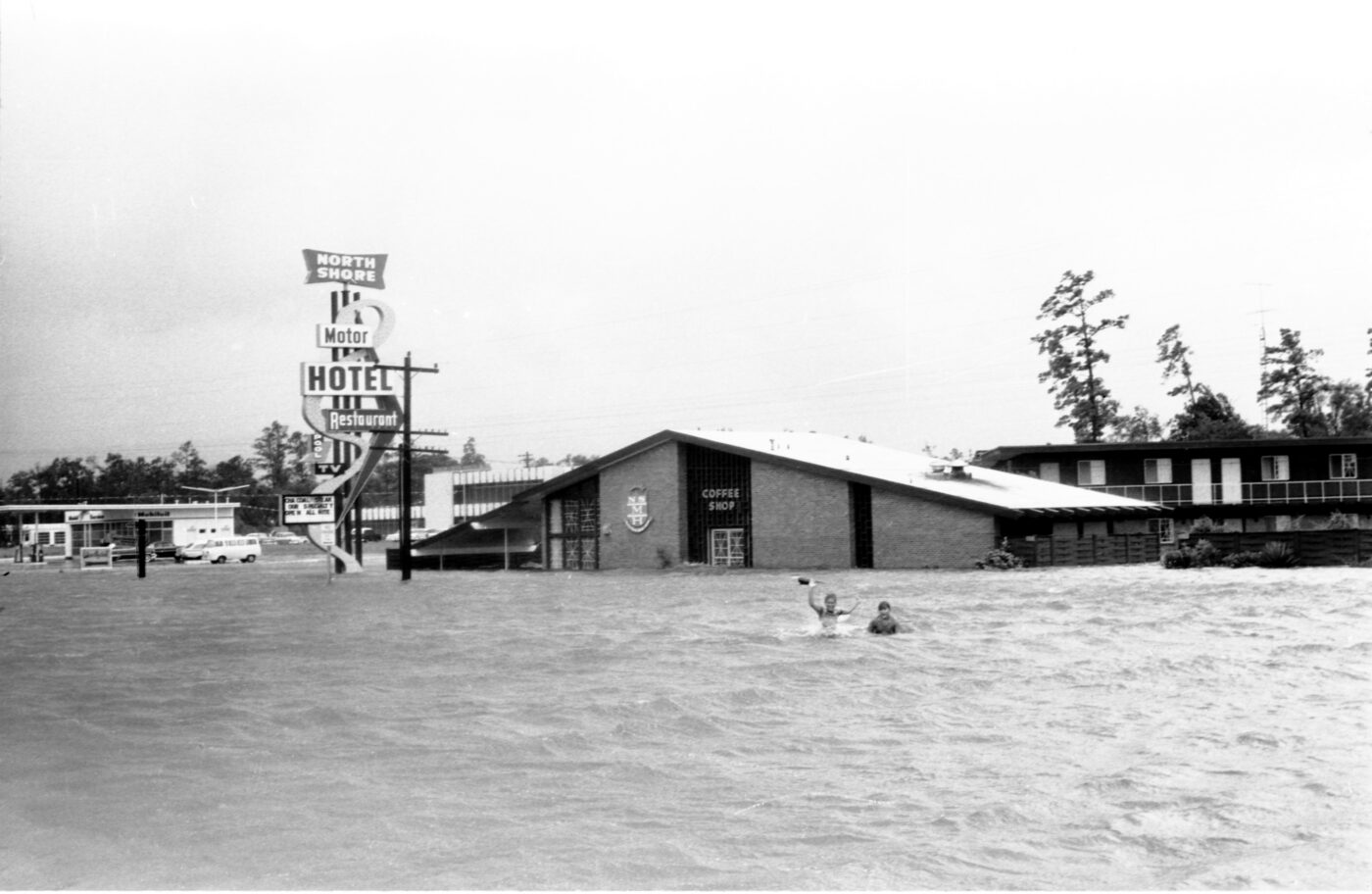
On September 11, 1961, Hurricane Carla made landfall in Texas—the most intense tropical cyclone landfall in United State history. Tidal waves over 10 feet tall smashed into the coast between Galveston and Texas City, where a young Dan Rather reported live during the storm itself. The hurricane also brought heavy rainfall of up to 17 inches across the city, including North Shore. Here, guests of the North Shore Motor Hotel found a much larger swimming pool outside along the old Highway 73 (now Interstate 10) than the motel’s kidney-shaped pool, which was left underwater—along with much of the motel itself.
6Hurricane Carla Comes Ashore
On September 11, 1961, Hurricane Carla made landfall in Texas—the most intense tropical cyclone landfall in United State history. Tidal waves over 10 feet tall smashed into the coast between Galveston and Texas City, where a young Dan Rather reported live during the storm itself. The hurricane also brought heavy rainfall of up to 17 inches across the city, including North Shore. Here, guests of the North Shore Motor Hotel found a much larger swimming pool outside along the old Highway 73 (now Interstate 10) than the motel’s kidney-shaped pool, which was left underwater—along with much of the motel itself.
7Hurricane Carla Comes Ashore

LIFE magazine photographer Flip Schulke captured a dramatic moment at Murdoch’s seaside bath house in Galveston after Hurricane Carla made landfall. Though it’s been destroyed several times by various storms, Murdoch’s has always rebuilt—and remains in operation today as a gift shop.
8Hurricane Carla Comes Ashore
LIFE magazine photographer Flip Schulke captured a dramatic moment at Murdoch’s seaside bath house in Galveston after Hurricane Carla made landfall. Though it’s been destroyed several times by various storms, Murdoch’s has always rebuilt—and remains in operation today as a gift shop.
9Let It Snow!

A rare snowfall on January 11, 1918 allowed the firemen at the Central Station, down the street from Christ Church Cathedral, to build a snow-woman from the .2 inches that fell downtown.
10Let It Snow!
A rare snowfall on January 11, 1918 allowed the firemen at the Central Station, down the street from Christ Church Cathedral, to build a snow-woman from the .2 inches that fell downtown.
11The Great Fifth Ward Fire
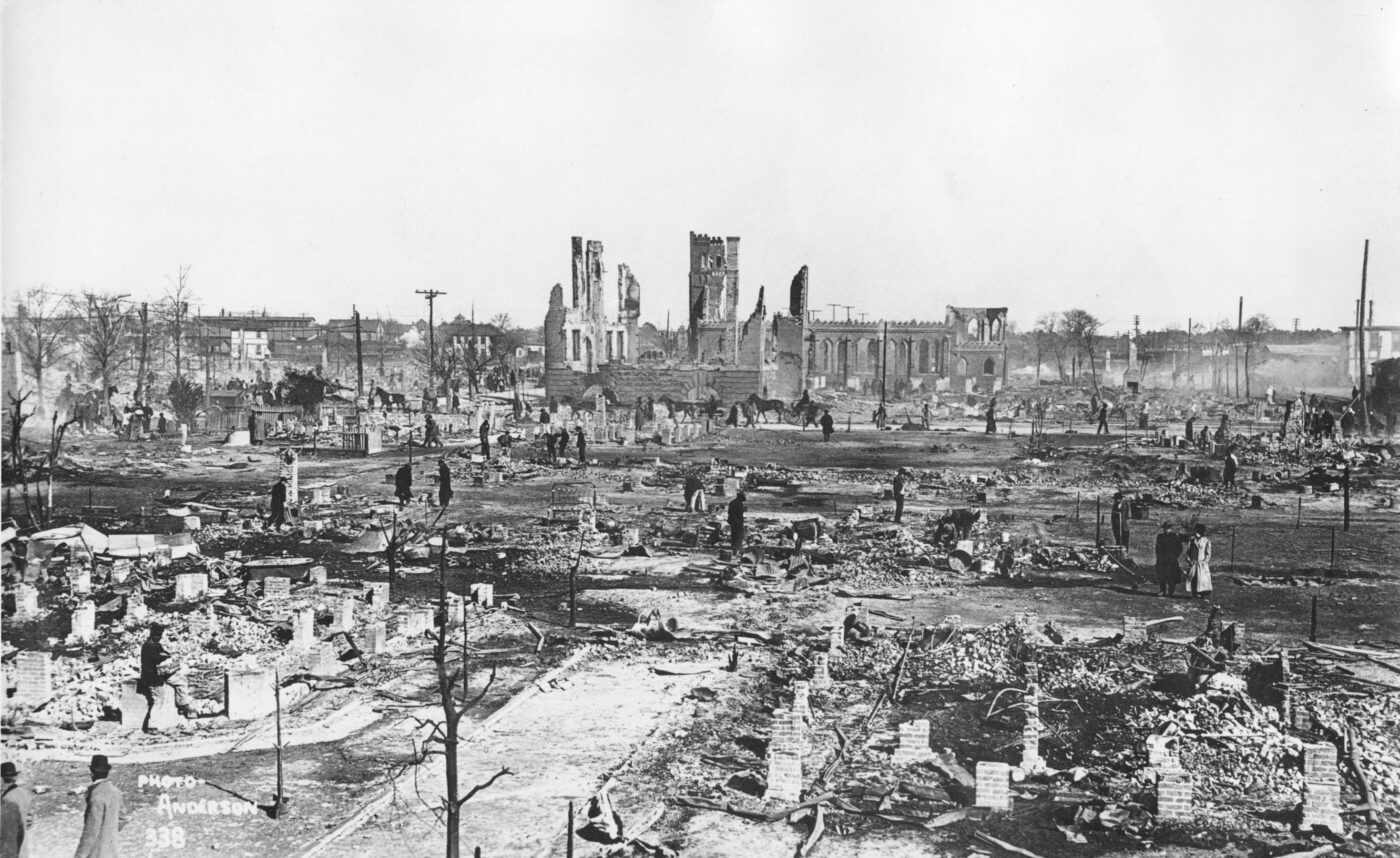
Not every Houston weather disaster is caused by water. Sometimes they’re caused by wind, as with the great fire of February 21, 1912 that destroyed 40 blocks in the Fifth and Second Wards and threatened to consume downtown. Vagrants trying to keep warm inside a vacant home at the corner of Hardy and Opelousas accidentally started a house fire that was spread by the cold winter winds in the dead of night; many Fifth Ward families escaped with only the nightclothes on their backs. A nor’easter that had blown into town whipped the winds to 38 miles an hour, pushing the fire south and causing an estimated $7 million in damages (nearly $175 million in today’s currency) as it spread, consuming everything from 32,000 bales of cotton at the Cleveland Compress Co. to 21 fully loaded Southern-Pacific rail cars. It remains the worst fire in Houston’s history.
12The Great Fifth Ward Fire
Not every Houston weather disaster is caused by water. Sometimes they’re caused by wind, as with the great fire of February 21, 1912 that destroyed 40 blocks in the Fifth and Second Wards and threatened to consume downtown. Vagrants trying to keep warm inside a vacant home at the corner of Hardy and Opelousas accidentally started a house fire that was spread by the cold winter winds in the dead of night; many Fifth Ward families escaped with only the nightclothes on their backs. A nor’easter that had blown into town whipped the winds to 38 miles an hour, pushing the fire south and causing an estimated $7 million in damages (nearly $175 million in today’s currency) as it spread, consuming everything from 32,000 bales of cotton at the Cleveland Compress Co. to 21 fully loaded Southern-Pacific rail cars. It remains the worst fire in Houston’s history.
13The 1935 Flood

The Houston Fire Department lost eight trucks in the 1935 flood, many of which were attempting to put out the blaze at the Yellow Cab Company on Louisiana Street. The city’s pumping station was unable to supply water for days following the flood, which meant the entire city was vulnerable to fires.
14No Part of the City Has Seen More Drama than Downtown

February 12, 1960 brought 4.4 inches of snow to Houston—just in time for the annual Houston Fat Stock Show, which was officially renamed the Houston Livestock Show and Rodeo the following year.
15The 1935 Flood

An estimated 20,000 Houstonians turned out to watch the HFD battle the blaze at the Yellow Cab Company in 1935; four trucks flooded out trying to draught water from the streets to fight the fire.
16Let It Snow!
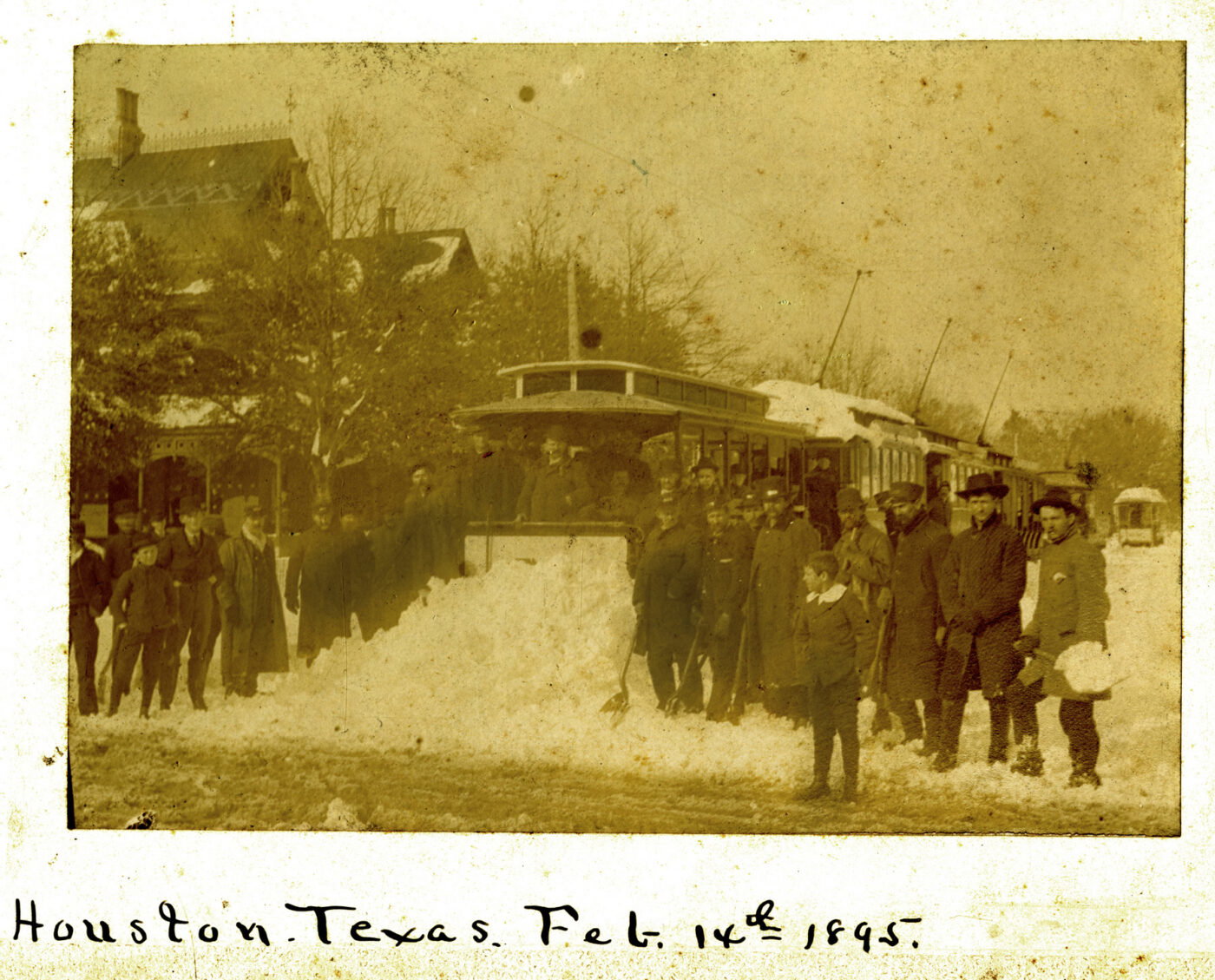
The 1895 snowfall piled up around streetcars across the city, such as this one in the Heights.
17No Part of the City Has Seen More Drama than Downtown

The intersection of Milam and Congress became a white-water rapid in the aftermath of the 1935 flood.
18The 1935 Flood
The Houston Fire Department lost eight trucks in the 1935 flood, many of which were attempting to put out the blaze at the Yellow Cab Company on Louisiana Street. The city’s pumping station was unable to supply water for days following the flood, which meant the entire city was vulnerable to fires.
19No Part of the City Has Seen More Drama than Downtown
February 12, 1960 brought 4.4 inches of snow to Houston—just in time for the annual Houston Fat Stock Show, which was officially renamed the Houston Livestock Show and Rodeo the following year.
20The 1935 Flood
An estimated 20,000 Houstonians turned out to watch the HFD battle the blaze at the Yellow Cab Company in 1935; four trucks flooded out trying to draught water from the streets to fight the fire.
21No Part of the City Has Seen More Drama than Downtown
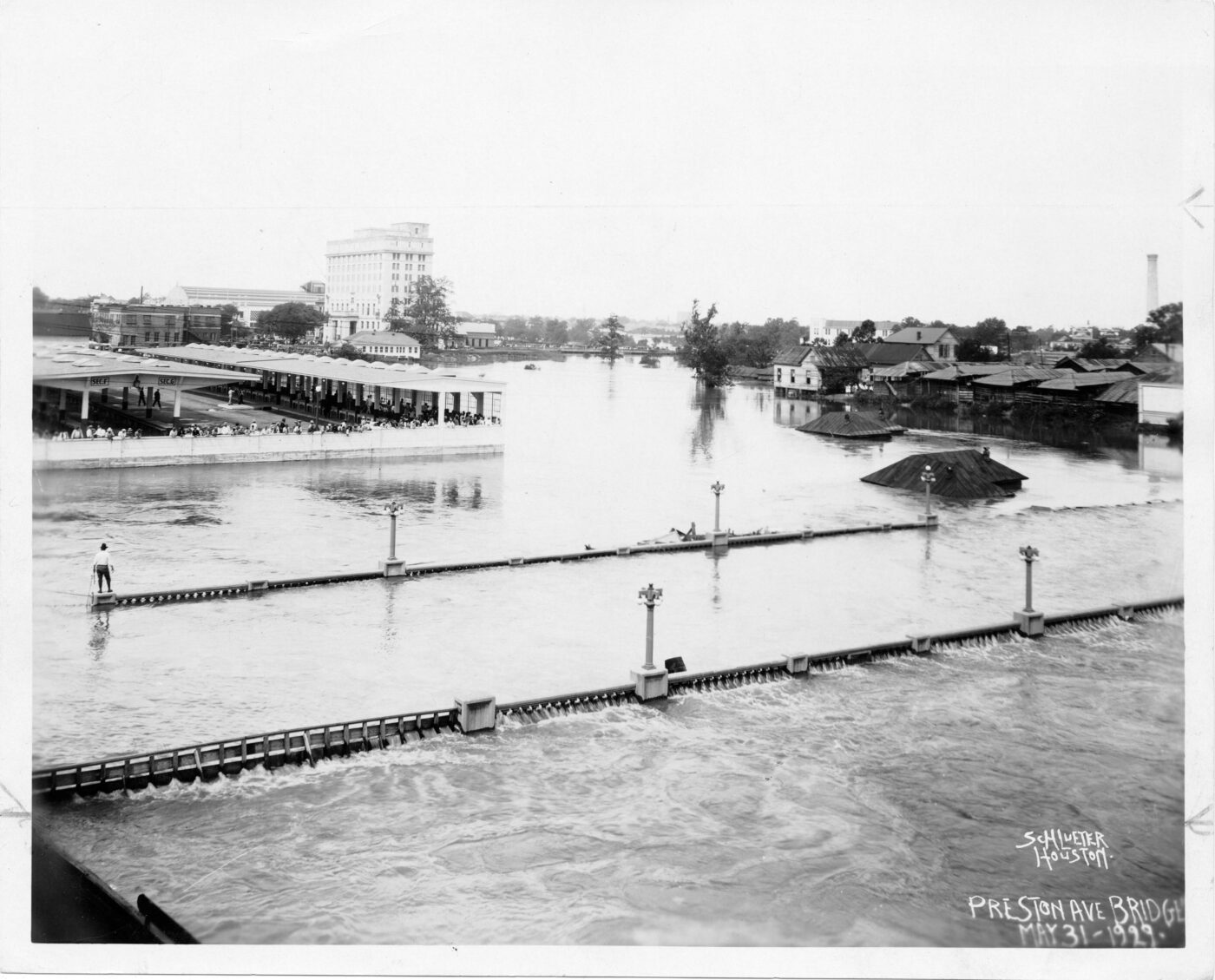
The 1929 flood that devastated downtown was the third significant rain event that year. By May 31, White Oak and Buffalo Bayou were completely out of their banks after 10 to 15 inches of rain fell across the city, turning bridges like this one at Preston Avenue into virtual dams.
22Let It Snow!

A full three inches of snow fell on January 22, 1940, covering the grounds of the brand-new City Hall, built in 1939.
23Let It Snow!
The 1895 snowfall piled up around streetcars across the city, such as this one in the Heights.
24No Part of the City Has Seen More Drama than Downtown
The 1929 flood that devastated downtown was the third significant rain event that year. By May 31, White Oak and Buffalo Bayou were completely out of their banks after 10 to 15 inches of rain fell across the city, turning bridges like this one at Preston Avenue into virtual dams.
25Let It Snow!
A full three inches of snow fell on January 22, 1940, covering the grounds of the brand-new City Hall, built in 1939.
26Let It Snow!

The 1940 snow also dusted the San Jacinto Battlefield, with the newly built monument in the distance.
27Let It Snow!

General Sam Houston watches the snow fall from his perch in Hermann Park during a winter night in February 1960.
28Recovery Efforts

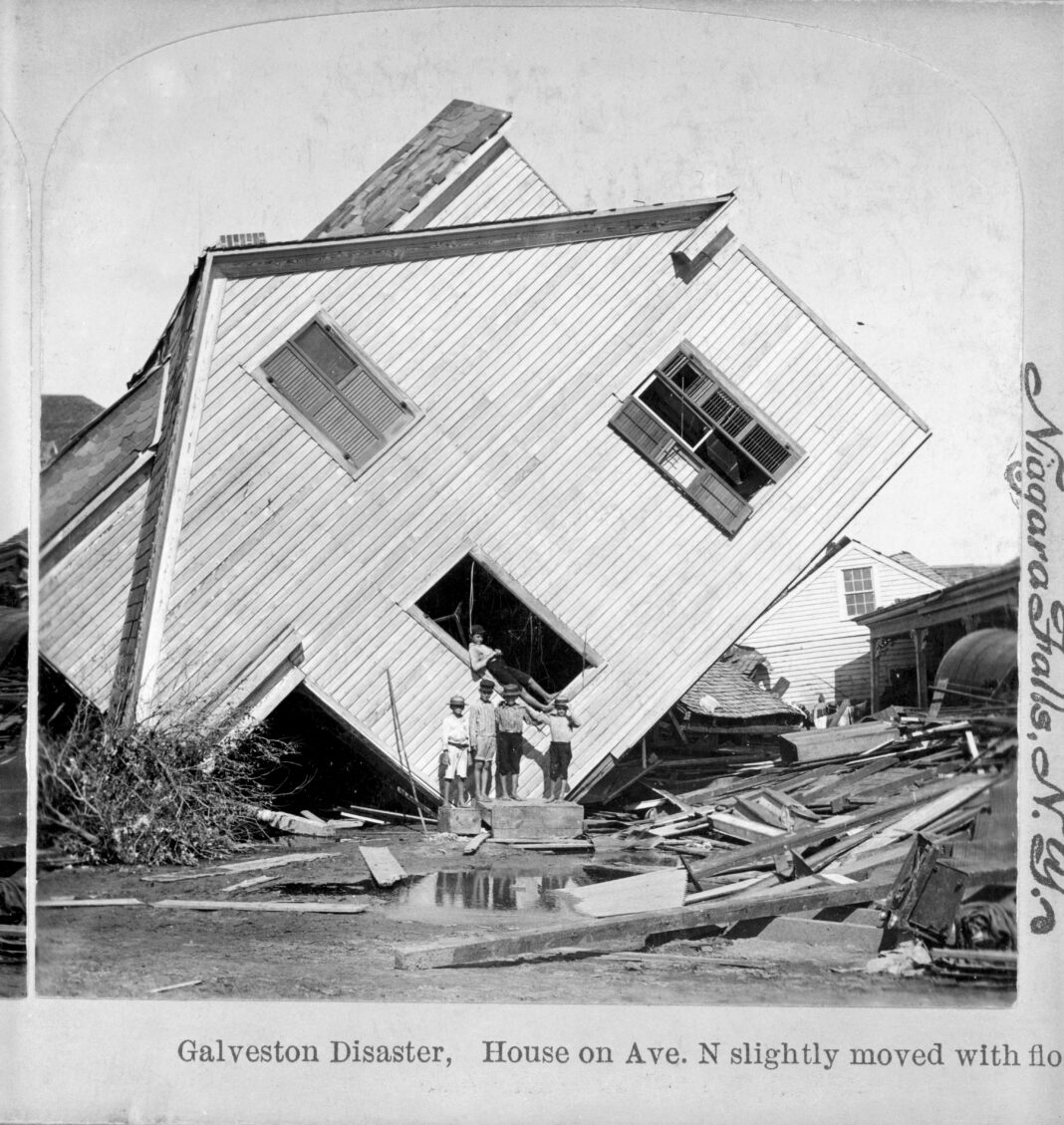
A house on Avenue N lies on its side following the 1900 Hurricane in Galveston.
29Let It Snow!
The 1940 snow also dusted the San Jacinto Battlefield, with the newly built monument in the distance.
30Let It Snow!

Houston’s heaviest snowfall took place in 1895, with 20 inches piled up in the streets of downtown.
31Let It Snow!
Houston’s heaviest snowfall took place in 1895, with 20 inches piled up in the streets of downtown.
32Let It Snow!

The weather in 1929 took another strange turn on December 21, when 2.5 inches of snow fell overnight, dusting Allen’s Landing and the Sunset Coffee Building.
33Let It Snow!
The weather in 1929 took another strange turn on December 21, when 2.5 inches of snow fell overnight, dusting Allen’s Landing and the Sunset Coffee Building.
34Recovery Efforts

Four young girls collect groceries in Lewis & Coker bags for victims of Hurricane Celia in 1970.
35Recovery Efforts

A relief party combs through the wreckage at Avenue P and Tremont Street in Galveston following the Great Storm of 1900, which killed an estimated 8,000 people and remains the deadliest natural disaster in U.S. history.
36No Part of the City Has Seen More Drama than Downtown
The intersection of Milam and Congress became a white-water rapid in the aftermath of the 1935 flood.
37Recovery Efforts
A house on Avenue N lies on its side following the 1900 Hurricane in Galveston.
38Let It Snow!
General Sam Houston watches the snow fall from his perch in Hermann Park during a winter night in February 1960.
39Recovery Efforts

A terrified dog is rescued from the debris left by Hurricane Carla.
40Recovery Efforts

A wrecker tows a car from a flooded Houston Avenue after Hurricane Alicia in 1983.
41Recovery Efforts

Thousands of Houstonians left homeless by Carla took shelter in school auditoriums across the city.
42Recovery Efforts
A terrified dog is rescued from the debris left by Hurricane Carla.
43Recovery Efforts
A wrecker tows a car from a flooded Houston Avenue after Hurricane Alicia in 1983.
44Recovery Efforts
Thousands of Houstonians left homeless by Carla took shelter in school auditoriums across the city.
45Recovery Efforts
Four young girls collect groceries in Lewis & Coker bags for victims of Hurricane Celia in 1970.
46Recovery Efforts

A man and his dog survey the damage on Galveston Island in the aftermath of Hurricane Alicia in 1983.
47Recovery Efforts

Houstonians employ everything from milk cans to trash cans to take potable water home following Hurricane Carla in 1961.
48Recovery Efforts
Houstonians employ everything from milk cans to trash cans to take potable water home following Hurricane Carla in 1961.
49Recovery Efforts
A man and his dog survey the damage on Galveston Island in the aftermath of Hurricane Alicia in 1983.
50Staying Dry is Always in Fashion

Rain or shine, no one missed a Houston Oilers game in the 1960s—especially in the early days of the franchise, when the young team played at Jeppesen Stadium (now Robertson Stadium at the University of Houston)
51Staying Dry is Always in Fashion
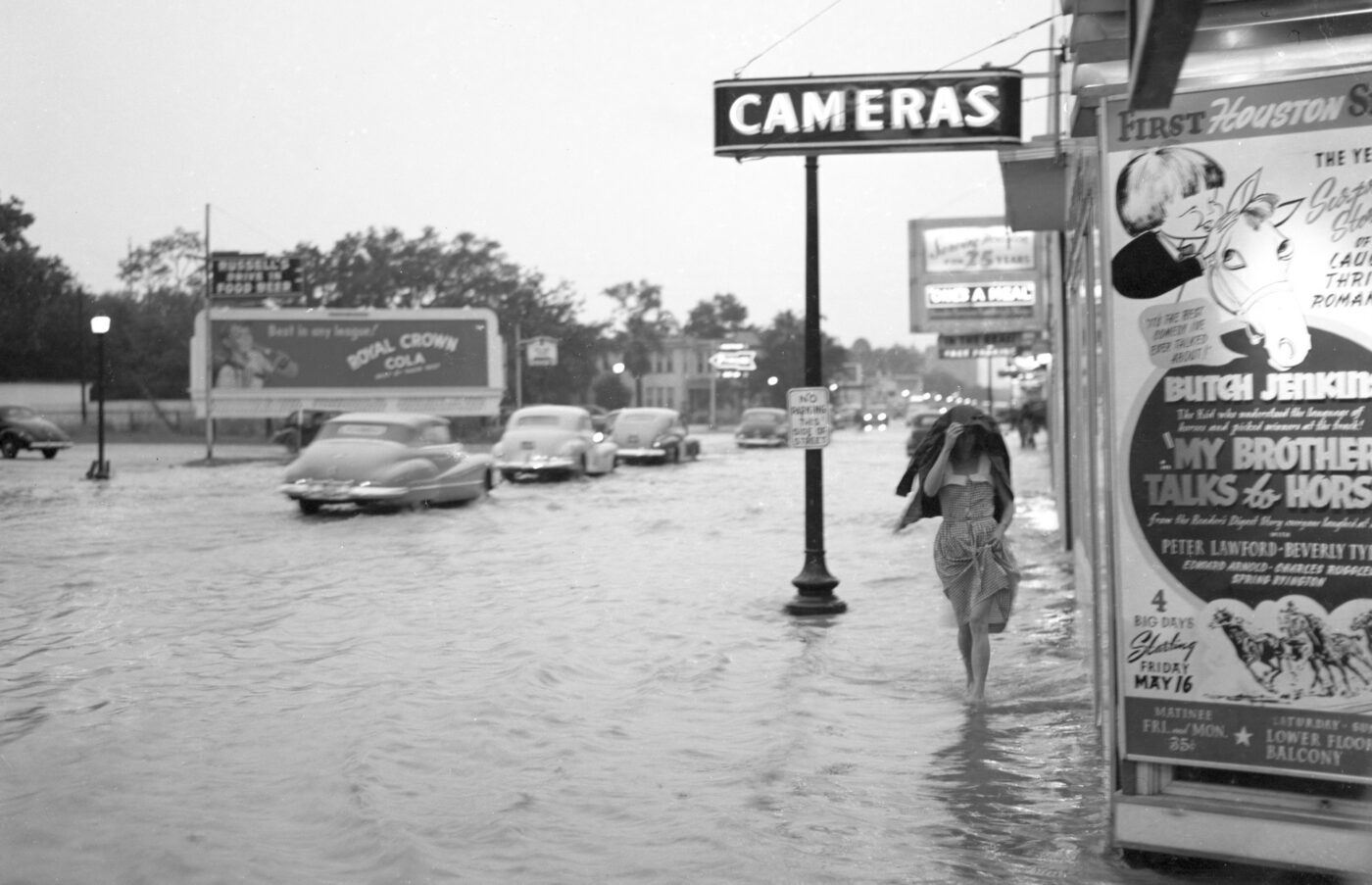
A woman takes shelter beneath her coat during a 1947 storm that flooded Richmond Avenue at South Main outside the Delman Theater.
52When Roads Become Rivers

Roper Street near Frey Road became a river during the summer floods of June 1961, when 4.75 inches of rain fell in two hours.
53Staying Dry is Always in Fashion
Rain or shine, no one missed a Houston Oilers game in the 1960s—especially in the early days of the franchise, when the young team played at Jeppesen Stadium (now Robertson Stadium at the University of Houston)
54Recovery Efforts
A relief party combs through the wreckage at Avenue P and Tremont Street in Galveston following the Great Storm of 1900, which killed an estimated 8,000 people and remains the deadliest natural disaster in U.S. history.
55Staying Dry is Always in Fashion
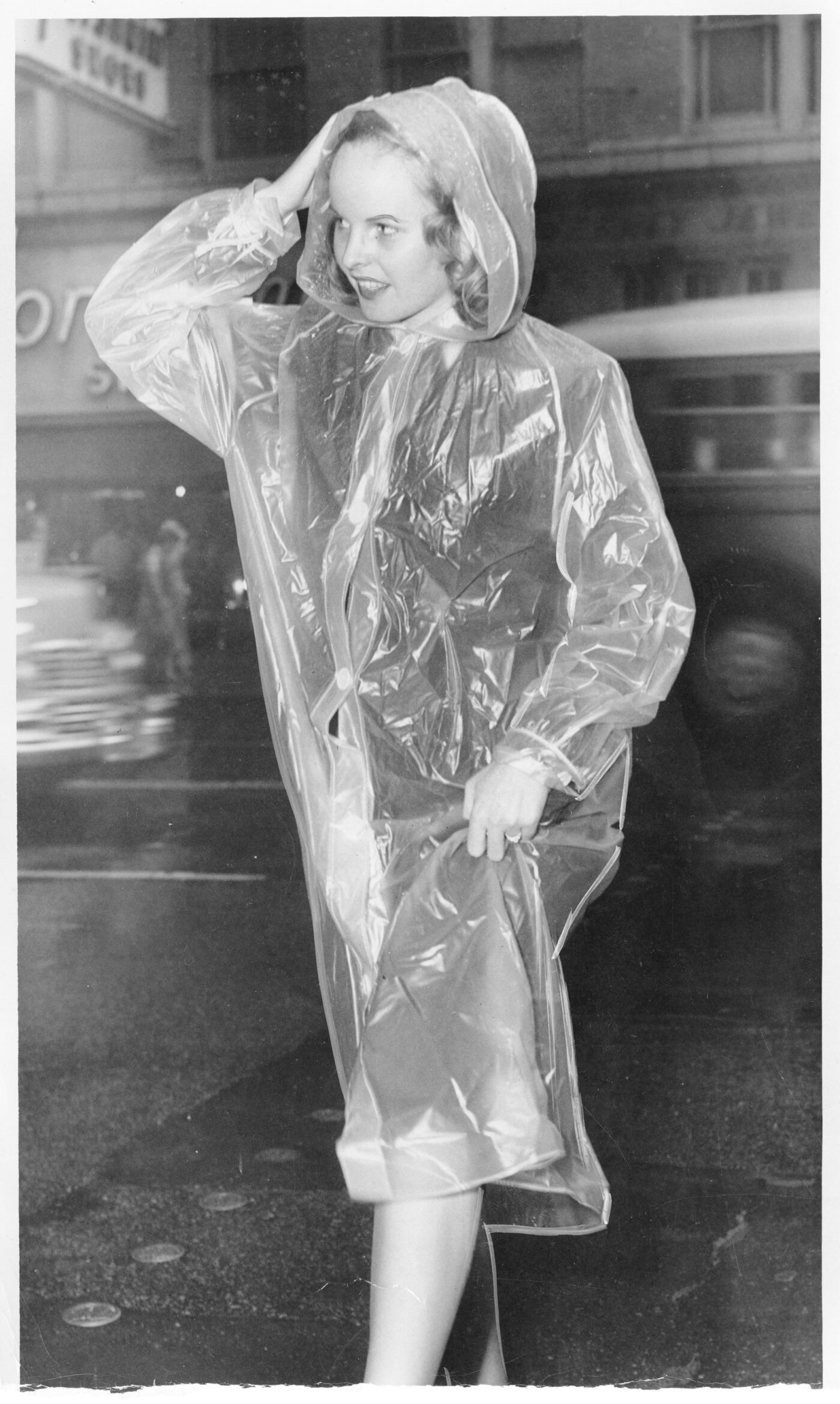
Mrs. Ernest Gallup dons a translucent raincoat during an October 1949 storm.
56Staying Dry is Always in Fashion
Mrs. Ernest Gallup dons a translucent raincoat during an October 1949 storm.
57Staying Dry is Always in Fashion
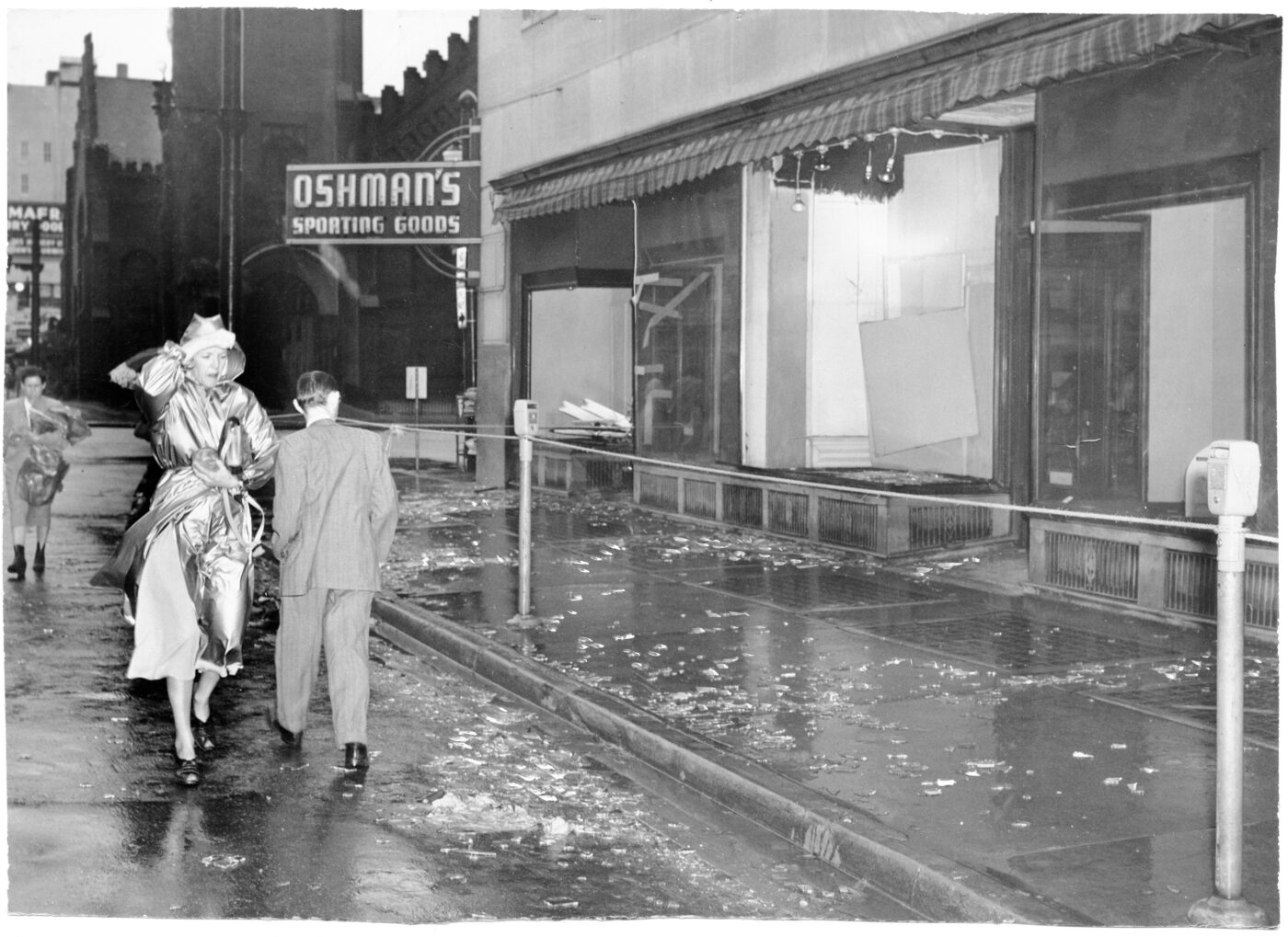
A woman passes the blown-out windows of Oshman’s downtown following a severe thunderstorm in 1949.
58Staying Dry is Always in Fashion
A woman passes the blown-out windows of Oshman’s downtown following a severe thunderstorm in 1949.
59When Roads Become Rivers

Rain brought by Hurricane Audrey in 1957 even covered the streets of Bellaire.
60Staying Dry is Always in Fashion
A woman takes shelter beneath her coat during a 1947 storm that flooded Richmond Avenue at South Main outside the Delman Theater.
61When Roads Become Rivers

The 1929 floodwaters reached as high as the Heights.
62The City Pool

David Bollom, 12, jumps from a fire plug into a flooded Spring Branch street as his sister, Gaynell, watches, in 1966.
63When Roads Become Rivers
Roper Street near Frey Road became a river during the summer floods of June 1961, when 4.75 inches of rain fell in two hours.
64When Roads Become Rivers
The 1929 floodwaters reached as high as the Heights.
65The City Pool

Children play in the 1929 floodwaters under the 1904-era Preston Avenue subway.
66The City Pool
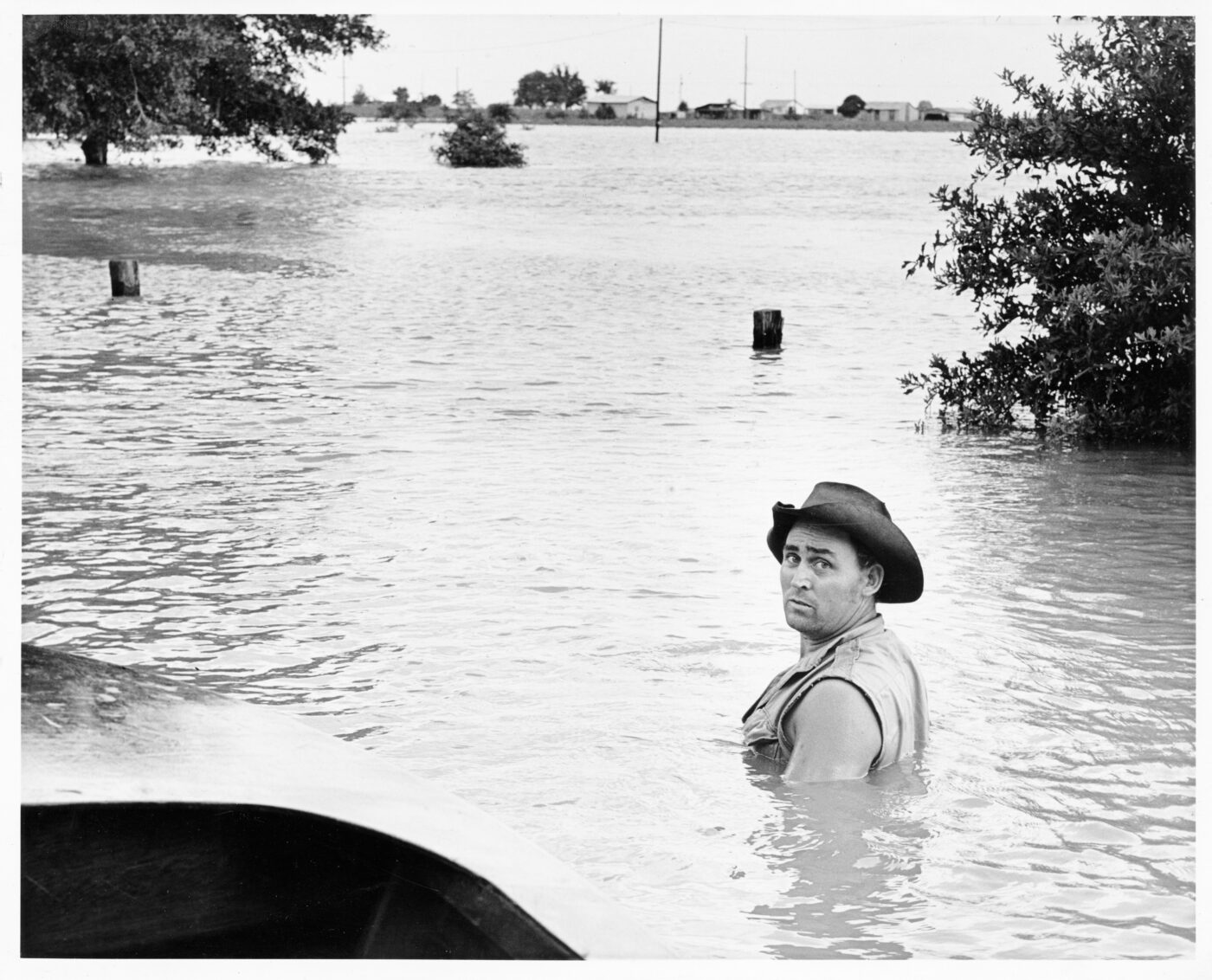
A.B. Winstead, who stands 6-foot-3, surveys the summer floods of June 1960, which left Cypress Creek, Spring Creek, Sims Bayou, White Oak Bayou and the San Jacinto River out of their banks.
67The City Pool
David Bollom, 12, jumps from a fire plug into a flooded Spring Branch street as his sister, Gaynell, watches, in 1966.
68The City Pool
Children play in the 1929 floodwaters under the 1904-era Preston Avenue subway.
69The City Pool
A.B. Winstead, who stands 6-foot-3, surveys the summer floods of June 1960, which left Cypress Creek, Spring Creek, Sims Bayou, White Oak Bayou and the San Jacinto River out of their banks.
70When Roads Become Rivers
Rain brought by Hurricane Audrey in 1957 even covered the streets of Bellaire.
From the city’s heaviest snowfall in 1895 to the water-logged cars and streets left behind by Hurricane Alicia in 1983, we scoured our city’s historic image archives—with extra-special thanks to the Sloane Gallery and the Houston Public Library—to create a visual catalog of weather-related devastation through the decades.
Published in the 100 Years of Houston Weather issue of Houstonia Mag.
|
|
|


