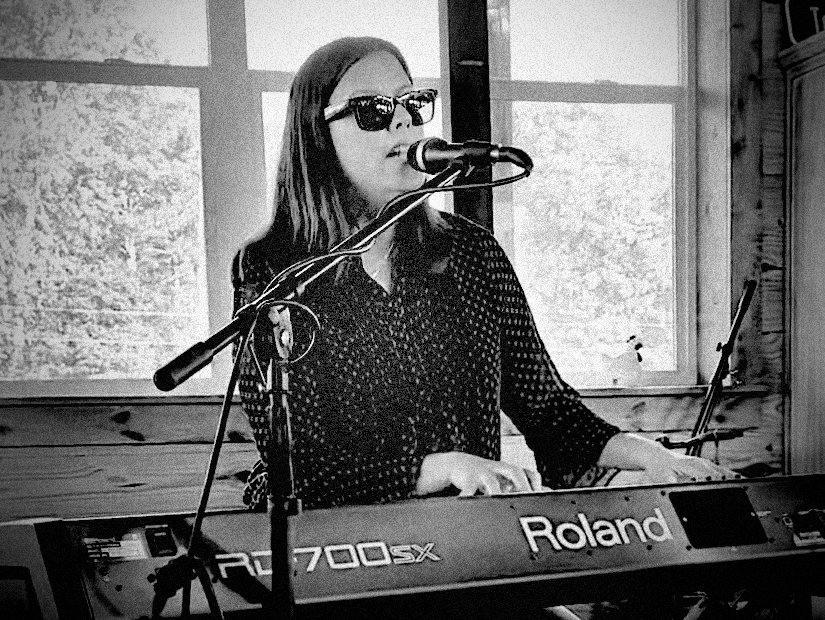
Jessica Callahan knows how to get people talking.
Last year, she made headlines after publicly advocating for inclusive dining experiences, asking local restaurants to print menus in braille for blind, low-vision, and visually impaired people. Callahan, who is herself blind, also earned a 2025 Houstonian of the Year nomination for her efforts. But as the founder of A1 Braille—the braille translation service she officially launched last year—her work extends well beyond making sure foodies of all abilities eat well.
“I figured my love for music, as well as my interest in reading, would be a great way to just make the world a little bit more accessible for my fellow blind people out there,” says Callahan. “I want to be a part of making things easier to access for everybody.”
She began working with braille as a child, studying braille music and classical piano at the Los Angeles-based Southern California Conservatory of Music starting at age nine. “That was where braille and music for me really started to intersect in my life,” says Callahan, who has written, recorded, and performed braille music since age 13. Braille music, she explains, emphasizes “all the little details that you can’t just pick up with your ears,” such as accent marks, finger markings, and dynamics.
It was the performing arts that initially brought her to Houston from Southern California in 2011. Callahan took a job singing at the now-closed Galleria steakhouse Mo’s…A Place for Steaks, a gig she says offered way more stage time than when she lived in Los Angeles—about five hours to play instead of just one. “You really learn how to connect with an audience and how to keep people entertained and just learn to make people happy with your performance and keep them interested,” she says.
A fan of many genres—electronic and classic rock among her favorites—Callahan calls the scene here “open-minded,” possessing a “fantastic appreciation for all different kinds of music.” Today, the musical prong of her career dovetails with her braille translation work. While she doesn’t yet hold the credentials necessary to translate sheet music directly, she can and does offer her services for lyrics. She also holds an officially recognized braille translation certification through the Library of Congress, which allows her to apply her skills professionally to short stories, personal medical and legal documents, and anything else clients may request.
“I’m one of those people that doesn’t like to put myself into one box,” Callahan says. “I really like the idea of being able to help people out and to give back where I can.” Menus are a part of that, too. The Americans with Disabilities Act doesn’t require public businesses to provide braille specifically as a reasonable accommodation for customers. Instead, they may have employees read menus and other materials aloud, provide large-print reading materials, or offer screen-reader-friendly text online. As long as some form of accessibility is provided, the delivery method doesn’t matter.
Braille isn’t a definitive solution, but it still comprises part of a much larger one. The more accessibility options a space offers, the more welcome and included disabled patrons feel. “The idea of a braille menu might be new territory for some people. I can understand why somebody might not want to immediately jump in on something like that,” Callahan says. “But definitely, the interest is there.”
Since posing major restaurant accessibility questions last year, she’s hosted “ongoing conversations” with multiple restaurants. Delays aside, Callahan says owners have been “incredibly receptive” to expanding accessibility options for patrons with visual impairments.
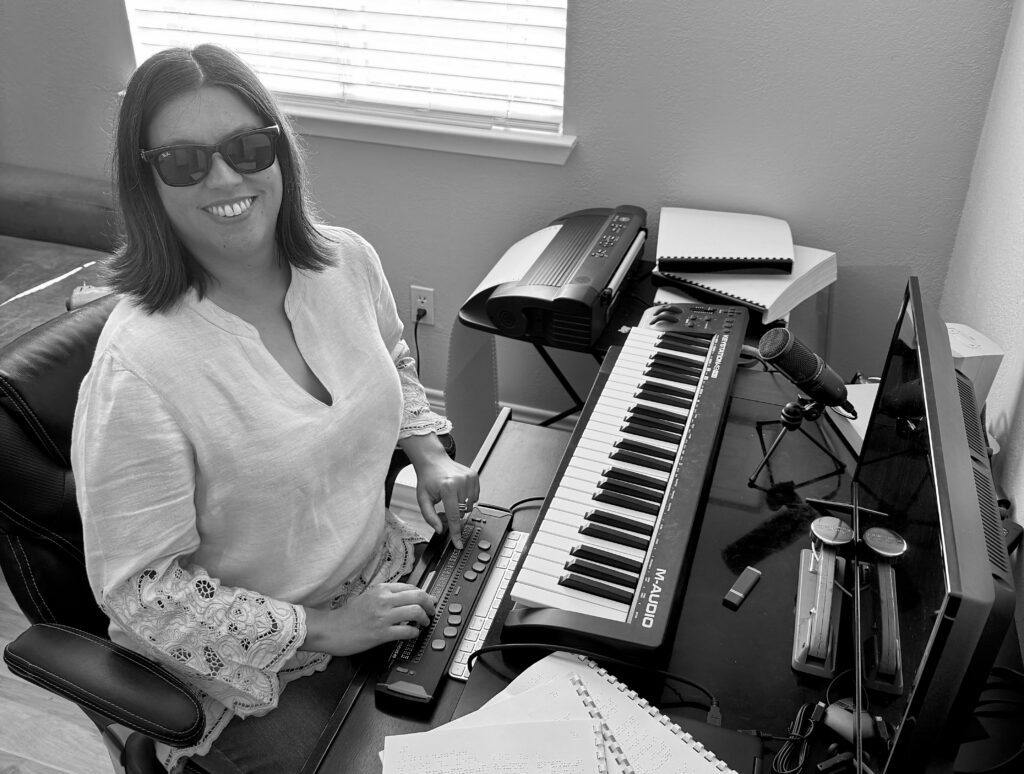
Courtesy of Jessica Callahan
Braille translators utilize a few different methods to create their materials, and Callahan doesn’t stick to just one. The Perkins Brailler, which first hit the market in the 1950s, works much like a typewriter: Translators use keyboards to type what they wish, and the machine embosses the braille letters into a thick paper capable of holding the shape. She also uses a more modern counterpart that turns a home computer into a proxy Perkins Brailler, provided it’s equipped with a specialty printer. With this setup, text can be entered using either a standard QWERTY setup or a braille keyboard.
Callahan refers to braille as a “tactile language” broken down into different levels based on how closely it references the original text. For example, she says Grade 1 braille—intended for newer readers—offers a direct one-to-one transposition of every letter of every word. Grade 2 is more streamlined and less resource-intensive, using characters in place of fully spelled-out words. It also has its own unique rules and guidelines, meaning the translation may not be as direct as Grade 1. A third grade exists essentially as the braille equivalent of shorthand, though it has yet to be standardized, and therefore is not used in formal publications like the ones Callahan is certified to provide.
And then, of course, there’s braille music. It has its own syntax, but shares the same alphabet as standard braille, adding unique notations to align with what sighted performers read. While she has yet to obtain certification in translating sheet music, Callahan still brings art and beauty to local audiences through her own deeply personal songwriting. “I think that it’s important for people to have access to information about the kind of music they like, whether it is a lyric sheet or an actual braille musical score,” she says.
|
|
|