

Image: Courtesy of Billy Moore
The gig economy has long served as a way to earn extra cash, keep up with rising costs, and sometimes launch a small business while working a full-time job in a different field. One of the most popular options revolves around lodging. Houstonians are actively renting out unused or underused spaces: guest houses, casitas, smaller barndominiums, garage apartments, or what many people now call “accessory dwelling units,” or ADUs—offering a haven for visitors, sometimes for a fee, with a buildout that costs far less than a traditional home.
Roughly the size of a two-car garage, these ADUs or renovated garage apartments often include much of what people might find in a tiny house or a large studio apartment. Guests can expect a bedroom or a combined sleeping and living area, plus a bathroom and kitchen or kitchenette. It’s a trend that taps into the barndominium and shipping-container-as-living-space craze, allowing people to list rooms and apartments for students or travelers, or offer a more private space for relatives.
Rice University saw this coming. More than 20 years ago, the Houston institution launched a hands-on, for-credit studio class for architecture students called Construct, in which professors worked with pupils to design and build compact, affordable, standalone homes that could double as income-producing dwellings in someone’s backyard.
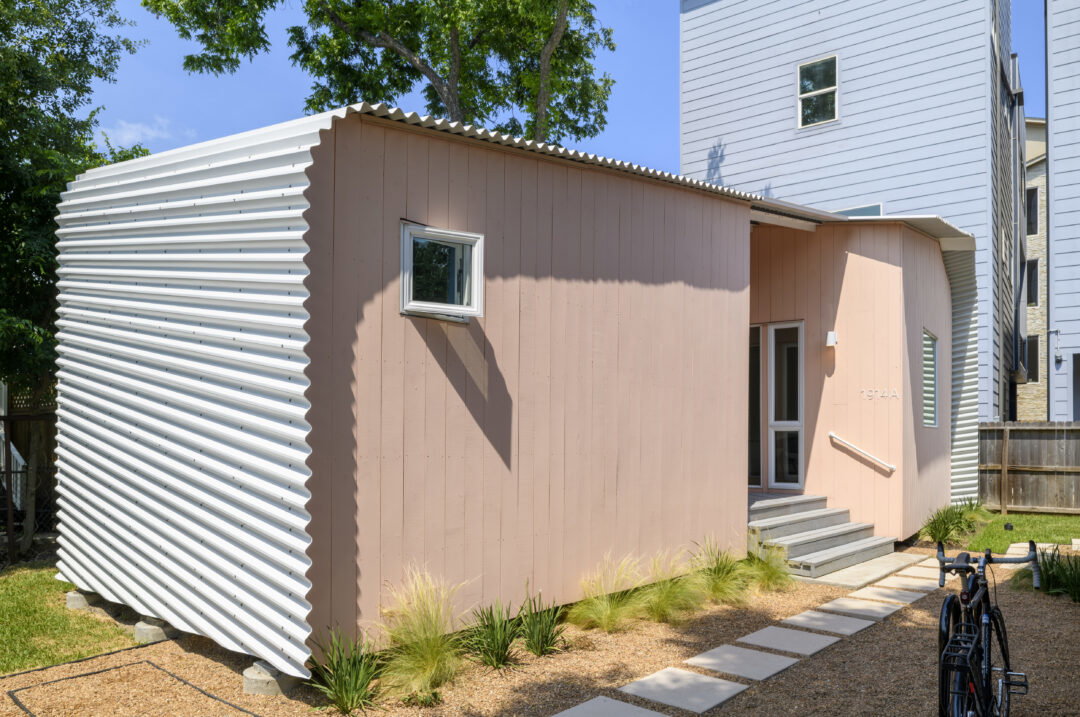
Image: Courtesy of Paul Hester
While designing sprawling luxury homes or modern skyscrapers might be the dream for most architecture students, this class focused on an economy of space: getting the most out of every inch of square footage and being as environmentally friendly as possible. Building the units themselves also gave students real-world construction experience.
“ADUs are mostly illegal in other cities because of zoning laws, but here in Houston, they’re workable,” says Andrew Colopy, an associate professor and director of undergraduate studies in Rice’s architecture school. This type of housing, which the city deems “secondary units,” is also an asset in the real estate market, since a potential buyer can use it as an extra space for an art studio, office, or even a man cave; to host out-of-town guests; or generate extra income. “They can be beneficial… but they don’t solve the affordability problem of housing,” Colopy adds. That’s because ADUs tend to get built one at a time—it would take an entire neighborhood’s worth to meaningfully move the needle on housing supply.
Although there’s no way to know how many secondary units exist in Houston, you can easily spot them in older neighborhoods with detached garages and alley approaches. Interior designer Pamela O’Brien of Pamela Hope Designs has helped clients design guest houses and garage apartments on the same property as their main residence, as well as separate vacation homes.
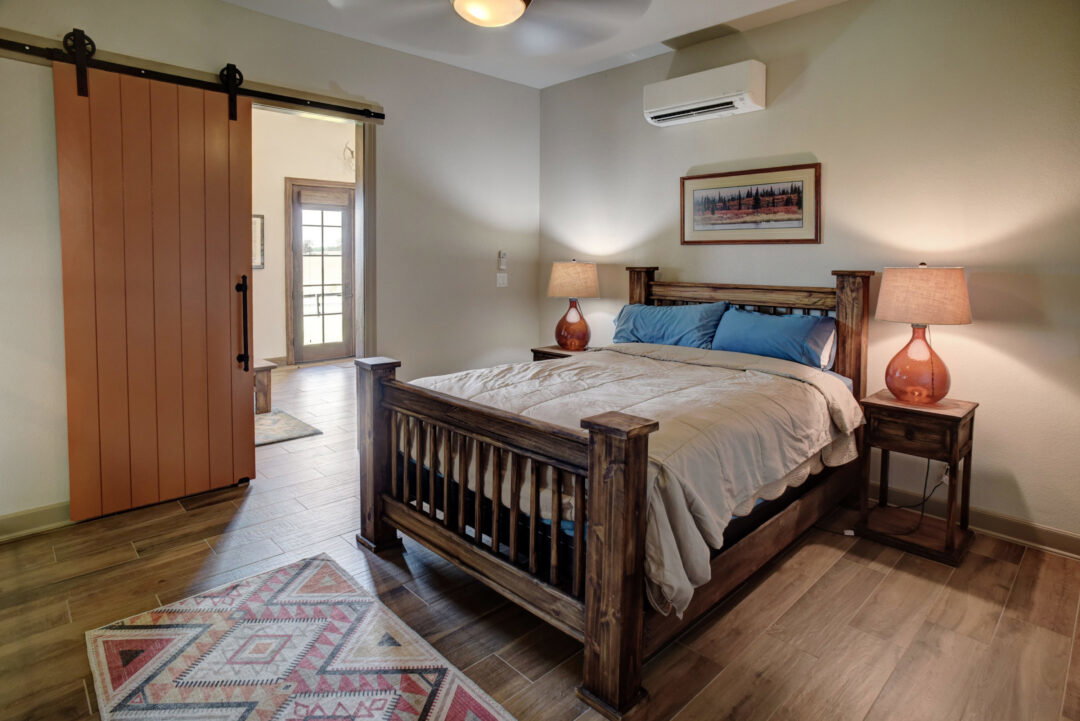
Image: Courtesy of Billy Moore
Cherri Carbonara and her husband, Tom McGhie, bought a fairly new home in the Heights with a separate apartment and a detached garage. The space was wired and plumbed but otherwise had open walls and plywood floors. The couple tapped Pamela Hope Designs to finish it for visiting guests.
“I envisioned a lot of uses,” says Carbonara, who wanted to welcome family members and her husband’s relatives from Scotland. “I also have nieces and nephews who are getting older and coming home from college to visit and having a space of their own,” which is important to them. Because of this, she didn’t skimp on hard finishes such as flooring, tile, and counters, but she kept her furniture budget in line with Wayfair, Pottery Barn, and Crate & Barrel.
Another client of O’Brien’s remodeled their garage apartment in West University, then moved into it for several months while remodeling their main home. Today, out-of-town guests use it, and it occasionally gets listed on Airbnb, which is becoming more common. “More people build [ADUs] for personal needs, and it morphs into ‘What the heck? Let’s rent it out’,” O’Brien says. “People are looking for extra money. It’s easy to do small projects and make it profitable. You can put it online in minutes.”
The finishes and furnishings might differ from what you see in a main or traditional home. They’re functional, durable, and easy to maintain, but likely less expensive, particularly since it’s not a primary dwelling, O’Brien says.
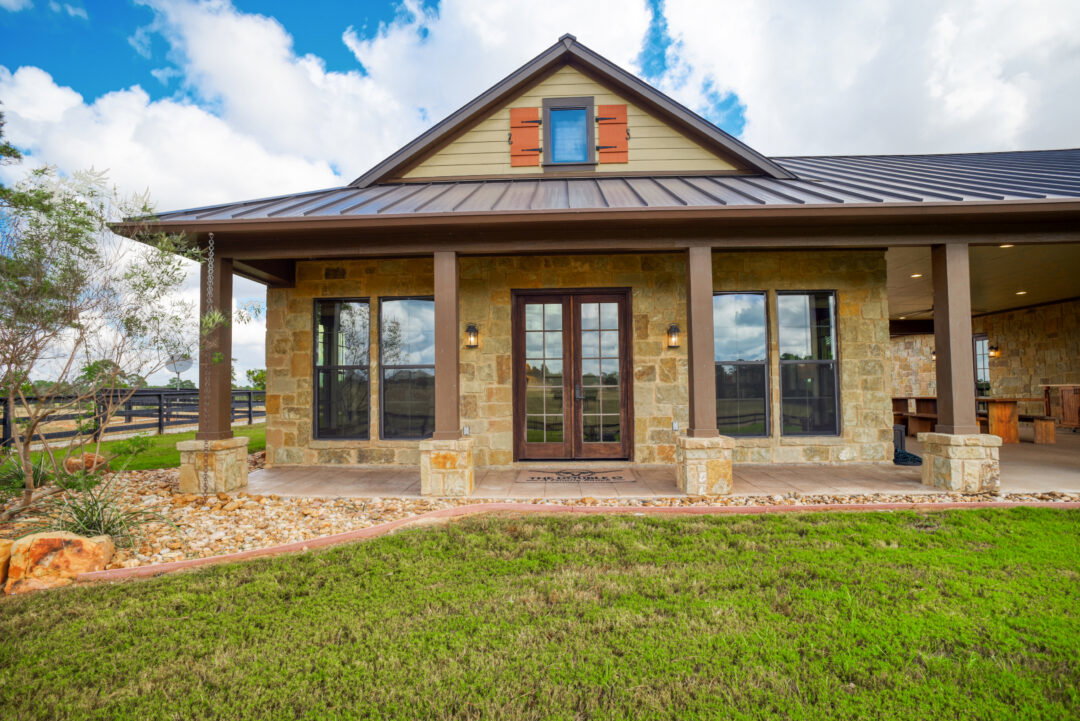
In vacation homes, particularly spacious ones in the country, guest quarters often take the form of full guest houses, sometimes with more than one bedroom. For another client with a Smithville ranch spanning 100 acres, O’Brien designed a guest house with two en-suite bedrooms, which the owners used while building their primary home.
Many landowners follow a similar blueprint by quickly building a simple garage or shop barndominium on land they already own, giving them a place to live or stay on weekends while their main home is being built. Then, the original living quarters are available to guests, a ranch hand, or anyone else, says Stacee Lynn Bell, who launched Barndominium Company a few years ago.
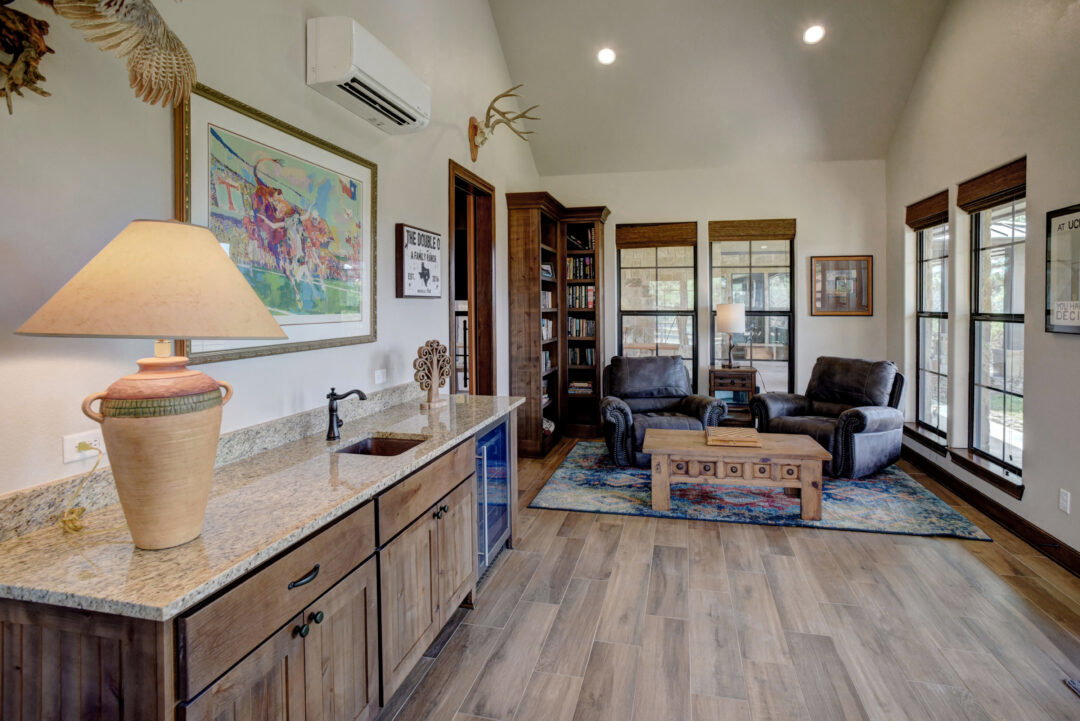
Image: Courtesy of Billy Moore
She started by selling pre-designed barndominium plans featuring the shell structure with plans for finishing out the interior. Today, her company delivers luxury barndominium plans that include buildout and finishes.
“You can use them as a bunkhouse with four beds and an expanded bathroom for guests. You can use them as a craft room or make it where Junior goes to play his drums because you don’t want to hear him learning how to play,” Bell says.
Whatever the use, Houstonians seem to love ADUs. After all, who would ever turn down the idea of extra space?
|
|
|