
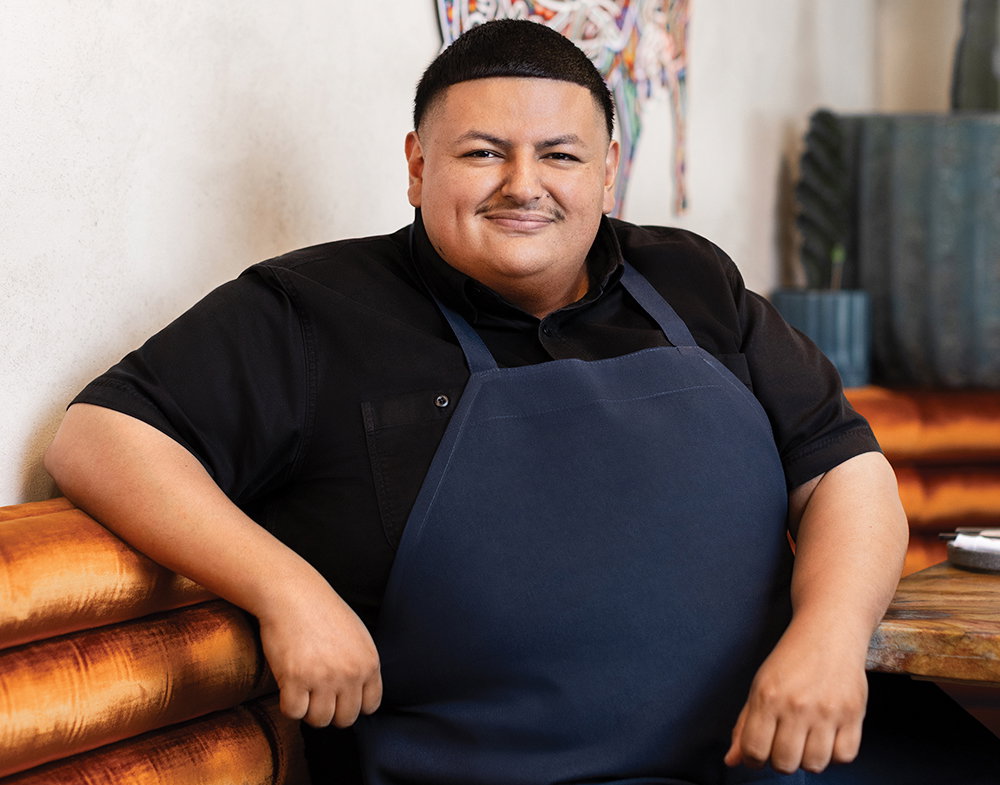

Adrian Torres had a plan for what would happen if he were named Emerging Chef at the 2026 James Beard Awards. He would kiss his fiancée, high-five his friends, and walk to the stage with a few prepared lines, thanking his parents and his team.
Instead, when his name was called, the 27-year-old chef froze, eyes closed for a few seconds before rushing to the stage. “Halfway through, I stop, and I’m like, ‘Oh my God, I didn’t kiss my lady! I didn’t say hi to nobody!’” he says, with a laugh. “I turn around, I’m like, ‘I’ll be right back,’ and then I just take off again.”
Once onstage, he delivered a speech that earned a standing ovation. “I want to say something I never thought my younger self would have the opportunity to say,” he told the audience before thanking his parents in Spanish. “I am proud to be the son of immigrants. I am proud to be an immigrant. I am proud to be a DACA recipient.”
Even in the rush of emotions, this “brown kid from the North Side” didn’t lose sight of what the moment meant. DACA, or Deferred Action for Childhood Arrivals, is the federal program that temporarily shields people brought to the US as children from deportation and makes them eligible for a work permit, which must be renewed every two years. It offers protection, but it doesn’t confer legal status or a path to citizenship. It’s a tightrope Torres and more than 450,000 others must walk, no matter their accomplishments or contributions.
“If I have such a national stage, it’s important for me to speak and bring visibility,” he says. “Just being able to go out there and say that I’m proud to be who I am, and I’m not afraid. There’s some fright in that, right? But this is who I am, and I’m happy to represent.”
It’s fitting, then, that Houston of all places would rally behind him as the 2026 Houstonian of the Year. We are one of the most diverse cities in the country, a city made up of immigrants with unparalleled hospitality and a deep love for our dining scene, and so the votes poured in. Torres doesn’t take the support for granted, but the visibility doesn’t come without a cost.
In January, word spread that ICE agents were canvassing the West University neighborhood where Maximo is located, leaving both Torres and some of his staff feeling vulnerable. As the Beards approached, he was told that traveling to Chicago was far too risky because his DACA renewal was still in progress.
Torres went anyway. He; his fiancée, Paloma; and three friends crammed into an SUV for the two-day drive, a trip that worried him at first. Despite a few cop sightings, the ride was smooth. Torres slept most of the way before making a pit stop in Nashville and continuing to Chicago.
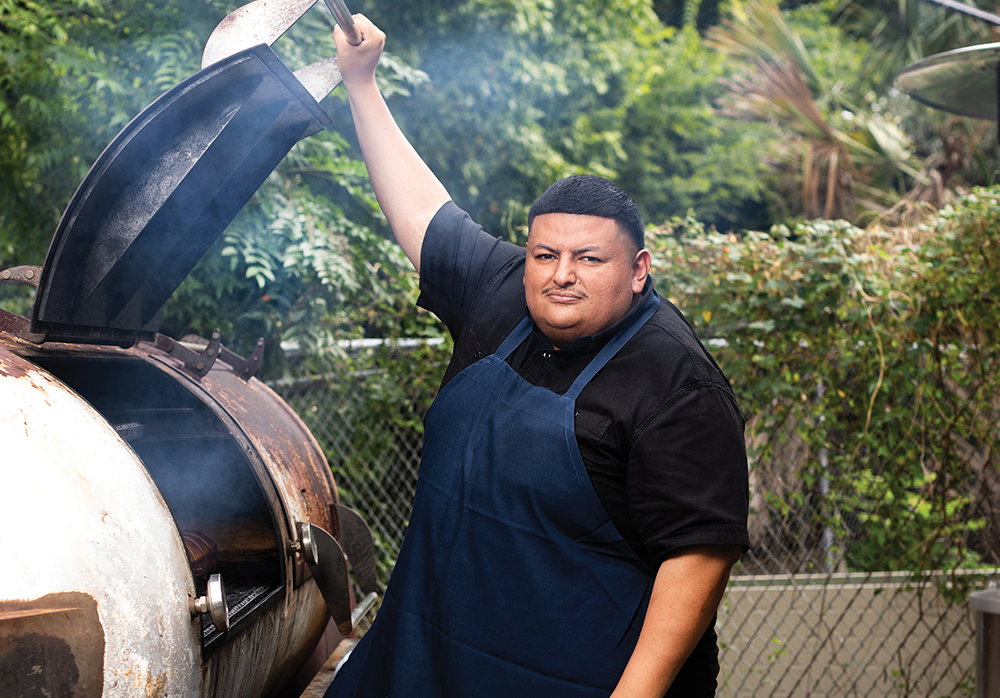
That fearlessness didn’t come naturally. His mother often told him whatever she could to keep him safe. “She’s always lived the lifestyle of ‘Stay under the radar. Don’t bring any attention to yourself. If you get in the car, don’t speed. Don’t run a red light [or] a stop sign. If there’s an altercation, get out of there,’” he says. “That changes your mentality of how you move around.”
So when headlines began highlighting his DACA status and his age, he feared it would put him and his staff in danger. He recalls his friend Cesar Espinosa, a co-founder of Familias Inmigrantes y Estudiantes en la Lucha (FIEL), an immigrant-led civil rights organization, setting him straight: “Nah, bro. You gotta say it louder, and you gotta be more out there.” Torres took the advice to heart. Now, any time he’s interviewed, he makes it a point to mention his DACA status. “It’s important to me that people understand, people know—with eating my food, with coming in this restaurant—it’s all at the hands of immigrants,” he says.
That drive has deep roots. Torres first applied for DACA after his 15th birthday with help from his mother and FIEL. Inspired by the reality show Cake Boss, he started out baking box cakes, cheesecakes, and cupcakes for family. He eventually enrolled in the culinary program at San Jacinto College.
He spent two formative years at James Beard Award–winning chef Hugo Ortega’s Oaxacan restaurant Xochi, shucking oysters under then–sous chef Thomas Bille, who would later take home a Beard of his own. “I thought I knew Mexican food,” says Torres, who grew up “very Mexican” in Aldine. “Then I walk into this restaurant in 2017, and there’s 13 different moles. There’s all these chiles, and everything so beautifully presented and flavorful. …That kind of just blew my mind.” He wanted to learn everything about it.
He later reconnected with Bille at his Spring restaurant, Belly of the Beast, just weeks before the pandemic. Working as Bille’s sous chef, Torres says something shifted. He had always thought of himself as a great line cook. “I could keep up. I had that down, but I wasn’t a good chef,” he admits. As Bille’s No. 2, Torres watched him pour love into his food and his flavor combinations (“Taste this. Try that.”). Keeping up with the kitchen’s fast pace only further confirmed Torres’s chef ambitions. “It didn’t scare me,” he says. “It made me fall in love.”
He put that knowledge to work as sous chef at El Topo, which later transformed into Maximo, a masa-focused restaurant still finding its groove. Then, after the departure of chef Tony Luhrman, Local Foods Group owner Benjy Levit and culinary director Seth Siegel-Gardner decided to change course. They abruptly closed Maximo for three weeks starting in December 2024 and promoted Torres, then just 26, to executive chef—his first time leading a team or a menu.
Local media picked up on the news, and we watched—closely. To the outside world, such a transition with so young a chef at the helm could read like a hospitality group in crisis, especially when two other establishments were undergoing transitions of their own (Lee’s Den wine bar reopened as a cocktail bar, and modern French restaurant Eau Tour later reopened as Italian restaurant Milton’s).
But it was less crisis and more creativity, says Carla Gomez, founder of Pop Ratio. Gomez, who handles public relations for Local Foods Group, says she was struck by the announcement, too. This was more than a simple press-release moment, she thought. But after a tasting at Maximo’s bar, when Torres, head down in the kitchen, sent out dish after dish, it all made sense. One bite in, she remembers locking eyes with Siegel-Gardner, who had “I told you so” written all over his face. “We have to make him famous,” he told her.
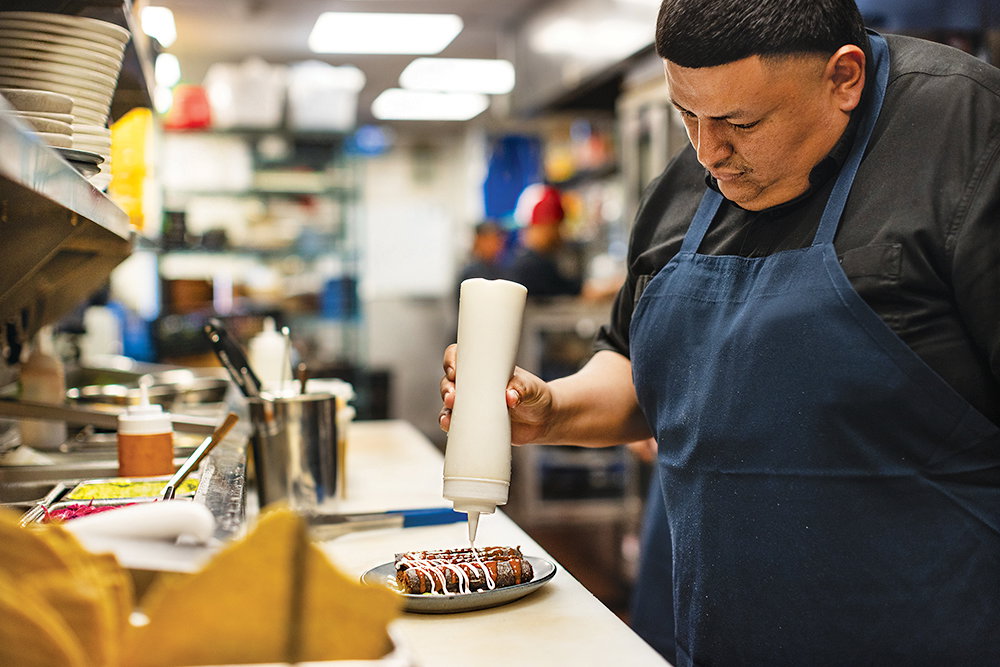
And famous he’s becoming. Less than a year in, Maximo was racking up honors—a Michelin Bib Gourmand, which recognizes “good food at a good value,” and a Beard semifinalist nod. And back in Houston, At Large Position 4 City Councilmember Alejandra Salinas presented Torres with his own holiday for “demonstrating exceptional culinary skill, creativity, and dedication to his craft” (September 15 is now “Adrian Torres Day”). “It all just happened so fast,” says Torres, who notes the restaurant is busier than ever. He’s been juggling a growing number of reservations alongside the interviews and photoshoots that come with the fanfare (on the day of our interview, a major Mexican TV station was filming at Maximo).
In the kitchen, though, he’s found his footing. Torres says he’s grown more confident in his cooking and leadership, moving Maximo toward his own interpretation of Mexican cuisine. That means not overexplaining or apologizing for what he puts on the plate. “People hear Mexican food, and they come in, and they’re like, ‘Where are the rice and beans? …Where are the enchiladas? Where’s the queso and the chips?’” he says. “Well, this is what it means to me. You take that first bite … and you’re like, ‘Okay, I get it.’”
It’s also important to him that his food remains accessible. Early in his career, Torres watched restaurants claim they were “keeping culture alive” while pricing out the very people who truly understood that culture. He understands the business, but he couldn’t fathom doing that in his own restaurant. “Every time I think about food, I think about home and my mom,” he says. “My mom would never be able to go to a restaurant and have a $200 tasting menu.”
At Maximo, where Torres says the food is “for the people,” that philosophy shapes its tasting menu. For $50, diners get a five-course meal, one of the most affordable tasting menus in the city. “Fifty bucks might be too high for someone, but it’s not unreachable,” he says, adding that $5 from every tasting menu is donated to a charity in Mexico. Courses change every two and a half months to focus on a different state in Mexico. Most recently, Torres centered the menu on his birthplace, San Luis Potosí—a lineup built mostly on memory, nostalgia, and reference: a tuna and prickly pear crudo (a fun play on the word tuna, which “prickly pear” in Spanish); the Potosina enchilada, made like it is back home; and zacahuil with short rib.
Eventually, the menu will venture to Oaxaca and Tamaulipas—another opportunity to educate diners on the depths of Mexican cuisine. “It’s ambitious on our end, so we get to push harder,” he says. “We give the guest an even better experience. …and we get to be a little more passionate, too.”
Success hasn’t made Torres’s status as a “Dreamer” any less precarious. Among everything else he’s working on, he’s pursuing an EB-1A visa, a self-petitioned route to permanent residency for people with “extraordinary ability.” His category falls under the arts, which requires him to build a portfolio of accolades, including published material about his work and major awards. It’s still a time-consuming, expensive process.
Without a visa, he must continue to renew his DACA status every two years, an often drawn-out process at the whim of the current administration (the DACA program has faced years of legal challenges, including a 2025 federal appeals court ruling that put Texas recipients in jeopardy). It means he must stay on top of deadlines and apply much earlier (if anything drags past its expiration, his protections could lapse, and his driver’s license could expire along with it). Still, he realizes it’s a privilege—one many people don’t have. “There’s a little bit of empowerment in that,” he says. “I have that level of protection where I know I can stand up. I know I can speak up, even if it’s just a little bit more.”
He keeps in mind a dear friend who, as a citizen, considers himself the front line—the first layer of protection for DACA recipients, the undocumented, and anyone more vulnerable. Torres takes a similar approach. “I owe it to the person behind me to stand in front of them,” he says. “I’m gonna protect whoever’s behind me.”
Siegel-Gardner, a mentor and friend, says he spotted Torres’s maturity from the start. “He’s been through a lot in his life, so he has a different perspective on life and what hard work is,” he says. “I really think of him as family, and I think that we’re just seeing the beginning of what he’s going to achieve.” He recalls the message he gave Torres just before the James Beard Awards ceremony in June. “I told him, no matter what happens today, there’s so much of this coming your way,” he says. “I love getting to watch it all happen.”
For Torres, the beauty lies in seeing how he and his team—the restaurant—have evolved together. “Sometimes, on a Sunday at 5pm, there’s 20 people out here waiting to get in. I’m like, ‘Look at that. Isn’t that beautiful?’” he says. “A year or two ago, we didn’t have none of that.”
The Runners-Up
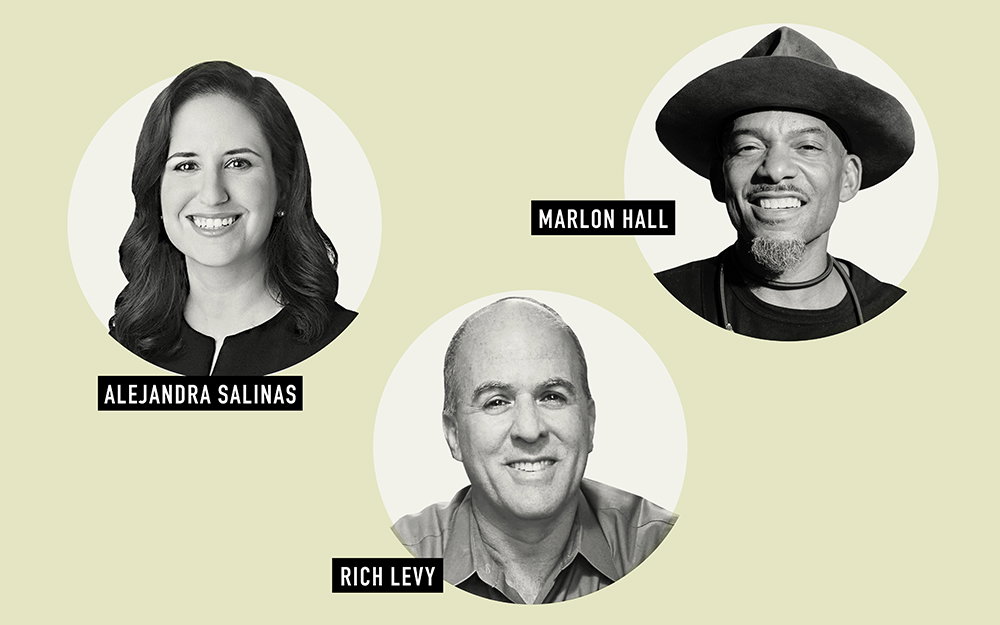
ALEJANDRA SALINAS: Houston’s first openly LGBTQ+ Latina councilmember spent her first year in office making City Hall harder to ignore. She spearheaded the ordinance limiting HPD–ICE cooperation and authored another requiring working air conditioning in every rental. She also handed out portable units to residents who couldn’t wait for it to take effect.
RICH LEVY: Levy spent 31 years turning Houston into a literary city, then retired in June as Inprint’s executive director. He grew the nonprofit from a single staff position into an organization that runs more than 60 workshops a year. He also fought to keep its celebrated reading series at just $5 a ticket, because access mattered more than what the market would bear.
MARLON HALL: The artist and anthropologist keeps proving that a seat at the table can change a person. He has hosted more than 300 dinners in cities including Houston and Tulsa, where people from different backgrounds share meals and family history. This summer, he took the idea to a human-development lodge in Nairobi National Park.
|
|
|