
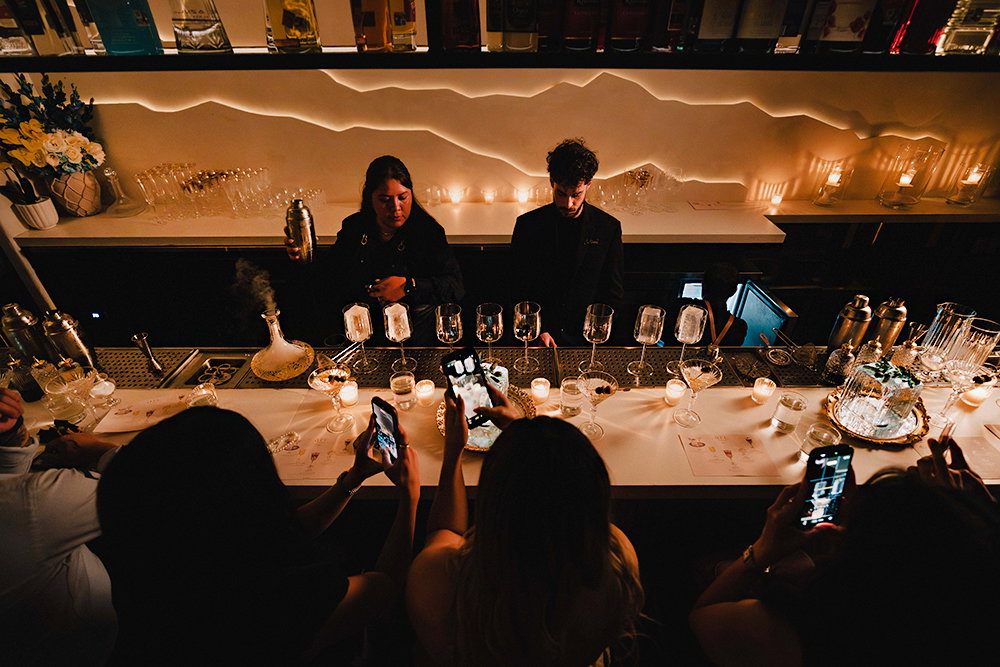

When restaurants expand, they often follow a similar playbook. The chef gains a dedicated following, signs a second lease across town, hires another general manager, and spends months split between two kitchens, separate staff, and very long workdays. The usual path works, but it’s also exhausting and expensive. For some restaurant owners who already have a space, whether it be a courtyard, private room, or a stretch of wall behind the line, instead of leasing something new, they build into what’s already theirs. Just a door—sometimes a wall or two—gets knocked down, and suddenly there’s an entirely different restaurant living inside—or right beside—the one they already run.
Restaurants including Ambra, tucked inside Philadelphia’s Southwark, and Kwame Onwuachi’s four-seat Sirius at Dōgon in Washington, DC, are part of this unique culinary movement. For Houstonians doing it, the motivation isn’t about novelty but logistics. Instead of being down the street or across town, these chefs and owners can be in two places at once or just steps away from their other restaurant, which makes creativity possible in a completely different way.
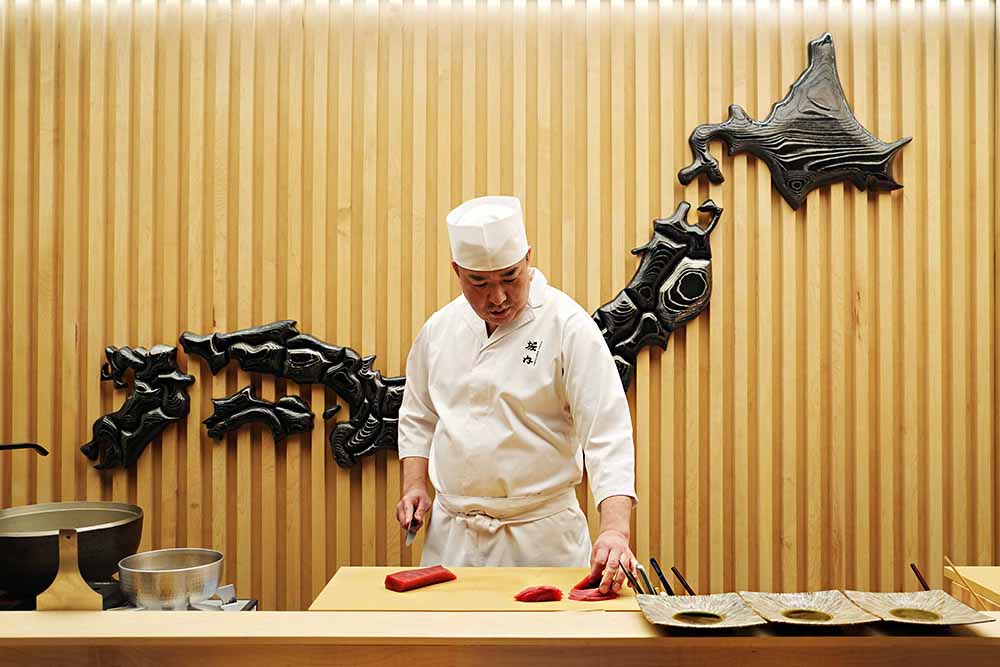
Chef Manabu “Hori” Horiuchi spent over a decade thinking about opening an omakase restaurant before finally building the Michelin-recommended Sushi Horiuchi directly behind Katami in Montrose.
Technically, it’s not “inside”—it’s adjacent, but that closeness is exactly what made it possible. “Kata Robata and Katami keep me extremely busy, and there are not enough hours in the day for me to open a third restaurant in another area,” he says. “We knew when we were first building Katami, we had this nice little space behind the restaurant we could do something cool with.”
Six seats, one seating a night, five nights a week—it’s a scale so small it lets Horiuchi source ingredients he’d never be able to justify buying in the quantities he’d need at Kata Robata or Katami. None of it would make financial or physical sense if he’d had to build it somewhere else. Being so close to his existing restaurants wasn’t a bonus; it was the entire idea. “I only need six portions for one night,” he says. “The world literally is my oyster.”
While Horiuchi’s proximity lets him source rare ingredients in tiny quantities, Sara Stayer and her husband, Martin, used theirs to solve the problem of an empty room. Toasted Coconut had a private event space that sat empty most nights. Rather than let it languish, the Stayers gutted it and turned it into the Road to Nowhere, a dark, boozy tiki lounge accessible through a pretend walk-in cooler door at the back of the restaurant. “We had a lot of guests who come to Toasted Coconut and are really looking for that tiki experience, and Toasted Coconut was never meant to be that,” Stayer says.
The lounge shares a building and a staff with the restaurant up front, but because the Road to Nowhere has a smaller occupancy, its bar team can slow down in a way the crowds in the main dining room never allow. “We don’t feel that pressure,” Stayer says. “We can take our time creating a menu, making drinks, and doing a little bit more intricate garnish.” Sharing the walls with Toasted Coconut means borrowing its infrastructure and its overflow of curious regulars without building any of it from scratch.
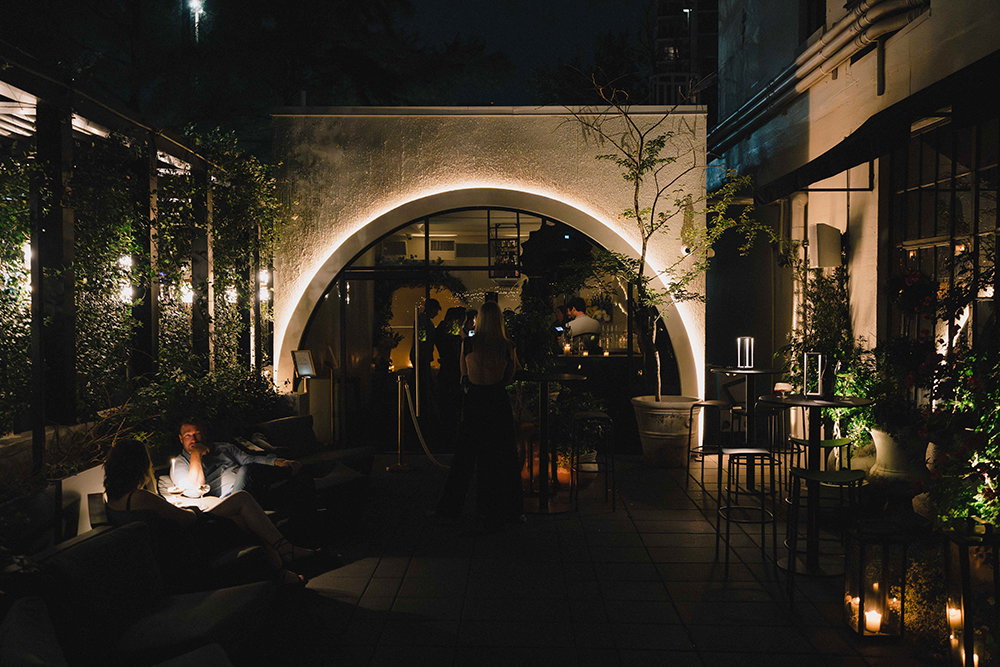
At cocktail bar Clarkwood, Army Sadeghi took the idea of adding a new space even further by integrating it into the existing architecture itself. He transformed an outdoor courtyard at his historic landmark property into the Arc Room, a fully enclosed, seasonally themed cocktail tasting room. It took years of approvals and construction, but the payoff was a concept that could share Clarkwood’s kitchen, bar program, and DNA while building an entirely separate identity.
Right now, the Arc Room is an ode to Italian aperitivo culture, built out with clarified milk punches and fat-washed spirits. “It wasn’t about adding another bar,” Sadeghi says. “It was about building on what Clarkwood already represents while creating an experience Houston didn’t have.” Because the Arc Room lives within the same blueprint, it allows the team more creative freedom. “Some ideas may eventually influence our other concepts,” he says, “while others are meant to remain exclusive.”
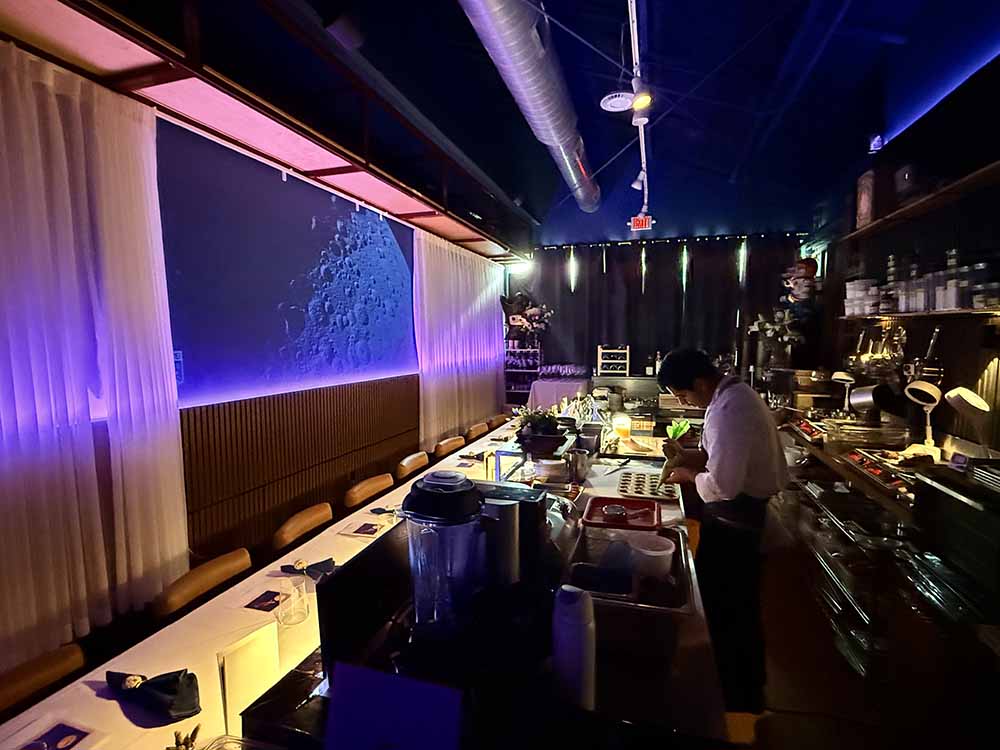
Chef Benchawan “G” Painter and Graham Painter used their second space not to expand their existing restaurant, but to shrink it—on purpose. Originally a grocery store next door, Jantra is now an eight-seat tasting counter beside the duo’s Thai restaurant, Street to Kitchen. When the grocery store space became available, the couple took it over, determined to create two entirely distinct experiences for their diners. Now, the two restaurants share a restroom, but nothing else. The mood, the cuisine, and the playlist are all intentionally their own. At Street to Kitchen, diners will hear Bangkok hip-hop, but at Jantra the vibe is more “lost in Paris at 2am, and you find a random wine bar,” says Graham.
The physical closeness is what lets Chef G run both restaurants at once without splitting herself in two. “She can still be executive chef of Street to Kitchen while also holding it down at Jantra,” Graham adds. That creativity did come with a financial risk for the duo. They went from serving 30 diners per night in the space that would become Jantra to replacing it with only eight seats and one seating. “G and I actually wanted to start with a tasting menu concept, but Street to Kitchen was born first, and we love it so much,” he says. “Jantra is where G has the space to express herself as an artist, and it is here to stay.”
Instead of cuisine or price point, geography is the common denominator across all four restaurants. Whether through ingredients, staff, brand, or identity, each chef and owner found a different use for the same few feet of real estate. None of them set out to build an empire; instead, they reframed what they already had, and without the overhead of a second commute and duplicate staff, they found the creativity to do the thing they actually wanted to do in the first place. Apparently, in Houston, the best expansion strategy is to barely expand at all.
|
|
|