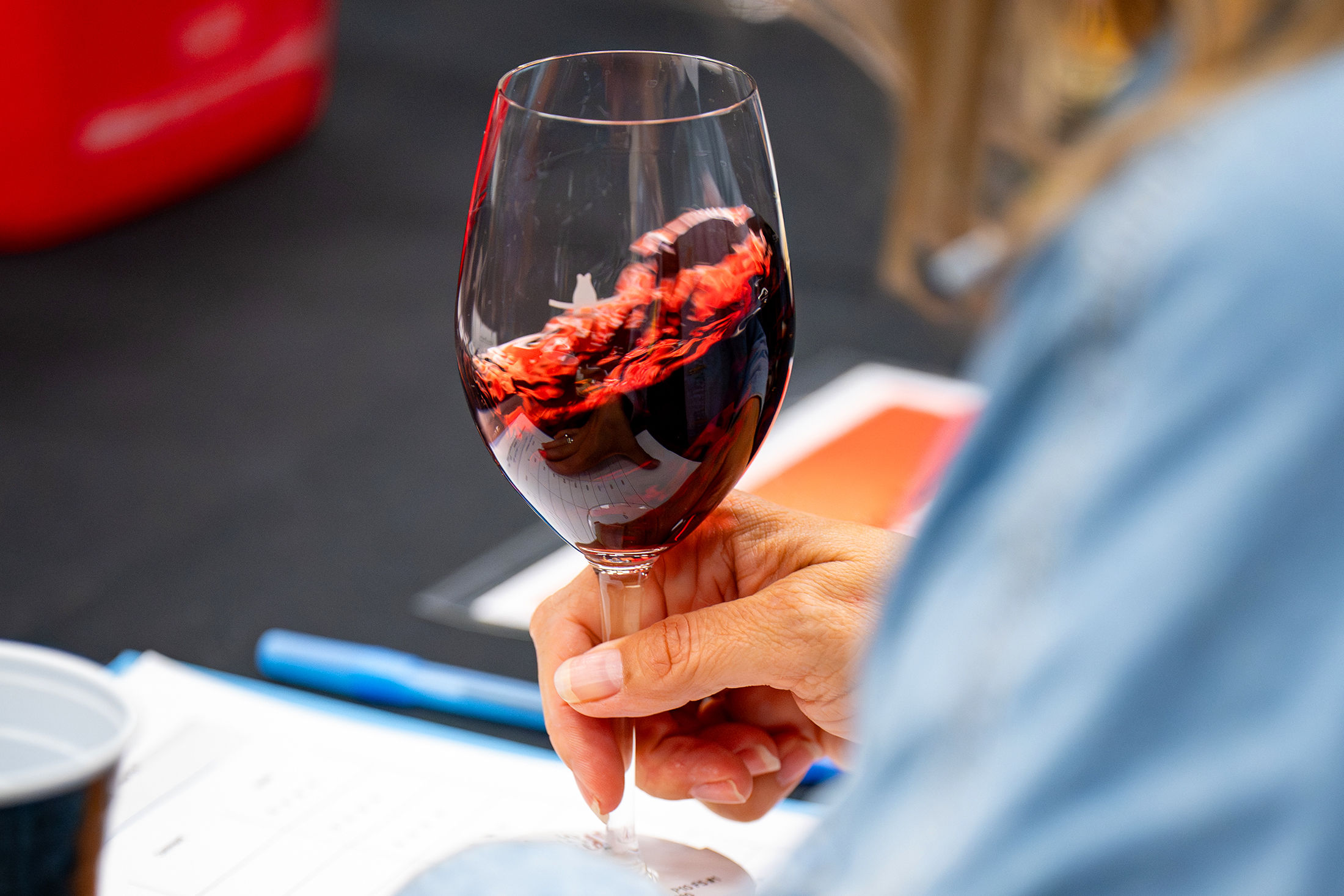
What It Takes to Be a Wine Judge at RodeoHouston

Judging wine at Houston Rodeo’s International Wine Competition is a serious gig. Judges for the event, which typically happens in November and helps select wines on offer months later at the Rodeo’s Champion Wine Garden, include experts with PhDs in wine, sommeliers, beverage directors, winemakers, wine writers, and what the Rodeo calls “educated consumers.”
No matter their background, they must first be vetted by Amy Gross, founder of wine analysis service VineSleuth and the annual competition’s vice chair of judging. She looks for people capable of assessing wines based not just on how they taste but on how well they represent their class. “We really need to have judges [who] understand different types of wine, different price points of wine [and] can communicate why they feel that a wine is representative of that, and can work with other judges,” she says. “I think it takes someone pretty special to be a judge for our competition.”
Gross asks candidates why they want to be a judge, to help make sure they’re in it for the right reasons. Then she’ll ask about bottles they enjoy, what drew them to the field in the first place, if they’ve attended tastings, and how they’ve furthered their education in wine. The responsibility requires significant dedication, with evaluators tasting up to 80 wines in one sitting.
Timothy Rondou, a seasoned wine industry professional and friend of Bear Dalton, the founder of the Rodeo’s wine committee, has been involved since its inception in 2003. He now serves as a panel chair, overseeing the process and leading discussions among the judges. His evaluation includes a sniff-and-swirl test. Flaws can often be detected by smell, but if the aroma is pleasant or the wine “smells delicious,” that’s something he makes note of as he goes through the lineup. He suggests judges swirl the sample around and wait for what he describes as a “pop.” If it hits, he’ll give it a gold medal.
Michael David Winery’s Troy Johnson, who began his tenure as a Rodeo wine judge in 2008 and has served as a panel head for about 10 years, often pictures himself at a party with a bring-your-own-bottle bar. If there were a glass poured that he wasn’t too thrilled about but didn’t mind finishing, that’s a bronze. If there’s a bottle that he wouldn’t mind a second glass of, that’s a silver, but if there’s a wine that he tastes and would selfishly hide the bottle from everyone else, that’s a gold.
Sometimes, Rondou will go through the bottles he’s evaluating a second time just to double-check, especially if there’s food around, to ensure that his palate wasn’t fatigued in the initial tasting process. “I do like to, right off the bat, just go, gold, silver, OK, and then I'll go back,” he says.
Bringing thoughts back to the group can help land on the right medal. As the panel head, Rondou says he’ll open up a discussion and ask his fellow judges what they scored the wine. If they all gave a certain one gold, but he gave it bronze, he’ll go back and taste it to ensure he is firm in his stance. Johnson reiterates that judging is about conversation and camaraderie within the panel, especially when scoring varies widely. “We just want to make sure that we're giving each side an opportunity to make their case,” he says, “so that we can see the range of perspectives and try to give the right medal to the wine.”