What It Takes to Be a Houston Food Influencer

Image: Marco Torres
Shawn Singh was pursuing a master’s in business administration at Pepperdine University's Los Angeles campus when he couldn’t help but notice content creators everywhere. So in May 2021, after returning home to Houston, he began posting daily under the handle @shawnthefoodsheep for a year to see where it would go.
Soon after, a simple post about the best chicken and waffles at the Cook Shack went viral, garnering 600,000 views. The restaurant group’s CEO also invited him to dinner, noting that the video helped sell more of the dish than any other marketing tactic they previously tried. It was thrilling. He was hooked.
Marissa Fiala, a former accountant, and Danielle Dubois, a pharmaceutical sales representative, both started posting about their dining experiences on social media about a decade ago. Now their social media handles (@houstonhotspots and @hangryhoustonian) are juggernauts that partner with major brands.
Combined, these creators have several million followers on social media; most earn a full-time living running food-focused accounts. Their rise to popularity underscores a larger truth: Food influencers are here to stay and, to some, are a new and trusted form of media, but the work behind it is strategic—nothing is accidental.
The Houstonians who have “made it” on social media have an instinct for platforms, a willingness to treat content like a business, and a deep understanding of the city’s sprawling, hyper-diverse food ecosystem. They’ve traveled across neighborhoods, cuisines, and formats, building trust with both followers and restaurateurs. And as algorithms and the dining scene have evolved, they’ve grown alongside them. The wildest part? No experience is needed; all that’s required is a passion for good food, a penchant for posting, and a duty to meet people where it’s most convenient: their smartphones.
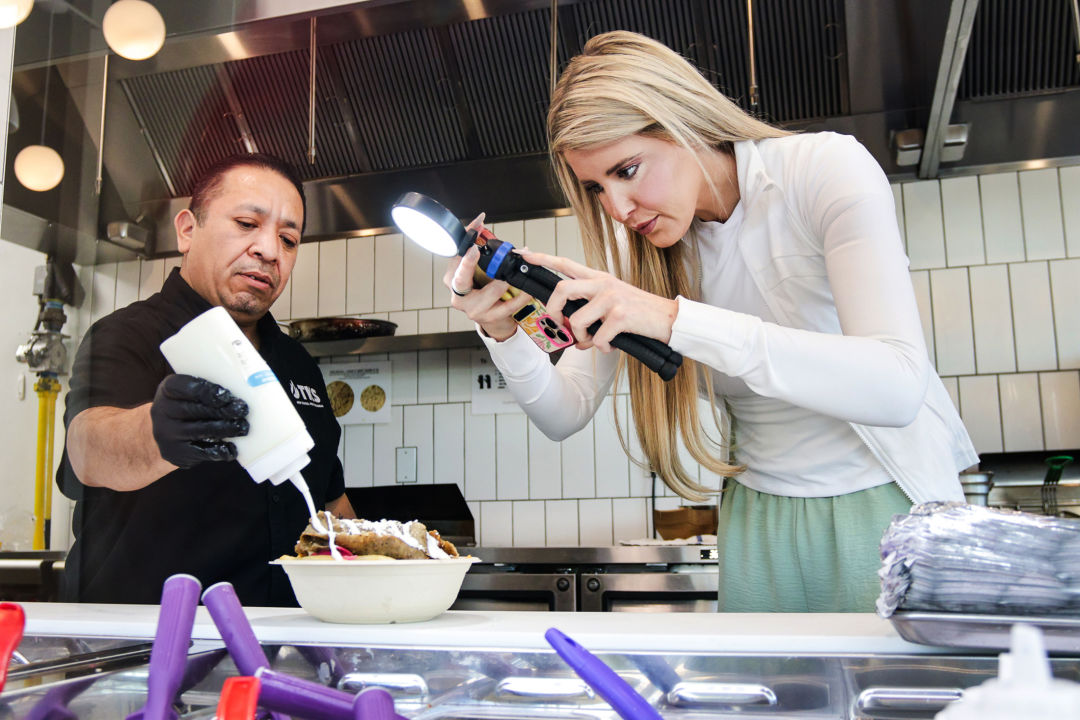
Image: Marco Torres
Influencer Adrian Verde says, “social media was starting to become a legitimate place” when he graduated with a pre-med degree from Baylor University. In 2016, he passed his MCAT, only to find out that medicine wasn’t for him—but he always loved food.
Even before social media, Verde remembers dining out for every meal, using other internet influencers to find new spots. Once he moved back home to Sugar Land, he decided to become a resource for others, too.
Almost immediately, he began posting food photos and recommendations under the handle @thehoustonfoodie and pitched himself to local restaurateurs to help manage their social media feeds. He didn’t have any experience in marketing or as a food critic, nor did he understand how restaurants worked. But knowing that social media had become a new “hangout” for younger generations, savvy business owners gave him a shot.
Today, in addition to running @thehoustonfoodie, Verde works full-time overseeing social media marketing for 15 restaurants and food trucks in the area. He spends mornings on client strategy, afternoons filming content, and nights editing reels and planning the next day’s posts.
While the days of a food influencer are flexible, they’re also long. Dubois notes that while it isn’t an average nine-to-five, there’s no clocking out, meaning work-life balance can get tricky. A recent Friday for Dubois included a luncheon at the Museum of Fine Arts, followed by a preview of new concessions at the Toyota Center. Weekends often mean travel, events, or late-night edits to get content up before anyone else.
Shooting content, however, is easy. The real work comes afterward when editing footage, writing captions, recording voice-overs, selecting music, and negotiating contracts. When content is sponsored, especially by larger brands, it typically involves deliverables, review rounds, and revisions. “It sounds silly to say, because, of course, I’m so grateful for these opportunities,” she says. “It’s fun stuff. But it’s work.”
Image: Marco Torres
With so much at hand, Fiala, who runs @houstonhotspots, has hired two full-time employees to help her plan coverage with restaurants and brands she’s partnered with. Mondays are reserved for administrative work, and the rest of the week, the team is out shooting two to three videos a day. “When I started, you could only post one photo to Instagram,” Fiala says. “Now we have carousels and TikTok and reels and videos and voice-overs and stories and Threads—all of the things.”
But the work pays off. Food influencing is now a lucrative job that, in many cases, runs like a full-fledged business. Depending on engagement, micro-influencers with smaller followings can earn between $100 and $600 per post, while those with larger audiences can earn between $1,000 and $5,000 per post and up to $20,000 for reels.
But when creators are paid to post reviews, it raises clear questions about transparency and credibility. What about trust?
Food influencers represent a shift not only in how Houstonians discover restaurants, but in how restaurants market themselves. In many cases, food influencer content also serves as advertisements, raising ethical questions about disclosure and credibility. Are followers of these accounts clear-eyed about what they’re watching? Can the creators’ opinions be trusted if they’re paid for?
Some influencers rely on media literacy. Eric Davis, who started his account @ericeatshtx in 2017, says that if a video features a table covered in dishes over several courses, viewers can safely assume it is sponsored or paid for by the owner. Hints are also embedded in the video's tone. In paid posts, Davis says he’ll often include exuberant abundance, raving about how great the dishes are, but when he’s paying for his own tab, critiques are sharper. (“The fruit cobbler was trash,” he once quipped at a new BBQ spot. We’ll bet he paid for that himself.)
Other followers won’t catch influencers saying a cross word about any place they visit—paid or not. Dubois, Fiala, and Verde say they have no desire to hurt small businesses in any way. Ditto for Singh. His viral chicken-and-waffle post made him realize early on the outsize effect he could have on a restaurant’s bottom line, which led him to swear off speaking ill of any establishment.
In many of his videos, Singh shows his receipts, indicating he’s paid. If the meal (or, in some cases, hotel stay) is comped, he will mention he was “invited” to the location. But even so, Singh says there’s a nuance he wrestles with. “If I go to a spot and pay for my food, I’m recognized, and they send me a free drink or dessert, am I obligated to disclose that?” he asks.
Image: Marco Torres
In cases where they were paid to promote a place they didn’t enjoy, Verde, Fiala, and Dubois have all ultimately returned the money to avoid posting dishonestly.
It’s worth noting that Instagram offers an option to mark a post as a paid partnership, but influencers say doing so reduces visibility and limits reach. “If I’m being paid thousands of dollars to make a post, I want it to reach as many people as possible. So, I don’t mark it,” admits Dubois. The fact is, “We are not trained food critics,” she adds. “I try to press that home to people.”
Sure, the dollar signs are nice, but an honest, credible reputation is more important, as trust is a key pillar for what they’re doing online. “If I’m recommending places everyone agrees are terrible, I wouldn’t have been doing this for very long,” Verde says.
He certainly wouldn’t want that. None of these Houston food influencers would. It may be hard work, but there isn’t any other job they’d rather have. That point is not lost on Dubois. “It’s crazy that I’ve been doing this for nine years now, and I’m just still, like—this is so wild. How did I fall into this? I am literally so grateful,” she says.