How Houston Became One of America’s Most Generous Cities

Image: Raymond Biesinger
Houston’s generosity surfaces during hurricane season—when neighbors share smoked briskets, run donation drives, and launch rescue boats into flooded streets—and year-round, when the city raises millions for causes ranging from hunger relief to scholarships. Frequent disasters, glaring inequality, and deep cultural traditions have made philanthropy not just a duty but an art that’s profoundly creative. Nonprofits and philanthropists turn generosity into experiences: restaurants design prix fixe menus to support the Houston Food Bank, the Orange Show hosts an entire parade with quirkily designed art cars to raise money for arts programming and education, pitmasters hand-deliver Sunday dinners to children undergoing cancer treatment, and billionaires transform empty land into green spaces and parks that anchor community life. The city’s giving spirit is as imaginative as it is immense, which may be the key to our city of philanthropy.
Houston has a lot of resources for nonprofits that foster a culture of philanthropy, says Hanjin Mao, a professor and the director of the master’s
nonprofit management program at University of Houston-Downtown. Over 15,600 nonprofits serve the tricounty area, providing essential services in health care, education, food security, and other critical areas. Major donors, including energy companies, the Texas Medical Center, and wealthy families such as the Kinders, mean that “philanthropy is deeply tied to Houston’s civic culture,” Mao explains.
But generosity isn’t limited to the wealthiest; everyday Houstonians are just as altruistic. Around 50 percent of households donated $25 or more in 2019, according to Understanding Houston, a local initiative that measures quality-of-life issues.
Mao has examined the business of generosity for the past three years as part of her UHD course Nonprofit Organizations in American Society. There, she encourages students to learn from Houston’s “culture of philanthropy” by connecting with community leaders and local charities. At the end of the semester, students collectively choose an organization to support and donate a total of $2,000, awarded, most recently, by the college and the Association for Research on Nonprofit Organizations and Voluntary Action (ARNOVA). Past recipients have included the Houston Area Women’s Center (HAWC), the Houston Food Bank, the Children’s Assessment Center, and groups addressing immigration issues.

Image: Raymond Biesinger
Outside the classroom, Mao’s research on philanthropy reveals that Houston is unique not only in the amount it gives, but also in the reasons behind it. “We have frequent disaster exposure,” she explains. “Hurricanes, floods—they create urgent needs and awareness of philanthropy.” Houston also has the highest poverty rate among the largest cities in the US. That glaring inequality, which becomes apparent when luxury developments are built in underserved neighborhoods, keeps need at the forefront of our minds, she says. Add in Houston’s massive and diverse immigrant population, with traditions of giving rooted in culture and religion, and philanthropy thrives. Empathy also broadens when Houstonians interact with underserved communities and witness these daily needs. “It will make charitable giving feel more personal,” she adds.
Major organizations are also attuned to this “visible demand” and address issues ranging from hunger relief to long-term quality-of-life improvements with an engaging flair that makes giving feel easy and inviting. Houston Food Bank’s largest fundraiser, Houston Restaurant Weeks, partners with local restaurants to offer prix fixe menus with a portion of the proceeds benefiting those experiencing food insecurity (last year, the program raised $2 million). In 2025, the Houston Livestock Show and Rodeo—the city’s equivalent of the Super Bowl—generated $10.5 million in scholarships for college-bound students. And, if you’ve ever set foot in Discovery Green, Memorial Park, Buffalo Bayou Park, a SPARK park, or a green space enhanced by Trees for Houston, thank the Kinders.

The Kinder Foundation, a local, family-owned nonprofit headed by billionaire philanthropists Rich and Nancy Kinder, has become synonymous with local giving. Since 1997, the couple and their organization have pledged and donated a total of $890 million to education, green spaces, and quality-of-life developments. Their commitment was formalized in 2011, when the pair signed the Giving Pledge, a campaign spearheaded by billionaires Warren Buffett and Bill and Melinda Gates, urging the world’s wealthiest to give away at least half of their net worth. The Kinders went further, pledging 95 percent of their wealth, most of it earmarked for Houston, their home since the 1980s. “I think it’s true that in Houston, you are what you’ve accomplished,” Rich says. “That gives rise to a feeling that if you’ve done well in Houston, you owe the city something.”
This belief has reshaped Houston’s landscape. In addition to local green spaces, the family has funded preservation efforts in historic Third Ward and Freedmen’s Town, while supporting esteemed institutions such as the Buffalo Soldiers National Museum; the Museum of Fine Arts, Houston; Rice University’s Kinder Institute for Urban Research; and Houston Landing, the nonprofit newsroom that shuttered in May. More recently, the Kinders pledged $150 million in May 2025 to launch the Kinder Children’s Cancer Center, a joint venture between UT MD Anderson and Texas Children’s that’s slated to be the nation’s largest pediatric cancer center.
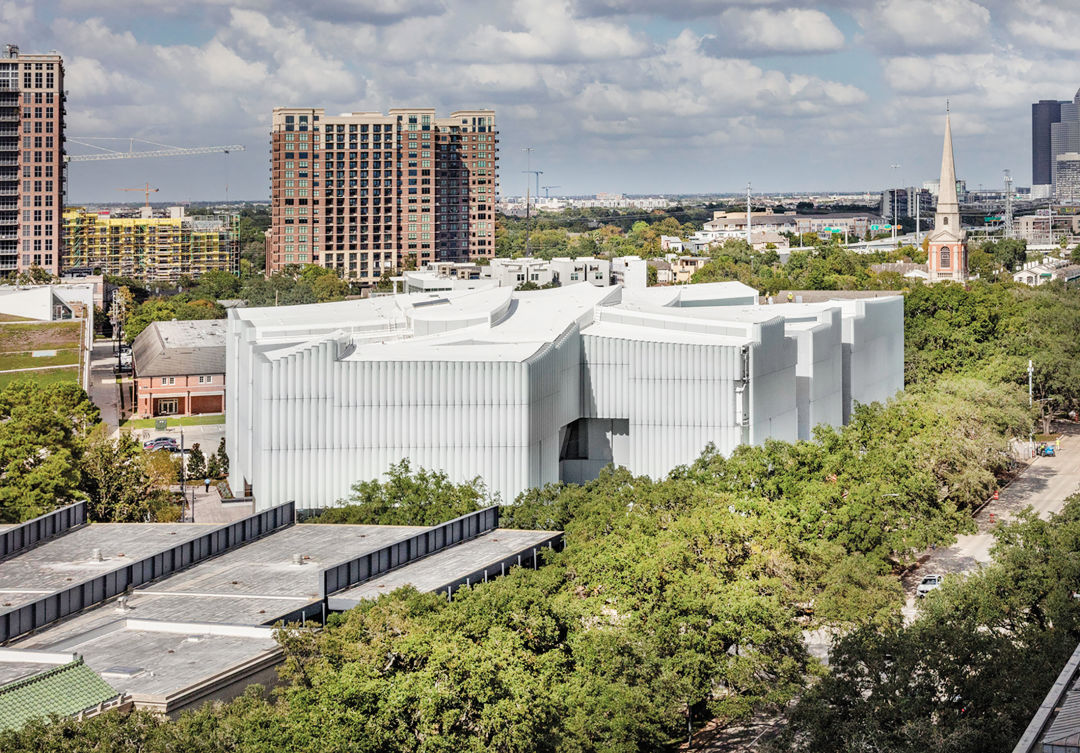
Transformational gifts like these are the Kinders’ hallmark—projects that, Rich says, likely wouldn’t happen otherwise. The Kinders cite big-ticket initiatives, such as parks, as vital aspects of a growing city (the Kinders themselves are regulars at Memorial Park). “When you pass people [at the park], you pass every nationality, every language.… Everybody is so friendly, you’re happy, and it’s a snapshot of what Houston is all about,” Nancy says. “We’re the melting pot of America, and we just love the way it feels.” But funding for green spaces is also frequently among the first to be cut from city budgets, they say, so when local governance and budgets fall short, that’s when the Kinders step in.
May Cahill, chief development officer at BakerRipley, believes this form of giving is crucial to the city’s long-term success. Considered Houston’s largest nonprofit, BakerRipley operates nearly 60 sites around the city, offering programs from community centers and citizenship and ESL classes to early education resources and weatherization assistance for local homes. The long-standing organization has weathered Houston’s economic booms and busts, which Cahill says have made Houstonians resilient. “Through it all, we’ve learned that what truly lasts are the investments we make in people and community,” Cahill said in a written statement.
That focus on immediate need is what drives Brittany Franklin, head of Sky High for Kids. Opportunities to give back are everywhere in the city, she says—through careers in medicine or education, or simple acts like making a meal. A former pageant queen from Louisiana, Franklin founded Sky High in 2007 to support families of children undergoing cancer treatment. In 2024, a visit to Houston’s Ronald McDonald House, a nonprofit that offers housing and other support for such families, underscored the need. Drained parents of young cancer patients were tired of hospital food but often couldn’t afford outside meals or expensive delivery services. In one instance, Franklin recalls a boy asking his mother for nachos after chemotherapy. Unable to afford it, the mother had to refuse. “It just broke my heart,” Franklin says.

From that moment came the Sunday Supper program, which connects Houston restaurants with families in treatment at Texas Children’s Cancer and Hematology Center. Each week, participating restaurants prepare around 200 meals, with partners including chef Drake Leonards’s Cajun spot, Eunice, and Truth BBQ, helmed by pitmaster Leonard Botello IV and his wife, Abbie Byrom-Botello.
Byrom-Botello recalls meeting a fan of Truth BBQ during her first visit to the hospital to serve prime rib dinners just before Christmas. The teenager, who was undergoing treatment at the hospital, made sure to stop into the restaurant before chemotherapy sessions. The encounter left the Botellos in tears and sparked a lasting bond with the family, who still reach out whenever they’re in Houston. Inspired, Byrom-Botello later joined Sky High’s board.
Drake Leonards has been similarly moved by his experiences with Sunday Supper, an opportunity that allows him to dish out his childhood favorites—chicken, corn bread, smoked sausage, and comforting red beans and rice—to children and their families in need. “It makes you realize and appreciate what you have and how precious life can be,” he says.
Such a program can prove financially challenging for restaurants, particularly as Houston’s dining scene experiences a wave of closings due to rising costs of goods and labor. Even so, Leonards and the Botellos say profit isn’t the point. For them, giving back is an integral part of their business plan. Truth BBQ also supports No Kid Hungry and provides meals to people experiencing homelessness. “There’s a reason philanthropy is difficult. If it wasn’t, everybody would do it,” Byrom-Botello says. “It takes, I think, a certain commitment to something that you really believe in.”
From parks to free meals and classes, Houston’s philanthropists do it all. “I think we’re all here to give back a little,” Leonards says. Natural disasters, economic swings, and immense diversity have created the conditions for a uniquely generous city. “Whether it’s through financial contributions, volunteer time, or expertise, Houstonians consistently show up for one another,” Cahill says. Anyone, even newcomers, can give, Mao adds. Money matters, but time, networks, and skills prove just as powerful. “By giving,” Mao says, “you create belonging in the city.”