At Houston’s Michelin-Starred Musaafer, Fine Dining Starts With Foraging
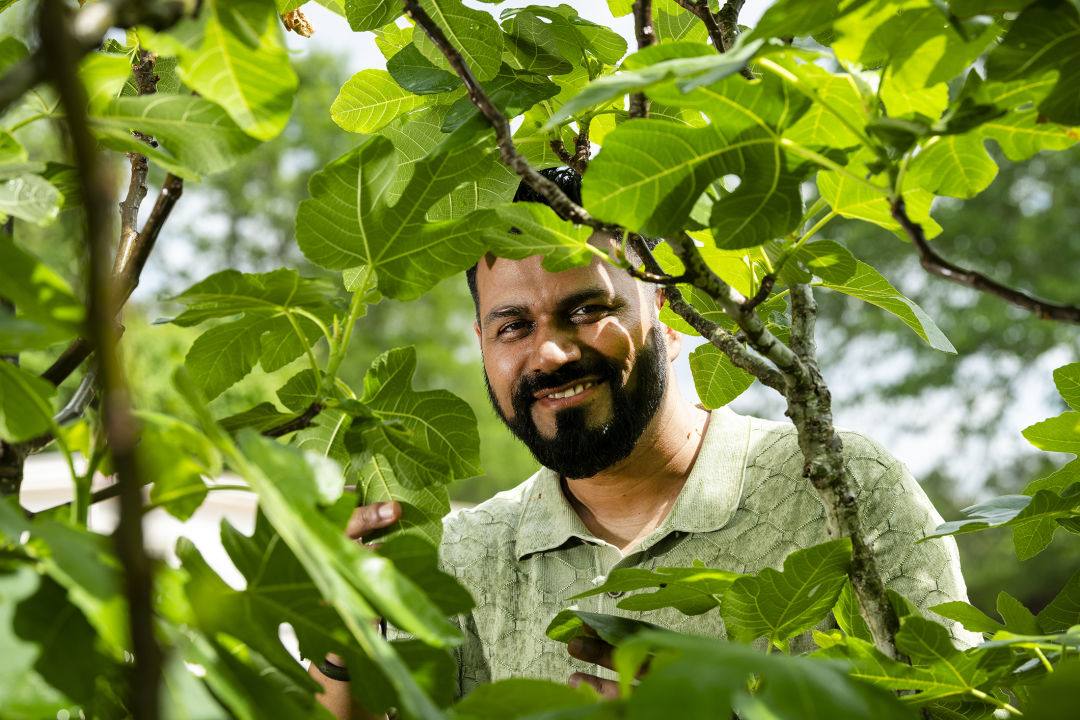
Image: Anthony Rathbun
Foraging in the forest isn’t everyone’s cup of tea, but for Mayank Istwal, it’s the key to creating a fascinating one. On a recent visit to Hempstead, I follow him deeper into the woods, watching as he recalls the names of almost every plant he sees and begins envisioning how he’ll use each one to his culinary advantage.
As the chef of Michelin-starred Musaafer, Istwal lets creativity take the reins, drawing inspiration from earth’s many wonders, particularly those growing across the acres that Blackwood Educational Land & Institute calls home.
Each spring, Istwal puts his knowledge and culinary skills to the test, debuting seasonal items using ingredients like pine needles pressed into oils and dried plants steeped into tea—all found on Blackwood’s working Hempstead farm.
Houston’s concrete jungle and the Hempstead farm’s flat land are far from where Istwal’s foraging journey began. As a child on a farm in the foothills of the Himalayas, Istwal grew up among turmeric, lychees, basmati rice, and varieties of mango and citrus. His grandfather, a doctor of Ayurvedic medicine, instilled in him knowledge he uses to this day—notably, the importance of foraging, respecting produce, and knowing how to use certain plants, whether for healing or food. “[My grandpa] used to pick a lot of stuff from the mountains,” he says. “The idea was to keep the traditions alive.”

Image: Anthony Rathbun
While foraging was his norm, it wasn’t until Istwal attended culinary school at the Institute of Hotel Management in northeastern India that he developed a framework for what he’d always known intuitively: the “4F Philosophy”—a focus on flora, fauna, farm, and food.
Launching Musaafer in Houston meant starting over. Istwal had to learn the region—what grew here, what thrived, and what the land could offer—beginning with the first F: flora; then fauna, which includes the animals that make up the surrounding area.
He still uses the mobile app Picture This to help. With just a snap of a phone camera, the app can identify plants, assess their health, and indicate whether they’re edible. “In the wild, you have to be very careful,” he says. “If you have maybe like a one percent doubt, do not eat it—that’s the first rule of foraging.”
Then, there’s “farm.” Istwal felt called to recreate an experience that reminded him of his upbringing in India, one that would allow him to debut his spring menu creatively while also bringing diners closer to the source of their food. That’s where Blackwood comes into the picture. “We thought, ‘We have to use mostly everything from the farm and from that season.’ I started studying the seasons in Texas and how they work, so we started building menus around [the flora],” Istwal says.

Image: Anthony Rathbun
The chef has found a plethora of plants and other ingredients that help his creative juices flow. Sitting on 33 acres, Blackwood’s farm offers foraging opportunities—winding gardens and trees heavy with berries—plus a working kitchen. It’s also where Istwal met Cade Conlon, the farm’s executive chef. Now, Musaafer hosts a stunning annual farm dinner, dubbed the Spring Soirée, bringing a Michelin-starred experience to the woods.
Conlon helps, too. While Istwal is experienced in foraging, having an expert like Conlon alongside is always beneficial—and something Istwal says he can’t overemphasize for beginners.
As for how his process translates all the foraging into finished dishes, Istwal says he lets the ingredients take the lead. “It’s a creative space that you have to get in,” he says. “I try to read between the lines and create something that has not been created ever... I will try everything.”
Istwal points to cedar as an example—a tree most Houstonians associate with one thing: allergies. In his mind, the bark, when broken down, makes for a flavorful balsamic vinegar (yes, safe—even for those prone to cedar fever). Blackwood is also brimming with sorrels, which, depending on the type, are ideal for chutney and oils. “The flowers are delicious,” he says—tart, tangy, with a sweet finish.
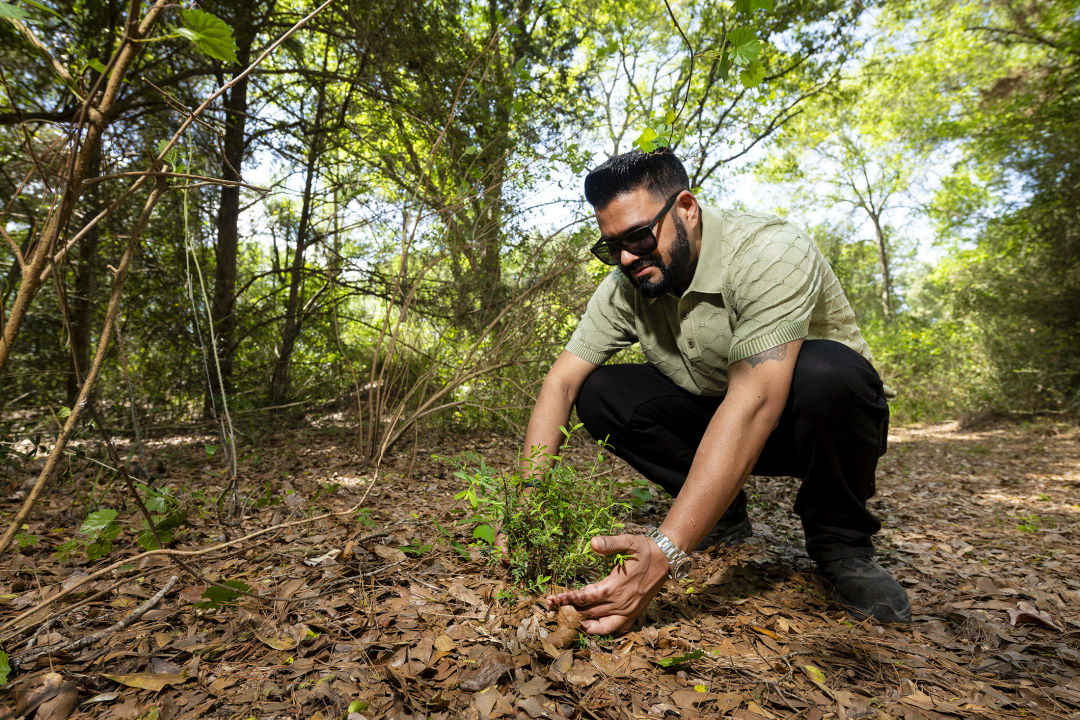
Image: Anthony Rathbun
The thought process extends to beverages. Take yaupon, for instance. The small shrub native to the area produces leaves whose last three inches are caffeinated and perfect for drying for tea. This year, the plant made its way to the Spring Soirée’s Gin and Tea cocktail, a play on the classic gin and tonic. Conlon says the farm is also home to Chinese privet, which is similar in appearance to yaupon but can have extreme diuretic effects when brewed—consider yourself warned.
When in Houston, if Istwal isn’t on the farm or at the restaurant, you can likely find him in Memorial Park. The Inner Loop doesn’t seem like prime foraging territory, but Istwal says he’s had some success—finding catbrier, which can taste like asparagus. Conlon notes that friends have collected chanterelle mushrooms, an edible fungus with an earthy, woody flavor and hints of apricot, and the larger region is known for native edible plants, such as Eastern persimmon, berries of all sorts, and the beloved pecan tree.
Still, Conlon warns that foraging in Houston remains risky due to pollution. “[You don’t know] whatever the plant itself is taking on. But… Memorial is probably one of the better places to find cleaner, better food, if you’re going to forage in the city,” he says.
For anyone who wants to embark on their own foraging journey, Istwal has one reminder: “If you’re unsure, do not eat it.”

Image: Anthony Rathbun