Houston Backyards Are Getting a Rethink—and Function Is Leading the Way
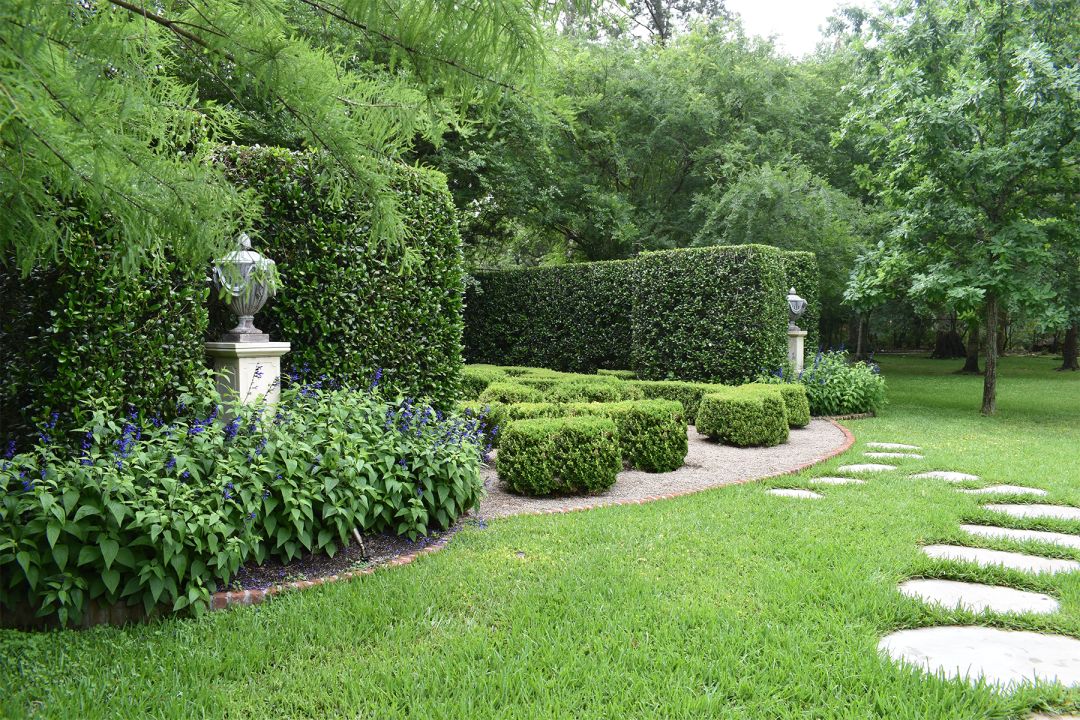
Image: Courtesy of McDugald Steele
Say what you want about front yards and curb appeal, but it’s our backyards that are getting the most attention as Houston-area residents create outdoor spaces designed less for show and more for how they’re actually used—play, gathering, and everyday enjoyment.
Landscape architect Lanson B. Jones is typically known for his classic European-style gardens, but these days he’s doing them in a more modern, casual way—in part because some of his favorite clients just so happen to be kids and dogs.
“Children’s play has been inspiring us to be more creative. Most of my clients have children or grandchildren,” Jones says. “Dogs love running around a perimeter, and so do kids. They love playing hide-and-seek, and they love playing in artful gardens—it brings out the creative side of them. It’s an important aspect of all of our lives.”
That philosophy shows up at his own home. Jones has installed a perimeter path with soft white gravel where dogs can run and play without hurting their paws, and barefoot grandchildren can entertain themselves for hours with toy backhoes, dump trucks, or bulldozers.
Jones’s preference for European-style gardens was initially inspired by a college trip abroad to study Renaissance-influenced gardens. His focus since has been on geometrically shaped lawns—rectangles, circles, and squares—and he’s not shy about suggesting synthetic turf when clients have too much shade or lack the time to care for real grass.
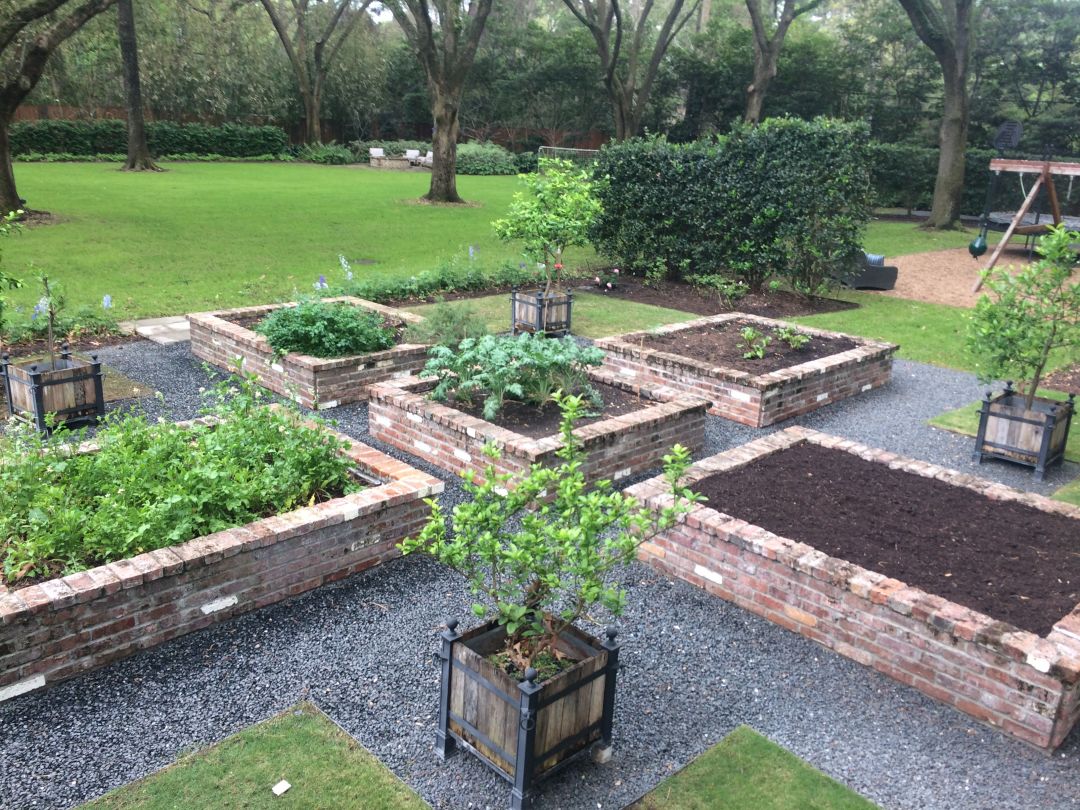
Image: Courtesy of McDugald Steele
“European-scale garden design is all about expanding views,” says Jones, who writes about landscape architecture on his blog, The Art of Inspiration. But “in the Houston area, it’s about controlling the views,” whether you’re aiming for more privacy (a tall hedge or pretty fence can work wonders) or to distinctly separate your home from Houston’s neighboring eclectic mix of architectural styles. “You could have an Italian-style house on one side and a modern home on the other.”
Still, Jones’s gardens are neither stuffy nor formal, with plant selection—including trees and flowers—helping determine how the gardens feel from their initial planting to maturity.
Jones and Adam Morocco, a landscape architect at McDugald Steele, agree that recent droughts and hard freezes have changed their go-to choices for all kinds of flowers, shrubs, and trees. “Our clients have gotten tired of replacing things,” says Morocco, referencing the 2021 freeze that wiped out many citrus trees in the Houston area. “If they ask for a lemon tree, we’re going to educate them about the risk involved.”
Viburnum was once Morocco’s go-to shrub for a hedge, but now he turns to needlepoint holly or dwarf Burford holly. Azaleas, roses, and holly trees are other hardy choices that benefit from a little cold weather, Morocco says. However, if a citrus tree is a must, he suggests planting it in a large container so it can be moved inside a garage when needed. With a sufficiently large pot, a tree could produce fruit for 10 to 15 years. Homeowners open to alternatives might consider pear, apple, peach, or fig trees, all of which thrive in the region.

Image: Courtesy of McDugald Steele
Since Greater Houston ended 2025 with only about 39 inches of rain—more than a foot less than the annual average of roughly 52 inches—Morocco says drought-tolerant plants such as native grasses, yucca, and Texas sage are increasingly considered practical choices.
Boxwood, widely used in trimmed hedges throughout the area, is now suffering from incurable fungal root rot. A smarter alternative, Morocco says, is dwarf yaupon holly, a disease-resistant and drought-tolerant shrub with smaller, darker leaves.
Morocco also encourages homeowners to think of the long-term use of plants. For example, a live oak planted in a small yard will eventually create so much shade that grass won’t survive, while too-tall shrubs can block views.
Function matters, too. Homeowners who host large gatherings might need expanded hardscape to accommodate guests wearing high heels and enough shade to entice people to spend time outdoors.
Combine compelling shapes, resilient plants, hardscaping, lighting, and art, and the result is a garden built to last and entertain, should you choose. “A creative and inspiring art garden feels fresh and modern and has classical shapes in it,” Jones says. “That is a solid trend that is not trendy. It’s a lifetime practice.”
Spring Gardening Tips
- Don’t start spring gardening until the risk of a hard freeze has passed.
- When you place a tree or shrub, consider how big it will be in 10 or 15 years. Make sure it’s not too close to your home and won’t block views out of windows.
- Don’t overmulch. Only 2 to 3 inches of mulch is needed to suppress weeds and protect soil moisture and temperature.
- Avoid placing plants too close together; adequate spacing allows for proper air circulation.
- Don’t forget to water newly placed plants. Even low-maintenance plants need consistent care until established.
Source: Brandi Keller, a master gardener and Texas A&M AgriLife Extension agent