In Houston, Lion Dancing Goes Far Beyond Lunar New Year

Image: Marco Torres
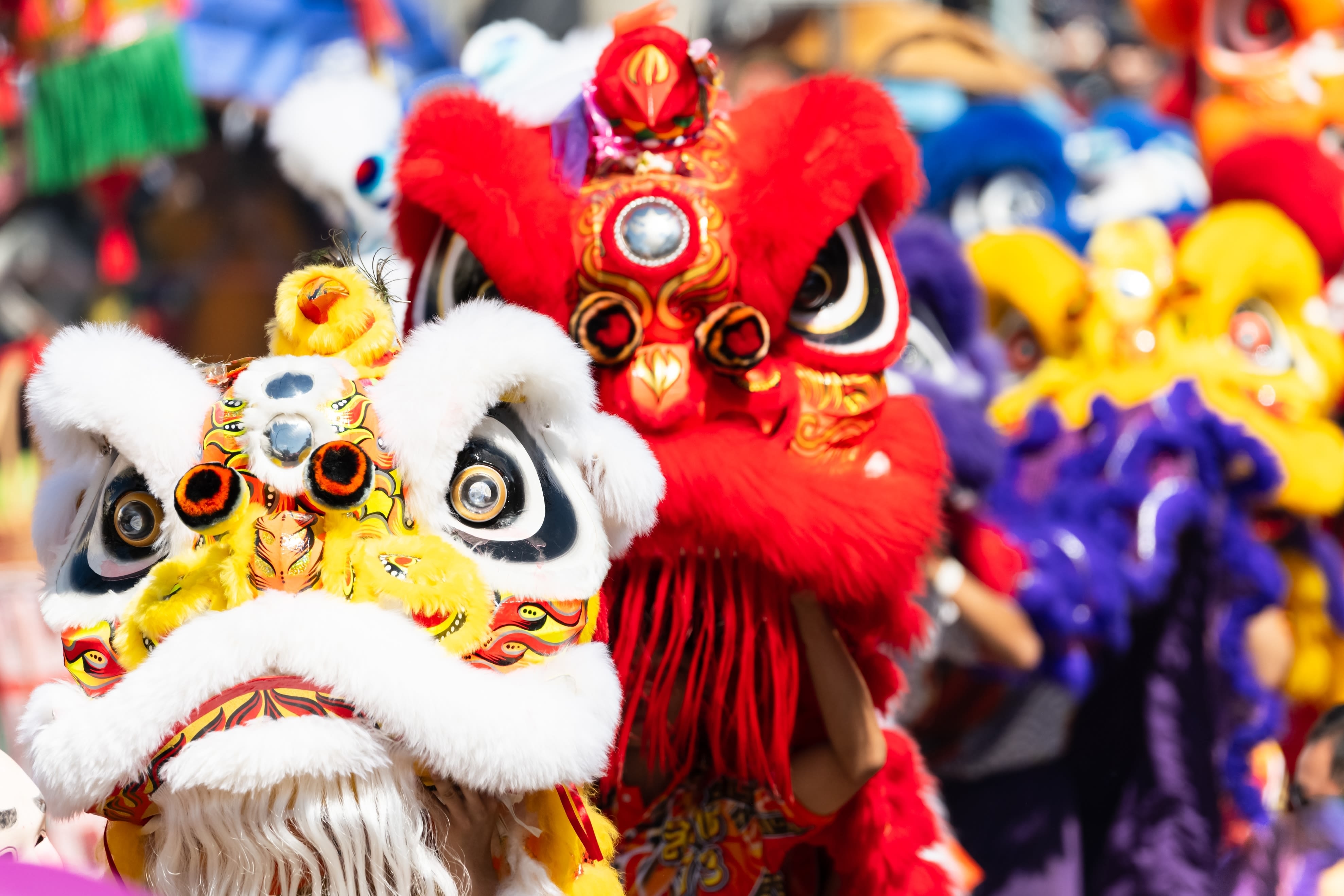
Every year, when Lunar New Year rolls around, Houston awakens with the crash-bang of cymbals, drums, and fireworks. OGs will remember the lion dancing performances at Hong Kong City Mall, Tan Tan, and near the George R. Brown Convention Center, but these days, lion dancers descend on all parts of the city—from Asiatown strip malls to Houston Rockets games—driving out bad luck and ushering in good fortune and prosperity. Though these dance troupes are widespread, most Houstonians only experience performances during the busy Lunar New Year season, which runs from February to March. But lion dancing is far more than a seasonal spectacle. For many dancers, it’s a year-round discipline, functioning as a hobby, a workout, and a competitive sport that marks the official start to the New Year.
Dr. Allen Lee, founder of Lee’s Golden Dragon, Houston’s oldest lion dancing troupe, traces the tradition back centuries to a Chinese emperor. Cultural legend holds that Chinese explorers who traveled to Africa once observed lions in the wilderness and were struck by their powerful and protective spirit. Artisans began crafting “lions” from bamboo and papier-mâché, believing that dancing with the lion heads could symbolize driving out negative energy. A tradition was born. “In the olden days, lion dancing was used to ward off evil spirits,” Lee explains. “With lions and drumming, all the evil is gone, and what's left is good.”
Over time, tradition gave rise to culture, and centuries later, Chinese immigrants introduced lion dancing to the United States. Historically, Houston had only a few loosely organized lion troupes, and most were associated with local temples, family groups, or martial art studios—organizations that were largely exclusive to members. Lee founded Lee’s Golden Dragon in 1974, which became “the first official, sanctioned lion dancing organization in Houston,” according to Lee. The founding marked a turning point in the city’s lion dance scene, introducing a full-time troupe that practiced and performed regularly.
As a child, Houston Lion Kings founder Tony Nguyen remembers attending lion dances in Downtown and Asiatown every Lunar New Year. Mesmerized, he tried to join but wasn’t allowed. Some teams, he explained, declined to accept him because he wasn’t a temple member or because troupes weren’t accepting non-family members. The few troupes that did exist were largely hired to perform during the New Year celebrations, making them less visible during the year.

Image: Marco Torres
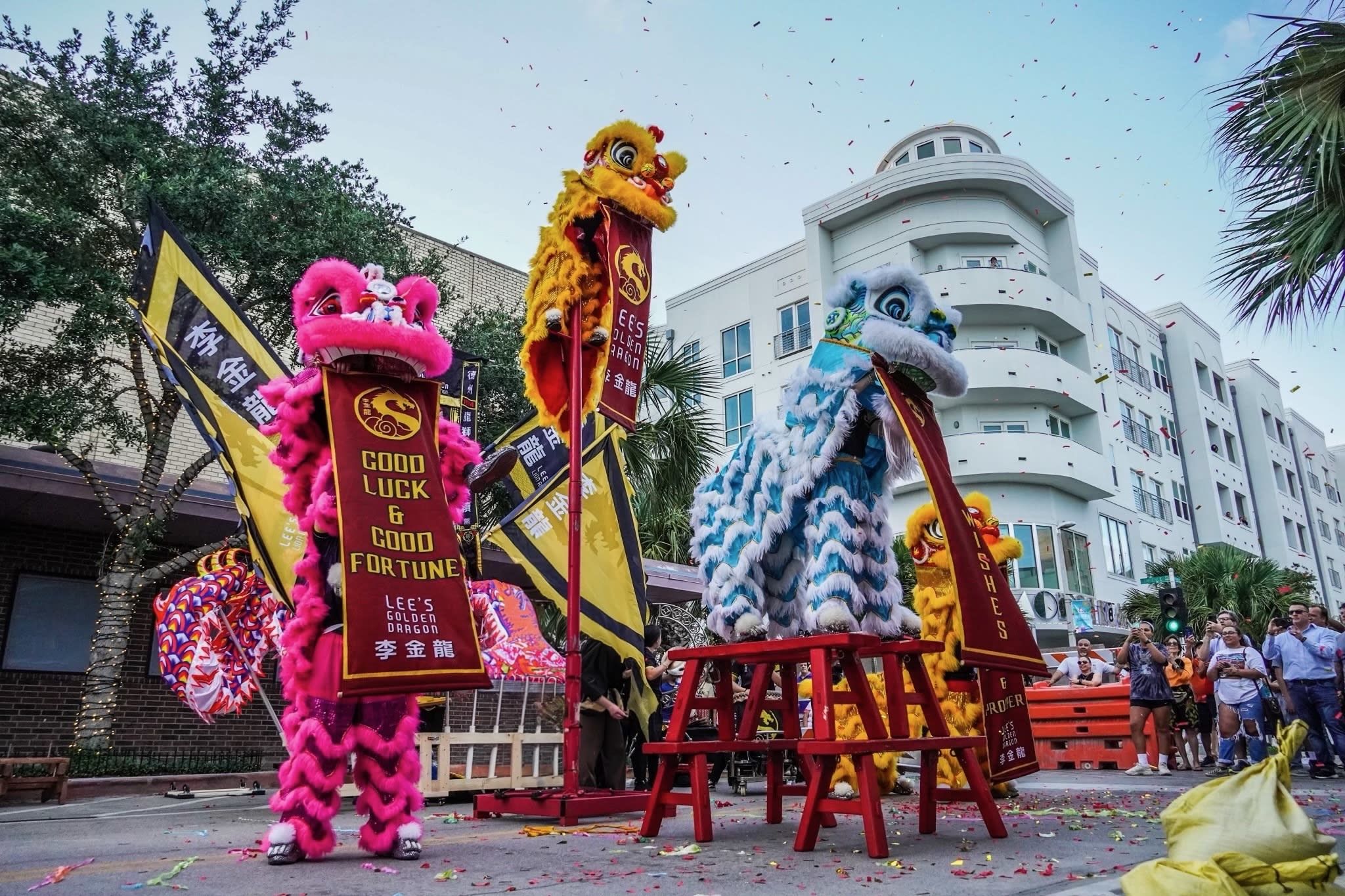
Today, that exclusivity has largely faded. Lee has noticed an uptick in interest in lion dancing, beyond the city’s Chinese community, and Houston's lion-dancing scene has expanded beyond the traditional martial arts-informed style. Many groups now welcome dancers of all races, cultures, and religions. Performances stretch well beyond the New Year, with dancers unleashing their specialized art at weddings, grand openings, and even food festivals. Lee’s Golden Dragon even performs as the official lion dance team for the Rockets.
The growth is evident in groups like Unity Lion Dance. Founders Kenny Tran, Josh Tang, and Tony Leung grew up attending performances at Tan Tan before eventually meeting at Teo Chew Temple in Houston. They later branched off to form their own troupe, and in just six years, Unity Lion has built a packed schedule. This year alone, Unity Lion has scheduled a record of around 140 shows across the two weeks of the mid-February Lunar New Year season, including performances at local venues like the Otaku Food Festival and the Houston Zoo.
During the offseason, though, the work doesn’t stop. “We do baby showers, dinners, quinceañeras, a lot of weddings,” Tran says. “I feel like we’re a family and everyone fits in,” Leung adds. “I think that’s a little bit different compared to teams back then, where it's inclusive of just one group.”

Image: Houston Lion Kings
Tucked behind a Buddhist temple in Alief, Houston Lion Kings trains in an industrial warehouse lined with colorful lion heads. Almost every night, Nguyen makes the hour-long drive to unlock the doors, lay out crash pads, and prepare for dance practice. Almost 20 students—teenage and young adults—filter in, stretching their limbs and changing into fluffy pants trimmed with sequins and sheep’s fur, each set matched to a lion’s head resting somewhere in the warehouse. Each team, composed of two dancers, acts as the lion’s head and tail, moving to the rhythmic beats of percussionists practicing in the moonlight.
Since 2005, the Lion Kings, a group of approximately 100 members (40 of whom work full-time), have participated in around 80 events during the busy season and at least one performance per week during the offseason. But what truly distinguishes elite teams is their work on jongs, or high poles, which elevate the lion dancers to small, staggered platforms nearly eight meters in the air, requiring precision and balance. At least one lion, composed of two people, dances on the jongs, flipping and swinging the other while balancing on the platforms. Nguyen notes that such an apparatus is uncommon in Houston. Only around three troupes, including Houston Lion Kings and Lee’s Golden Dragon, train in the high-flying act.

Image: Houston Lion Kings
For lion dancer Henryson Nguyen, the danger was what drew him to the sport. “[I] just like the thrill of it, it’s fun,” he laughs. A firefighter-in-training by day, the 21-year-old serves dual roles in the troupe, performing as both a head and a tail. As the lion’s head, Henryson must carry the weight of the lion while puppeteering the ears, mouth, and eyes, and also jumping from jong to jong. When he’s the tail, Henryson must carry his partner (combined with the weight of the head) and lift them to new heights. “Our most active part is just doing a lot of swings, a lot of spins, and for me personally, just flying on the jongs,” he says.
Beyond community performances, lion dance has evolved into a competitive sport. Groups like Houston Lion Kings and Lee’s Golden Dragon regularly compete nationally and internationally.
An amazing feat of balance, artistry, and strength, the Houston Lion Kings have competed across the US, even attending international competitions in Malaysia, which Nguyen, a certified Team USA judge, calls “the Olympics of lion dancing.” Competition-level performances are graded based on several factors, including artistry, execution, choreography, and how much emotion the lion conveys.
While audiences marvel at the athleticism, Nguyen emphasizes that each performance follows a storyline, depicting lions climbing mountains, represented by the jongs.

Image: Houston Lion Kings
Eighteen-year-old Keaton Dang, who began lion dancing at age 4, joined the Lion Kings five years ago. He specializes in performing as a lion head and drummer, which means working on the jongs for hours each week, a practice that has led to broken bones after falling from the platforms. “There’s a lot of risk, a lot of danger coming with this sport, but at the same time, that’s where your passion comes out,” Dang explains. (“There’s a 24-hour urgent care down the street that knows us very well,” Nguyen adds.)
Beyond physical danger, the financial commitment is steep. Custom lion heads are imported from abroad, costing thousands of dollars apiece, and traveling to competitions requires funds. Though tips and donations can help, coaches often fund their teams out of pocket, relying on performance fees that range from $500 to $1,000 for mid-range performers. In Houston, many troupes operate as nonprofits, incurring debt rather than turning a profit, but groups like Unity Lion find more creative ways to fund their hobbies. “Most of our lions are sponsored,” Tran explains, noting that local businesses pay for branded lion heads at performances.
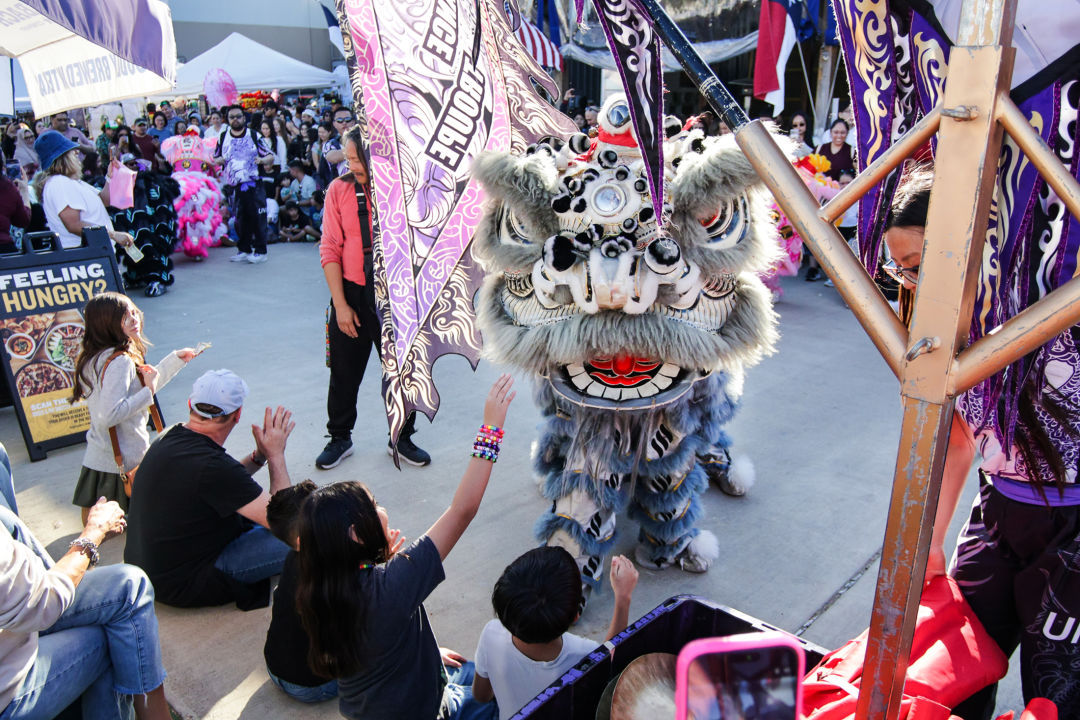
Image: Marco Torres
Coaches like Nguyen still hold down full-time day jobs, filling their free time with lion dancing and supporting young performers when they can. While the rest of Houston sees a one-off performance during the New Year, Nguyen sees the hours of practice and hard work each dancer puts into their craft. And where performers in Asian countries, such as Malaysia, Singapore, and China, are revered enough that it’s possible to dedicate their entire lives to the craft, here in the US, lion dancers are still waiting to get their due. “These guys spend hours trying to perfect the art, learning to be better,” he says, gesturing to his students. “It’s an amazing cultural art that takes years to perfect.” When the cymbals crash and the lion blinks to life each January, Houston only sees a glimpse of that devotion.