Houston’s First 3D Printed Home Community Rises near Hobby
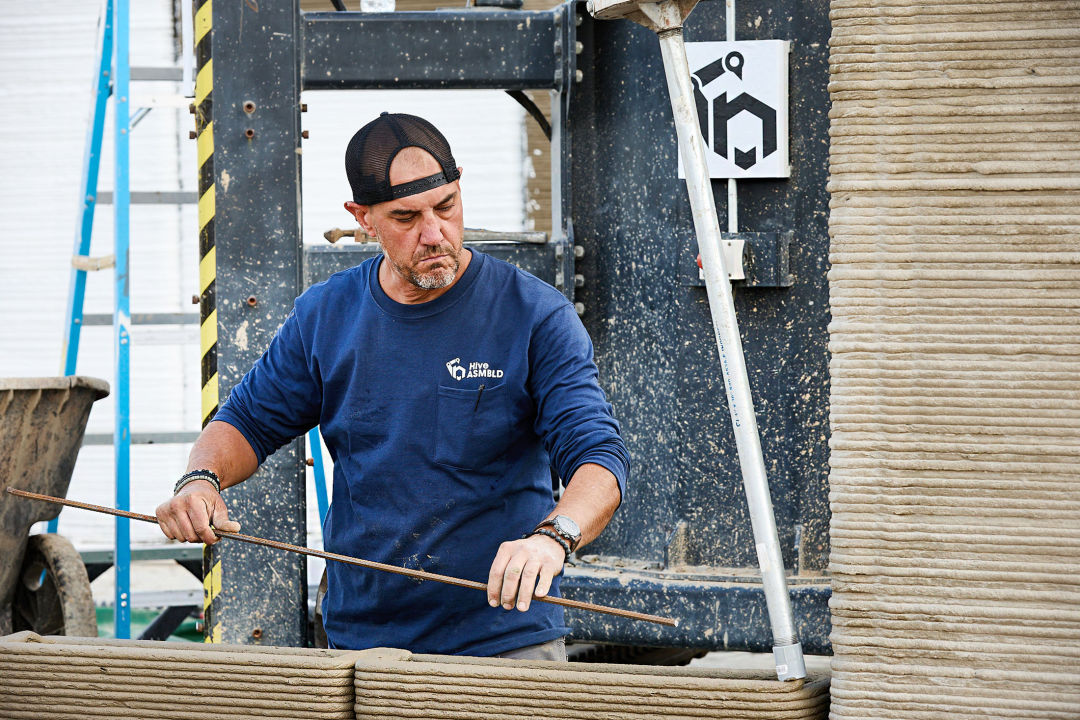
Image: Courtesy of Nicki Evans
Three-dimensional printing technology has revolutionized everything from tabletop gaming miniatures to medical prosthetics, and in Houston, the newest frontier is real estate. The new Zuri Gardens development in southeast Houston, a multi-million-dollar project, will be one of the first and largest communities in the world to feature homes largely 3D printed.
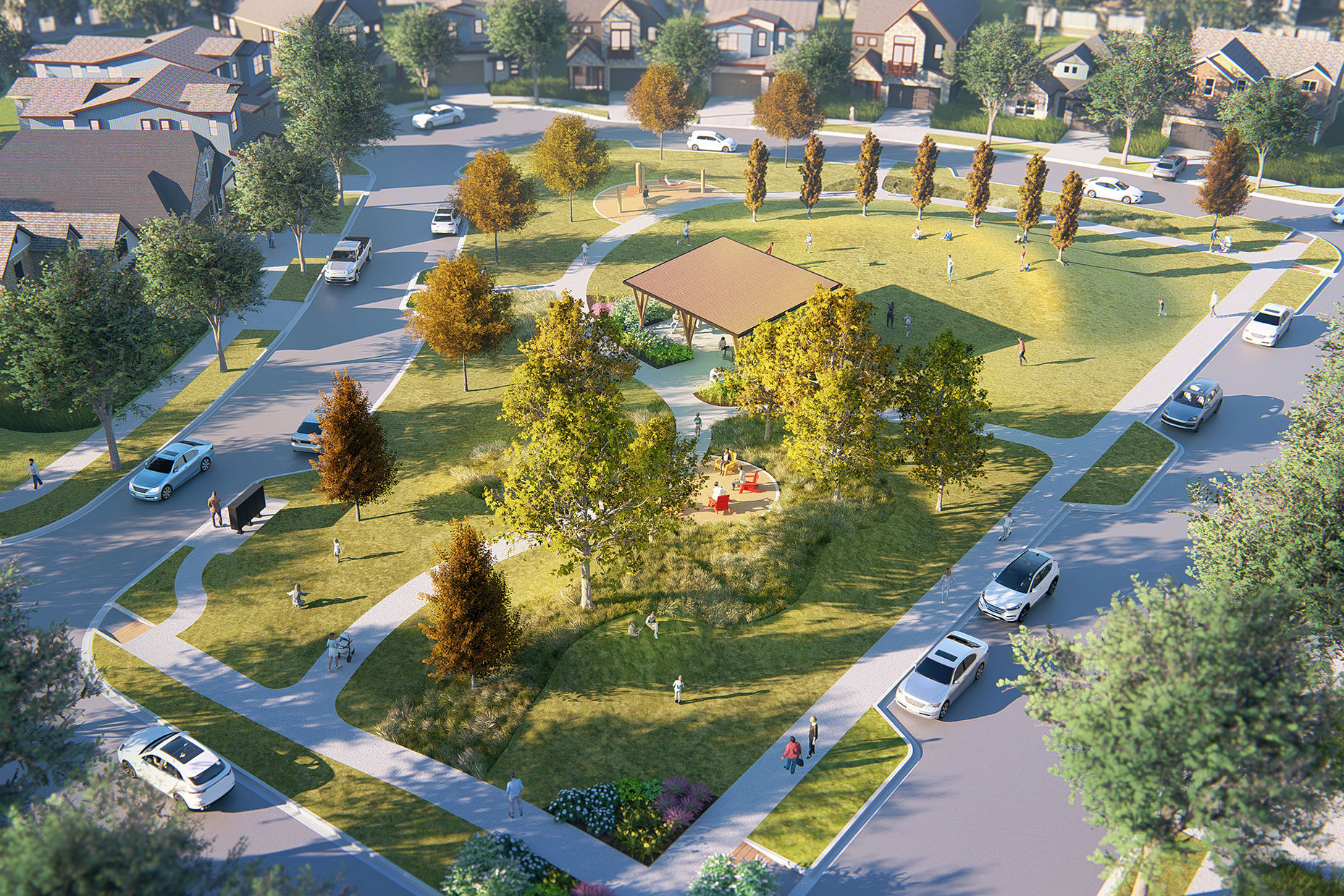
The neighborhood is a result of a partnership between Jewett, Texas–based manufacturer Green Cement and Houston’s HiveASMBLD, a construction-tech company that has already built several custom 3D homes for individuals in Texas. Projected to be completed in late 2026, Zuri will be HiveASMBLD’s first full neighborhood, comprising 80 affordable houses on 13 acres in the Hobby Airport area, a region rapidly gentrifying with new construction.
HiveASMBLD CEOs Timothy Lankau and Ethan Wong say the reduction in time, materials, and labor required to 3D print homes can significantly lower home prices, a selling point that has drawn interest from cost-conscious homebuyers. “If you whisper it into the wind that you can build 5 percent less expensive than someone else, [business] just comes to you because we have a huge demand for affordable housing,” Lankau says.
Vanessa Cole, cofounder of the builder and developer Cole Klein, says the houses in Zuri Gardens will sell in the mid- to high $200,000 range. That’s around the median home price in Houston in 2025, according to Zillow, and higher than the average home price in the zip code. According to a 2023 report from the National Association of Home Builders, construction accounts for 60 percent of a home’s sale price. 3D printing can help reduce that percentage by using fewer materials and shortening turnaround times.
That said, it’s difficult to draw a clear comparison with other homes in the area. Floor plans for each 1,360-square-foot home in Zuri Gardens feature two bedrooms, two and a half bathrooms, a covered patio, and a dedicated office. None of the homes have a garage, so only street parking is available, with more than 140 spaces on-site, according to a Houston Chronicle report. Although Zuri is a planned community with shared spaces, including 3D printed benches, a pavilion, and a nearby five-acre park, it will not offer shared amenities such as a pool. Even so, two-bedroom, two-bath homes are increasingly rare in the area, and the few comparable listings on HAR.com range from $149,000 to $535,000, depending on condition, square footage, and age.

Image: Courtesy of Nicki Evans
Using 3D printing technology to build homes has advantages beyond cost-cutting, including helping to fill a shrinking construction industry labor pool, Wong says. “Being able to implement some automation that improves the productivity with fewer people is really key,” he says. “We want to address more and more pieces of the home using automation and using a smaller number of people to build a home, while maintaining that design, that quality, energy efficiency, and comfort.”
On an unseasonably warm November day, the developers behind Zuri Gardens hosted festive tours of the site to display the printers in action. A marching band, cheerleaders, and color guard from nearby Sterling High School performed, eliciting excitement from attendees, including local media, executives, and elected officials, who previously approved the use of $1.8 million in city bond proceeds through the Tax Increment Reinvestment Zone program. “What you see here in Zuri Gardens represents more than innovation in construction,” Houston councilmember Carolyn Evans-Shabazz said at the event. “It represents our continued commitment to housing affordability and accessibility for every Houstonian.”
Evans-Shabazz, who represents District D, first saw the 3D printed house technology at Houston Community College in 2018. The process is indeed spellbinding: Large, crane-like printers stack layers of Green Cement (a durable, sustainable form of cement) like icing on a cake. Once dried, the material forms a solid, structural, gray wall with a ribbed texture that resembles pool tubing in both texture and color. While the walls appear rough, 3D printed furniture made from the same material, such as a bench displayed on-site, can be surprisingly smooth and comfortable.
Green Cement, made by the company of the same name, is crafted from a proprietary mixture of 98 percent recovered coal ash, making it almost entirely recycled, says David McNitt, the company’s director of technology. Besides its sustainability profile, Green Cement is strong, with a crush point of 8,000 psi—roughly 10 times that of a standard cinder block—making it particularly suited for homes in a city prone to extreme weather events. “I don’t think you'll even notice a hurricane,” McNitt said. Green Cement is also more seamless and sets more quickly than Portland cement, the most widely used type of cement. “This is all monolithic. It's one continuous core. Literally, it's one piece,” McNitt says.
But not every part of a home in Zuri Gardens is 3D printed. The technology is specifically used for the first-story foundation walls, which provide a solid base for the traditionally built wood-frame structure and materials on the second story. Nor is the process free from hiccups: Clogged nozzles and blown hoses delayed printing during the recent tour, requiring workers to intervene to remedy the issues. That could mean the estimated four days HiveASMBLD claims it takes to print an entire home may be optimistic.

Image: Courtesy of Nicki Evans
Nonetheless, the benefits of 3D printed homes are evident. The company claims the design’s concrete walls are significantly more resistant to flood damage, mold growth, pests, and fire than traditional materials, and can keep residents cooler and possibly safer during extreme weather. “When [a flood] happens, they’re not ripping out sheetrock. They’re not having to contact FEMA and their insurance adjusters. They’re not being displaced and put in a hotel. They can just wipe their walls,” Cole says. “They may have to replace some furniture, but they go back to their standard of living.”
Cutting-edge tech or not, in a city where the definition of “affordable” keeps changing, $275,000 is still a steep price for a modern home of this size. It’s a reminder that even the most innovative construction methods cannot entirely outrun Houston’s housing market realities.