The Holocaust Is Not Just History—Houston Survivors Are Still Telling Their Stories

Image: Meredith Nudo
Every Thursday, when the Holocaust Museum waives its admission fees between 2 and 5pm, Bill Orlin, or another volunteer, sits at a table for a couple of hours. Visitors can approach them, ask questions, and hear first-person testimonies—a rare and increasingly urgent chance to learn about the Holocaust, not as an abstraction, but as lived memory. The conversations put a human face on the genocide of an estimated 6 million Jewish people and millions of others deemed subhuman by Germany’s Nazi regime. Among those targeted were Roma people, members of the LGBTQ+ community, disabled people, and political dissidents. Nazi persecution and mass murder unfolded between 1933 and 1945, concluding with the end of World War II. It’s a history that still needs telling, especially as denial and distortion persist.
“I welcome every opportunity to tell my story because there are still people who believe that this did not happen,” Orlin says. “Well, I’m here to tell you it did.”
Orlin, now 93, is one of the estimated 100 Holocaust survivors residing in the Houston area. For more than 20 years, he has been a member of the Holocaust Museum Houston, where he volunteers to share his story with locals and tourists alike. “There’s a diminishing amount of Holocaust survivors, so I’m very, very glad that they’re using me,” he says.
These weekly conversations are part of the museum’s broader survivor speaker program, which pairs testimony with education for visitors of all ages. As part of the program, Orlin has spoken to churches, synagogues, schools, and colleges, but such opportunities become increasingly challenging as survivors age. According to Clare Legg, the museum’s associate director of communications, only about 20 participants regularly attend, while five or six can handle the demands of traveling to speak around the city.
Orlin’s story begins in Brok, Poland, at a moment when his childhood was interrupted in one of the most tragic ways possible. Born Velvel Orlinski, he was only 7 when the Nazis invaded his hometown in September 1939. He was supposed to begin school that day, but instead, he listened to a rundown of the new antisemitic laws the fascists were beginning to implement; they claimed to have no choice, blaming it on a Jewish man killing a German soldier. Orlin believes this story was fabricated. A local Catholic church opened its doors to Orlin, his pregnant mother, Sonia, his 2-year-old brother, Boris (born Baruch), and his maternal grandparents. They took shelter there as the rest of the village burned (his father, Sender, escaped from Brok just before the occupation).
From there, his family and approximately 15 other villagers were forced to march nearly 10 kilometers to the Polish town of Ostrów Mazowiecki. Throughout the torturous ordeal, Orlin witnessed Nazis shoot and bayonet people who fell behind.
They took pleasure in humiliating them with cruel tactics—Orlin’s devout grandfather became a target. “One of the soldiers produced scissors and cut his beard,” Orlin says. “My grandfather protested very vigorously, so he got slapped by the Germans. My grandfather said to him, ‘How can you do this to me? It is a part of me. I’m a religious Jew. I’m part of God’s people.’ So, the German soldier slapped him and said to him in German, ‘Gott mit uns.’ That means ‘God is with us.’ That’s the first time I learned German.”
Upon arrival in Ostrów Mazowiecki, Orlin and his family stayed with his mother’s friends for a few months before fleeing to the Soviet-occupied parts of Poland, then, later, to the Russian cities of Voronezh and Belostok. Eventually, they reunited with his father and fled to Belarus, where his grandfather ultimately froze to death; then, to Uzbekistan, Kazakhstan, and Ukraine before finally returning to Poland in 1946.
Orlin’s father, Sender, eventually arranged to relocate the family to Houston, where Orlin’s paternal grandfather had lived since 1913, raising chickens and selling eggs at the egg and poultry facility on Houston Avenue. By that point, Orlin had picked up several languages—a skill he says the American military saw as an asset (he now speaks Polish, German, Russian, English, Canadian French, and a bit of Uzbek). After arriving in the United States, Orlin was drafted, trained in the infantry, and sent to Germany during the Korean War. “I was occupied by the Germans when I was 7, then I got to occupy the Germans when I was 21,” Orlin says.

Image: Courtesy Bill Orlin
Following his return to Houston, he opened ABC Beauty Supply, which provided hair-care equipment to local barbershops and beauty shops. One such space belonged to fellow Holocaust survivor and beautician Ruth Steinfeld. The two met while attending night school together, and their friendship is one of many quiet ways the community has overlapped and connected with one another over the decades.
Born Ruth Krell in Mannheim, Germany, in 1933, Steinfeld grew up as Nazi rule tightened around everyday life. Adolf Hitler was the chancellor at the time; under his regime, she and her family were no longer considered citizens due to their Jewish heritage. In 1940, after Steinfeld’s family was deported to Camp de Gurs, a French concentration camp, her parents entrusted Oeuvres de Secours aux Enfants (OSE), an organization that paired Jewish children with French families as cover, to take care of her and her sister.
“I begged [my mother] to let me stay with her, but she insisted that I get on that bus,” Steinfeld says. “…The last time I saw my mom, waving goodbye, I was in the back of the bus and crying and screaming.”
Steinfeld never reunited with her parents. They were murdered in Auschwitz on October 9, 1942, a fate she wouldn’t learn of until nearly 40 years later. But their heart-wrenching sacrifice saved Steinfeld and her sister, Lea Weems; the OSE kept its promise. “[They] told my mom, from what I understand, that they would do all that they could to make sure we would survive. And that’s exactly what they did,” she says.
Both Steinfeld and Weems were placed in the care of a couple, Monsieur and Madame Chapot, who took them in as their own, always ensuring they were “a step ahead of the Nazis.”
“They were brave enough to take in two little Jewish girls. They made sure that we were told that we were never to tell anyone that we were Jews, and we became Catholic. We went to catechism every day,” she says.
The girls stayed with the Chapots through the war, until the OSE placed an ad in The New York Times with the hope of reuniting families separated during the Holocaust.
Jakob Kapustin, Steinfeld’s paternal grandfather, spotted the ad, and the sisters traveled by army boat to New York City to live with him. But the reunion didn’t guarantee stability. Their grandfather wasn’t particularly enthused about raising them, so the girls needed to find their own way in a new country. Their options were Seattle, Washington; Minneapolis, Minnesota; or Houston, Texas, all cities that hosted chapters of Jewish Family Service (JFS), a nonprofit providing medical, employment, and financial aid to struggling individuals and families.
The sisters wanted to stay together. “Lea, who was just 14 months older than me, had been very sick during the war. She had rheumatic fever.… So whatever she wanted to do, I wanted to do it, too,” she says. With Lea banking on meeting a “cowboy,” the sisters chose Houston, and through the aid of JFS, they found housing, attended school, and learned typing and shorthand. Here, they could openly practice their Jewish faith again and pursue career opportunities.
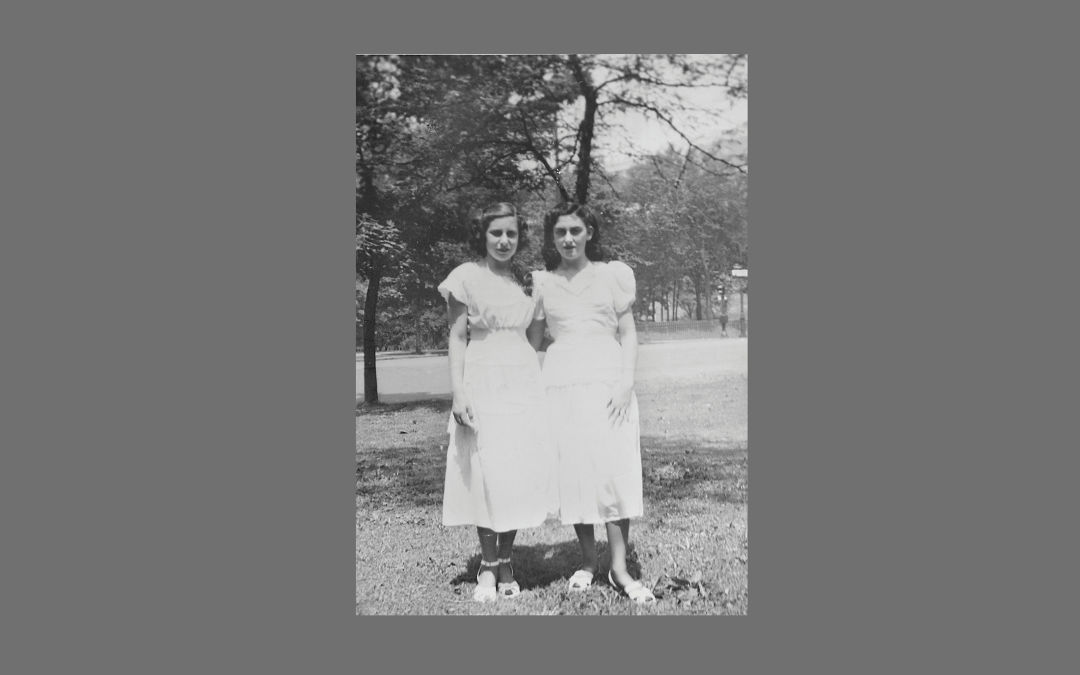
Image: Courtesy Ruth Steinfeld
Steinfeld first worked as a secretary for Zero Foods, which later became international food and beverage wholesaler Sysco. The role earned her a mention in Tom Kennedy’s From Waco to Wall Street, a biography about the company’s cofounder John F. Baugh. “[At Sysco], they treated me like I was a prized possession, because at that point I could really speak terrific French,” says Steinfeld.
She helped the company communicate with French chefs working at some of Houston’s major restaurants, but after giving birth to her first child, Steinfeld quit to pursue life as a stay-at-home mom. Once her children were older, she attended beauty school on a scholarship provided by a fellow Jewish woman she had befriended in New York. Later, she launched her own beauty shop, operating it herself until retiring about a decade ago.
Steinfeld says she focused on raising her children to be “good Jewish people,” which sometimes resulted in her skirting around her history. “I never told my kids about what happened to us, and if they would ask me about where their grandparents were, I didn’t have my answer,” she says.
A trip to Yad Vashem, a Holocaust memorial in Jerusalem, changed her perspective. Steinfeld no longer wanted to keep silent about witnessing a genocide and losing her parents to an act of antisemitic violence. She didn’t want the stories to erode over time; speaking up ensures more people know and understand history. “At that point, I knew that I had a reason for being alive—that I had to speak for that 1.5 million who never had a chance,” Steinfeld says.
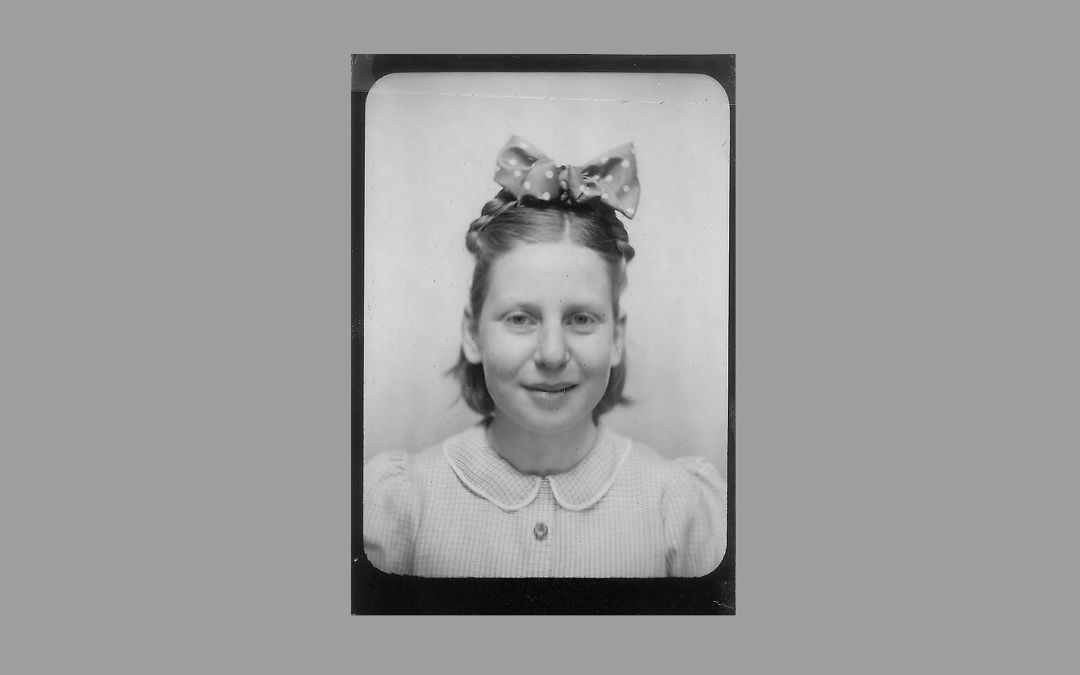
Image: Courtesy Ruth Steinfeld
Now, she speaks through Holocaust Museum Houston, visiting schools and community groups to discuss the devastating effects of the Holocaust. For her efforts, Steinfeld was awarded the French Legion of Honour during a ceremony in October 2021, and she received the German Federal Cross of Merit, First Class, this past fall.
Born in Brussels, Belgium, in 1936, Pauline Rubin wasn’t even 4 years old when the Nazis invaded. She still recalls the first hours of the attack, starting with a loud bang. “I was in the park with my mother, and I remember her picking me up and running,” she says. “The next thing I knew, I was in a room with a lot of people.”
They took shelter in a basement, where they listened to the radio for news and updates on their options. When a sympathetic German neighbor urged Rubin’s parents to leave Belgium, the family took refuge at her father’s friend’s home in an area that was said to have fewer Germans and a lower risk of getting caught. All the while, her family refused to wear the stars that the Germans were forcing Jewish people to wear as an indicator of their heritage. “My parents had a long conversation and said, ‘If we wear the star, we would be caught and sent away. If we don’t wear the star, we have a chance of not being taken,’” she says. “We never wore the star.”
When a Turkish family across the street was seized, members of the local underground resistance movement offered Rubin’s family another escape, but it required them to separate to survive. Like Steinfeld, Rubin left her parents for safety. Starting at age 5, she bounced from place to place and from home to home, including a Catholic orphanage.
She eventually landed with a young Belgian married couple on a farm in Bastogne; the husband was the head of the village’s underground movement. “I call them all angels, because [their lives] were in danger if they had been caught by the Germans,” she says. “None of us would [have survived].”
Rubin says they made sure she “was spoiled rotten” with love and attention. They introduced her to “unusual animals” she had never seen before, like chickens and cows.

Under their care, she was reunited with her parents at the end of the war (both were hidden with members of the underground movement). But Rubin says she didn’t recognize either of her parents after such a harrowing time apart. This made it difficult to separate from the couple who tended to her during the war, but she would continue to correspond with the two. She kept in touch with her “aunt” and “uncle” throughout her life, even making regular trips to visit them in Belgium.
Rubin and her parents eventually relocated to the United States and moved in with extended family in Indiana when she was 13. She would go on to marry a fellow Belgian Jewish Holocaust survivor, but a 1958 trip to Beaumont to visit her husband’s old roommate inspired the couple to make a big move. “We loved Houston instantly,” she says. In October of that same year, they moved to the city and never left.
Rubin started working, assisting her husband, a pharmacist, and later joined Prudential, where she worked for 20 years before retiring. Much like Steinfeld, she initially shied away from discussing her Holocaust experience with anyone. But after reading a book about child survivors around the time of the Holocaust Museum’s 1996 opening, Rubin’s daughter encouraged her to get involved in the local community. In 2024, she began speaking openly about the genocide she witnessed.
“Too many people aren’t believing the story. Too many people are naïve about what happened in World War II to the Jews,” she says. “I said, ‘It’s time for me to do something about it.’ So, I talk to the schools. Whenever they need me, they call me.”
The courage of Rubin, Steinfeld, Orlin, and others sustains the museum’s Thursday program: survivors choosing, again and again, to tell their stories to strangers. What they share provides a critical education and helps build empathy. Holocaust survivors live here, and they are essential members of the local community. They are friends, neighbors, and business colleagues. They have witnessed one of the greatest human rights tragedies of the twentieth century, but they also share stories about the families they’ve built, the hobbies they’ve taken up, the careers they’ve pursued, and the connections they’ve made.
They are, in a word, Houstonians.

“Anybody settled here…who had success here and contributed to the community, their names are still important in the Houston community, not just because of who they know or what their contributions are,” says Trevor Boyd, the Holocaust Museum’s director of collections and exhibitions. “It doesn’t have to be change-the-world, but [they] are living and [they] are doing things in the world, right? That is a gift, and that is an amazing accomplishment, because the odds were so stacked against survivors. I think that existence is a huge success.”
Boyd sees the museum’s exhibitions as another way to pull visitors closer to the human scale of history. He curated the recent Unveiled: From the Vault, an exhibition of artifacts from both the museum’s permanent collection—some of which had never been on display before—and Rice University’s Joan and Stanford Alexander South Texas Jewish Archives. These included printed propaganda from the Germans and Americans from before and during World War II, scrip used in internment and concentration camps, photographs, and the letters Jewish American soldiers sent home while fighting for their European brethren. There was also a tapestry from a now-closed synagogue, Beth Jacob, embroidered with the names of congregation members who served in the war, and a spotlight on the contributions of Houston activist Adele Heyman.
Not much is known about Heyman’s early life. She arrived in Houston in 1931 and, shortly thereafter, became an integral figure in welcoming Jewish refugees. In 1939, she was named the chairwoman of the Refugee Services Committee of the Jewish Community Council, now known as the Jewish Federation of Greater Houston. Under her guidance, she welcomed 485 refugees to Houston, providing them with kosher meals, employment training, job placement, health care, and assistance with naturalization and citizenship. Though not a survivor herself, Heyman and her team’s efforts offered a lifeline to Holocaust survivors, constructing a scaffolding for a community that continues into today.
“History can often be kind of cold and feel distant,” Boyd says. “By putting humans into that history—personal stories, testimonies available for people to see and hear—by having objects like this, letters that you can see humans wrote; real emotions came through in that writing—I think that’s teaching history through the lens of empathy.”
“If we can envision ourselves in somebody else’s history, then we can think about it more and open our minds more to it…all these lessons are universal.”
Although they spend their retirement educating anyone willing to listen about the travesties they endured and witnessed, Orlin, Steinfeld, Rubin, and fellow speakers still enjoy downtime—often together. Every August, Orlin looks forward to a big meal at the Post Oak Boulevard diner Kenny & Ziggy’s New York Delicatessen, which offers Holocaust survivors a free meal. Events like this are a chance to spend time with the friends who understand his circumstances best.
“It [is] a very vibrant community, and I think the Holocaust survivors have contributed a lot to the city of Houston,” he says. “The people here in Texas have been very good to us.”