Is the Rodeo Getting Too Big for Houston?
Brandon Citizen can count on one hand the number of times he’s missed the Houston Livestock Show and Rodeo. The Rodeo veteran and Prairie View A&M University alum has attended since he was “in Pampers.” “My dad always had tickets to the Rodeo,” Citizen says, a tradition that included weeklong trail rides, the World's Championship Bar-B-Que Contest, and concerts at the Astrodome. “Brooks & Dunn…George Strait,” he says, before rattling off decades of artists. “Frankie Beverly to Ashanti, to LL [Cool J] to Janet [Jackson].”
Other fond memories include dressing up for Go Texan Day at school, watching talented childhood friends submit artwork for competitions and scholarships, and raising a pig—a rite of passage for many students who earn the chance to show livestock at the Rodeo.
For third-generation Rodeo volunteer Halie Dittemore, Rodeo runs in the family. While her brightest memories include high-fiving Shania Twain after a performance, her mother, Vicki Thornton-Wiley, watched concerts by Elvis, the Jackson Five, and Sonny and Cher. But their history starts with Dittemore's grandfather, Billy Thornton, who was a regular attendee and volunteer in the 1980s. He eventually earned a lifetime volunteer badge, a high honor in the Rodeo volunteer circuit.
To many Houstonians, that’s exactly what Rodeo is about: hometown pride, family traditions, and a sense of continuity that spans generations. But many longtime attendees argue that the Rodeo isn’t quite what it used to be. “It’s gotten huge,” Thornton-Wiley says, noting that the Rodeo once felt more local. “If you didn’t live in Houston, you really didn’t know about that culture unless [you were] involved in it,” Citizen explains.
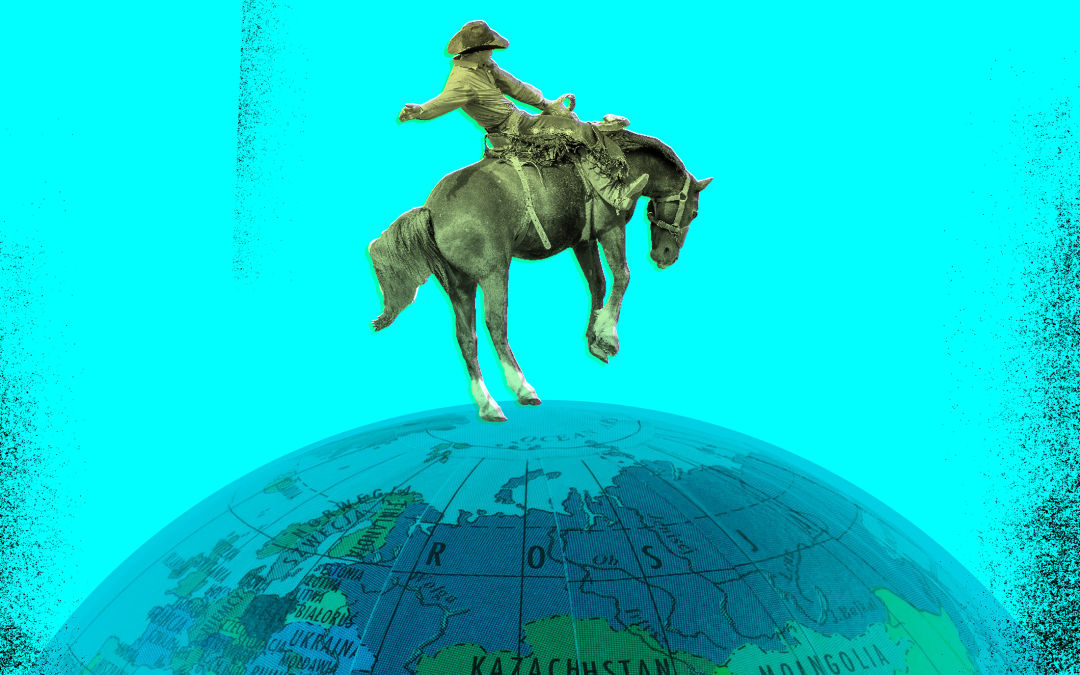
But the secret’s out. Despite already being deemed the largest rodeo in the world, the Houston Livestock Show and Rodeo continues to expand. Attendance records for the 2025 season smashed expectations, with 2.7 million attendees. The 2024 season reported an economic impact of $326 million, not far off from the $374 million generated by the 2017 Super Bowl held in Houston. Concert demand has followed suit, with ticket sales reaching insatiable demand: For the 2026 lineup, seven headlining concerts, including Kelly Clarkson and Lainey Wilson, sold out in just 30 minutes.
Houstonians have also noticed a surge in Rodeo visibility in the media. Social media, fashion, and pop culture, including Beyoncé’s Cowboy Carter album, have helped propel the Rodeo beyond Texas, Citizen says, drawing in vloggers, Queen Bey fans, and visitors eager to experience Houston’s version of Western culture and cowboy couture firsthand.
Rodeo attire has even entered high-fashion circles, gaining attention outside of Houston. In 2024, Citizen was featured in a Vogue article about Rodeo fashion, which highlighted his vintage fringed jacket passed down from his father (he later learned that rapper Drake reportedly has the same coat). The New York Times most recently deemed the Rodeo our “Super Bowl,” a reputation the organization has increasingly embraced as it approaches its 100th anniversary in 2032. And in January 2026, the Houston Rodeo hosted a pop-up concert in New York’s Times Square, an American landmark and one of the most coveted and high-impact advertising stages in the country.
“It's about being prideful and boastful and having people understand what an amazing organization and event we are,” says Lisa Gagnon, the chief marketing officer for the HLSR, who organized the Times Square event. “How do we get [Rodeo Houston] on people’s bucket list?” she asks.
Recognition for the event even occasionally extends beyond the country. Dittemore recalls a fan stopping her mother, who was wearing a Rodeo hoodie, in Spain to swap stories. “I think Rodeo is more known than we think,” Dittemore says. “It’s not a hidden gem anymore,” Citizen adds.
According to Rodeo CEO Chris Boleman, the numbers back up these observations. Attendance exceeded 1 million by the late ’90s and crossed 2 million in 2010, a threshold it’s maintained ever since, excluding the pandemic years. And each year, more newcomers arrive. In 2025, roughly 18 percent of the 2.7 million who visited were first-timers. “That number is pretty consistent for us,” Boleman says. “We see that year over year.”
The Rodeo has grown in scale as well. Every February, Boleman says, the event comes to life on the NRG Park grounds as crews erect a “small city” in just 10 days. “It’s so overwhelming how [quickly] it happens,” Boleman says with a laugh. Local vendors move in, volunteers arrive in droves, and tons of dirt are hauled into the stadium to prepare the grounds. Carnival rides rise, livestock pens take shape, and by opening day, the park hums with activity and festival foods. An estimated 36,000 volunteers across 109 committees ensure that the Rodeo runs smoothly. “It’s a well-oiled machine,” says Melissa Underhill, Rodeo’s chief volunteer and HR officer. “…and we could not do it without the volunteers.”
By opening day, Boleman is struck by the sounds and sights of the Rodeo: corn dogs and funnel cakes are fried golden brown in bubbling oil, and there’s a symphony of laughter combined with the moos, oinks, and clucks of livestock. “I do always kind of step back and go, ‘Man, I can’t believe I’m the CEO of this place,’” he remarks. And beneath the spectacle, the mission remains unchanged: The Rodeo is one of the largest scholarship providers in the country, having awarded more than $660 million to Texas youth.
Still, many Houstonians remember the Rodeo in humbler, quieter times. Originally called the Houston Fat Stock Show and Livestock Exposition, the Rodeo was launched in 1931 by seven entrepreneurs aiming to highlight and preserve Western heritage and the cattle industry along the Texas Gulf Coast. Over time, the Fat Stock Show evolved, adding concerts, trail rides, scholarships, a barbecue cook-off, and other attractions. Iconic Houston landmarks and host venues like the Astrodome and the Sam Houston Coliseum served as backdrops, and Houstonians grew increasingly captivated by the Rodeo, making it a fixture of the spring season.
Rodeo’s newfound and ever-growing popularity has sparked online debate, with some Houstonians urging others to “gatekeep” the event. Instagram user Antionette Torregano (@darealnette) criticized the Rodeo’s size and modern vibe, jokingly calling on Houstonians to protect its purpose and local roots. “The Rodeo is a family event, it’s a scholarship program…this isn’t a hootin’, hollerin’ Fashion Nova extravaganza!” she said, noting that, unlike sprawling events like New Orleans’s Mardi Gras, the Rodeo is confined to a single site. “The Rodeo is in a parking lot—one parking lot in the city of Houston. It cannot handle the influx of everybody and their mother from across the country,” she concluded. Torregano’s video was met with both praise and contempt. Some commentators noted that greater attention could lead to more scholarships for Texas youth and more tourism dollars for the city. Others agreed with Torregano, suggesting that “wristband activities” like the barbecue cook-off should be reserved solely for Houstonians, while others joked that attendees should be required to show a Texas ID for entry.
Regardless, one thing is clear: The Rodeo is no longer just Houston’s secret. It’s a destination for people around the country and, maybe, the globe. But Gagnon says the growing visibility isn’t just about chasing attendance for Rodeo. It’s about showing how great Houston is. “At the end of the day, our heart and our core is that we’re Houstonians and Texans first and foremost,” Gagnon says. “And that’s never going to change.”