What’s Worth Checking Out at the 2024 FotoFest Biennial

Every two years, the FotoFest biennial rolls into town and gifts photography-loving Houstonians with over a month to peruse some of the best photographic work the world has to offer—all without having to jump on a plane or go spelunking on Flickr. If you’re new to the biennial, running March 9 through April 21, it can be hard to get your bearings on the massive event. That’s because it doesn’t consist of just one big exhibition in one location: it’s actually spread across multiple spaces in Sawyer Yards as well as the rest of the city.
In addition to its central exhibition, Critical Geography, on view at Silver Street Studios, there’s also Ten by Ten: Ten Portfolios from the Meeting Place 2022–23, an exhibition taking place at the Silos at Sawyer Yards. Organized this year by FotoFest curator Max Fields and exhibitions manager Chris Wicker, Ten by Ten displays photographic work from (you guessed it) 10 artists nominated by experts from the previous iteration of FotoFest’s portfolio review program, the Meeting Place, which brings in 100 curators and editors every biennial to review the portfolios of more than 300 artists and photographers.
Attendees can also enjoy Creative Conversations, a series of talks about art and photography, as well as a film program, a fine print auction, educational events through FotoFest’s learning program, and book signings. Oh, and there are over 70 other events, exhibitions, and programs at participating spaces across the Houston region.
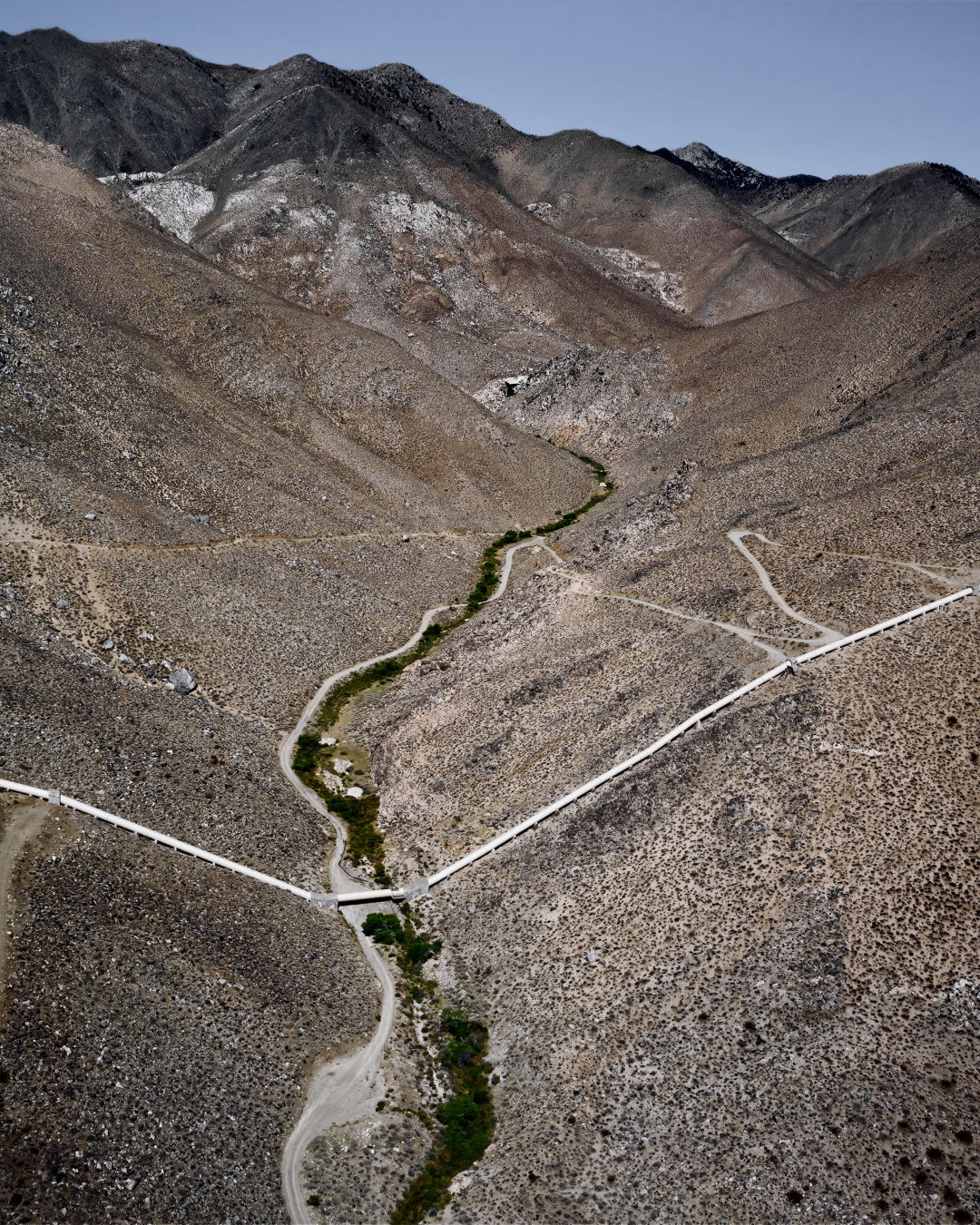
Image: Courtesy of the Artist
Although you have over a month to check everything out, it’s quite a lot to take in. If you’re like us and prefer to microdose big events like this, the best way to kickstart your FotoFest experience is through a visit to Critical Geography at Silver Street.
The exhibition is a truly global affair. The 24 participating artists represent 14 countries—from Singapore to Cambodia and Denmark to Ukraine—and this is the first time many of them have ever shown work in the United States.
The exhibition’s name is taken from a sub-discipline of geography that delves into issues like power structures and inequality and how they shape spatial patterns—ideas that should be all too familiar to Houstonians thanks to the existence of adverse local geographic features like “the Arrow,” a collection of affluent neighborhoods that highlight where inequities are concentrated within the city.
“What it looks at, and what the show looks at, is how space, place, and community are affected by economic, ecological, political, and social forces,” says Steven Evans, who is the curator of the exhibition as well as the executive director of FotoFest. “It’s about borders, it’s about economies, it’s about humanity’s impact on the natural world and the world’s impact on humanity. It’s about all of those things at the same time.”
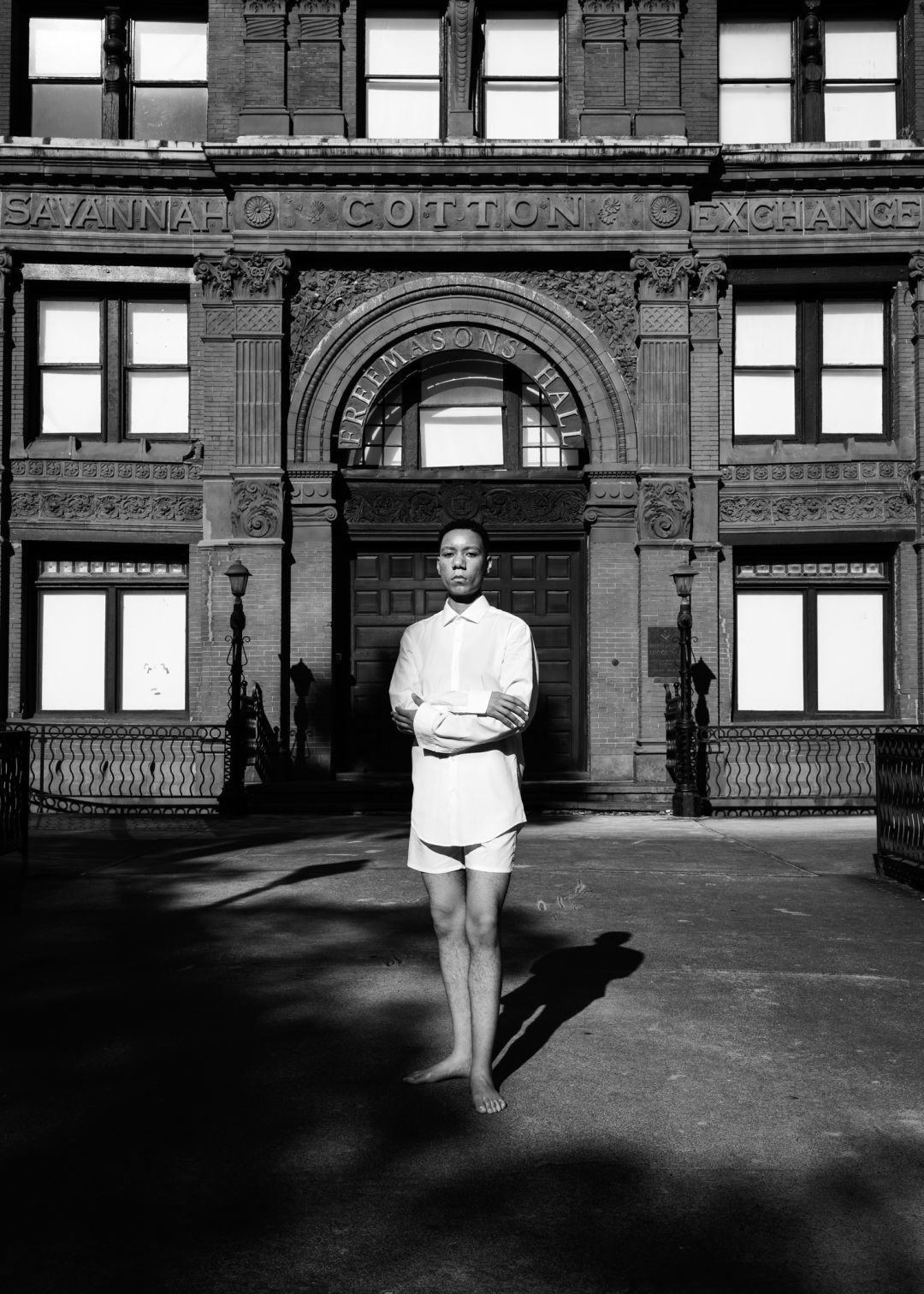
Image: Courtesy of the Artist
Evans says that the biennial’s concepts are always devised two or three years in advance, and the goal is to address a topic or movement in photography that is going to resonate with the public.
“We try to capture an element of the zeitgeist,” he says. “And I think FotoFest has a strong history of doing that and covering pressing subjects.”
The success of Critical Geography and the reason it resonates so well is due to the wide variety of ideas explored through the exhibit. In C. Rose Smith’s powerful Talking Back to Power series, the artist draws on Afro surrealism and Black dandyism to explore gender expression and, according to the exhibit’s promotional materials, to “repudiate histories of colonial dress.” Meanwhile, a site-specific installation from Ethel Lilienfeld, titled INVISIBLE FILTER, explores how self-image is affected through social media and the virtual realm.

Image: Courtesy of the Artist
A particularly timely portion of the exhibition is photographer Caleb Fung’s Exile to the Red Planet series, which consists of photographs of ancient Chinese Banyan trees in Hong Kong. The trees are being destroyed by Hong Kong’s government, and the artist makes the argument that their destruction falls in line with the realigning of the independent city-state with mainland China.
“Many of the artists are talking about community, and what constitutes community and family and how those things are formed,” Evans says. “So, there’s a lot of approaches, and I think they all hang together.”
For the first time this year, one of FotoFest’s installations is also being presented at George Bush Intercontinental Airport. Looking Up (Voices from Jack Yates High School), a project from San Antonio–based artist Mark Menjívar, takes its inspiration from teaching philosophies developed during the Civil Rights era of the 1960s. The installation displays photographs students of the historic high school took of the sky above their school, overlaid with text: their own mini-manifestos in which they describe their perfect school.

Image: Courtesy of the Artist
Menjívar, who has a background in social work, has done similar projects in San Antonio and in Arizona. He says that the process of co-creating the art with students instead of simply creating art about them made for a much more powerful experience.
“I think that seeing how things were unfolding with HISD over last summer just reinforced the desire to raise up student voices,” he says, referring to the state’s ongoing takeover of the independent school district.
The installation at the airport is located between terminals C and D and consists of 28 transparencies on windows. Prints from the installation are also on view at Sawyer Yards, and they’ll be installed at Jack Yates High School after the conclusion of FotoFest.
Evans hopes installations like Menjívar’s and the rest of the work in Critical Geography will help people better understand how societies, communities, and places are all affected—even if in seemingly invisible ways—by economic, social, and political forces. The goal is for that new understanding to spark societal change.
“I think there’s a growing awareness of that in the public’s mind already,” Evans says. “What I hope they’ll get from it is recognizing even more of that, and seeing the way that we can approach this critically, but also positively.”