How to Start Composting at Home (Without Overthinking It)

Image: flystock/shutterstock.com
Composting is, in entirely unscientific terms, plant fertilizer made from decomposing material—and a great way to turn food scraps and yard waste into nutrient-rich soil. There’s a lot more to it than that, obviously; microbes, moisture, oxygen, and time all play a role. But you don’t need that information to get started. Here’s an easy-to-follow guide on how to start composting at home.
Why Compost?
- Puts food scraps to good use (and keeps them from stinking up the garbage).
- Saves money on fertilizer for plants.
- Reduces soil erosion.
- Conserves water.
- Keeps organic material out of landfills, which reduces methane emissions.
Where to Compost?
- In a pile out in the open (the cheapest option).
- In a special compost bin or box.
- Directly in the soil (a.k.a. trench composting).
What to Compost?
GREENS (Nitrogen-rich materials): Produce scraps (see exceptions, below), coffee grounds and tea leaves, eggshells, aged grass provided no herbicides or fungicides were used.
OTHER COMPOSTABLES: Pet fur and undyed/unbleached human hair; claw clippings; unpainted fingernail and toenail clippings; breads, cereals, pastas (no sauce), and grains; 100 percent natural-fiber cloth, undyed/unbleached.
Do Not Compost
Citrus (fine in moderation in standard compost, avoid in vermicompost); dairy, onions and garlic (except in very tiny amounts); meat and fish; egg yolks and whites; bones; glossy or bleached paper; newspaper with colored inks; produce stickers; painted, treated, or stained wood; dryer lint; fats, grease, and oil; salt and spices; pet waste, including cat litter; human waste; plants exposed to herbicides or fungicides; candy; processed foods; spicy peppers (fine in moderation in standard compost, avoid in vermicompost); plastics, glass, and other inorganic compounds.

Image: John Kenzie
Did Somebody Say Worms?
Jacey Bowers, a gardener at Wabash Feed & Garden and the owner-operator of Hello Darling Irises, teaches workshops on vermicomposting and sells fertilizers made with the worm castings (poop) she harvests for her plants. Bowers first got into the practice when setting up her iris and daylily hybridization program; without an irrigation system, she needed a way to offer her flowers nutrient-dense soil to compensate.
“If there are worms there, then that means that fungi and bacteria are there, which means that probably protozoa and nematodes are there. And all these things are necessary to form aggregates in the soil,” she says. “Earthworms play a crucial part in that process.”
In the spirit of spreading a love of vermicomposting, she’s graciously shared with us some of her slimy, squirmy secrets.
Composting vs. Vermicomposting
|
Composting |
Vermicomposting |
|
Does not use worms |
Uses worms |
|
Wider range of items can be composted |
Some food scraps may harm worms |
|
Slower and less efficient |
Faster and more efficient |
|
High heat |
Moderate heat |
|
Requires aeration by hand |
Worms handle most of the aeration |
|
Deep depth |
Shallow depth |
|
Can be started for free |
Requires a little spending up front |
|
Less lucrative on a commercial scale |
More lucrative on a commercial scale |
Vermicompost Basics
Mixture: Bowers recommends 50 percent greens and 50 percent browns.
What worms to get: Red wigglers are ideal.
Number of worms to start: Mary Appelhof’s multigenerational vermicomposting classic, Worms Eat My Garbage: How to Set up and Maintain a Worm Composting System, recommends starting with 1 pound of worms for every half pound of food, scaling up or down at a similar 2:1 ratio depending on bin size.
pH: 5 to 9 on a 14-point scale (pH meters can be purchased from most gardening stores or online).
Moisture: Most sources describe the ideal moisture level as feeling like a wrung-out sponge. Worms breathe through their skin, so if conditions get too dry, water your bin as you would a plant. But if it gets too wet, worms could potentially drown.
Temperature: Red wigglers can survive temperatures between 32˚F and 95˚F, but are optimal producers between 59˚F and 77˚F.
But this is Houston… “As long as you have some sort of sheltered area, you will be OK,” Bowers says. If you’re using bins in a controlled environment, she advises not opening lids too frequently during extreme heat or cold. During temperature swings, add extra bedding and food, then leave the bin undisturbed.
Build Bowers’s Bin
Materials:
- 3 5-gallon plastic buckets
- Drill

Image: John Kenzie
Wait…what is worm tea?
Don’t worry, you don’t have to drink it. “Worm tea,” also known as “leachate,” refers to the liquid that collects in the bottom of a worm bin setup. Dilute it with water and use it to feed your other plants—it’s packed with nutrients, too, just like the castings.
Bowers concentrates and sells her own worm tea using a proprietary recipe that incorporates worm castings. But unless you plan to go commercial with yours, there isn’t much need to go through so many steps.
How will I know the castings are ready?
When there are no food scraps left and the contents of your bin resemble dark brown-black, crumbly, moist soil, that’s when you should be able to harvest your castings. There may still be some decomposing bits here and there, but in general it should all be well broken down; if there’s still whole food scraps left, then you should wait a little longer.
Here’s an example of what delicious and nutritious castings should look like.
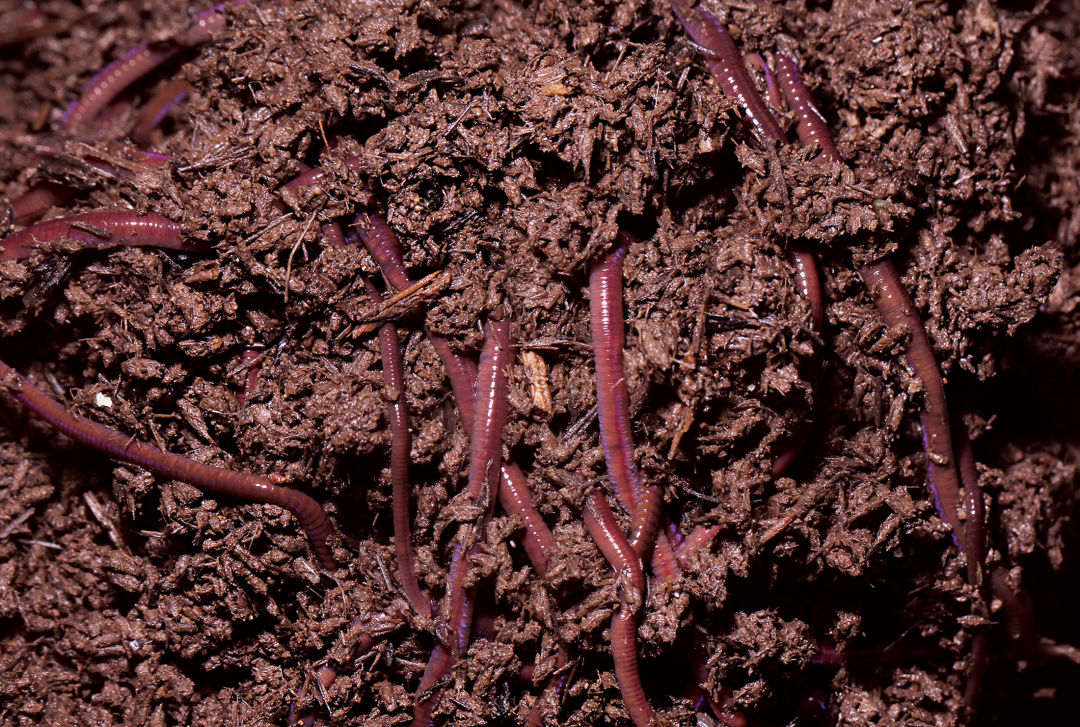
Image: pong wira/shutterstock.com
There are critters in my bin!
Good! Soil is a living ecosystem. Healthy worm bins will play host to mites, springtails, isopods, and even black soldier fly larvae (though these are an indicator that your soil might be too acidic; your pH meter comes in handy here). All of these organisms help break down organic matter into nutrient-rich soil for your plants.
Remove any centipedes or planarians if you spot them, though—they’ll feed on your worms.
It’s worth noting, too, that the reason bones, meats, oils, dairy, and such are discouraged in composting is because they attract more and bigger critters. These animals could disrupt your compost by digging through it and spreading dirt and detritus around. Some standard composters welcome their presence, since raccoons, skunks, possums, and other scavengers can help aerate the compost, while others don’t want to keep cleaning up the resulting messes. Vermicomposters will want to avoid these natural neighbors entirely, as they could very well make a juicy meal out of the worms.
How do I prevent my bin from stinking?
A good compost pile—worms or not—should smell like earth. If it stinks, make sure all your waste is properly buried and that the bin has sufficient oxygen. Aerate the bin, and check that the air holes aren’t blocked.
The best ways to use your worm castings:
- Mix with potting soil when growing new plants.
- Mix with mulch for more established plants.
- Dilute in water to make a potent worm tea.
- Simply scatter some on top of soil for added nutrition.
More Resources
In addition to local experts like Bowers and references such as Mary Appelhof and Joanne Olszewski’s Worms Eat My Garbage: How to Set up and Maintain a Worm Composting System (updated by Joanne Olszewski for a 35th anniversary edition in 2017), find more information online: