What Houston’s Favorite Meteorologist Says About Hurricane Season 2026
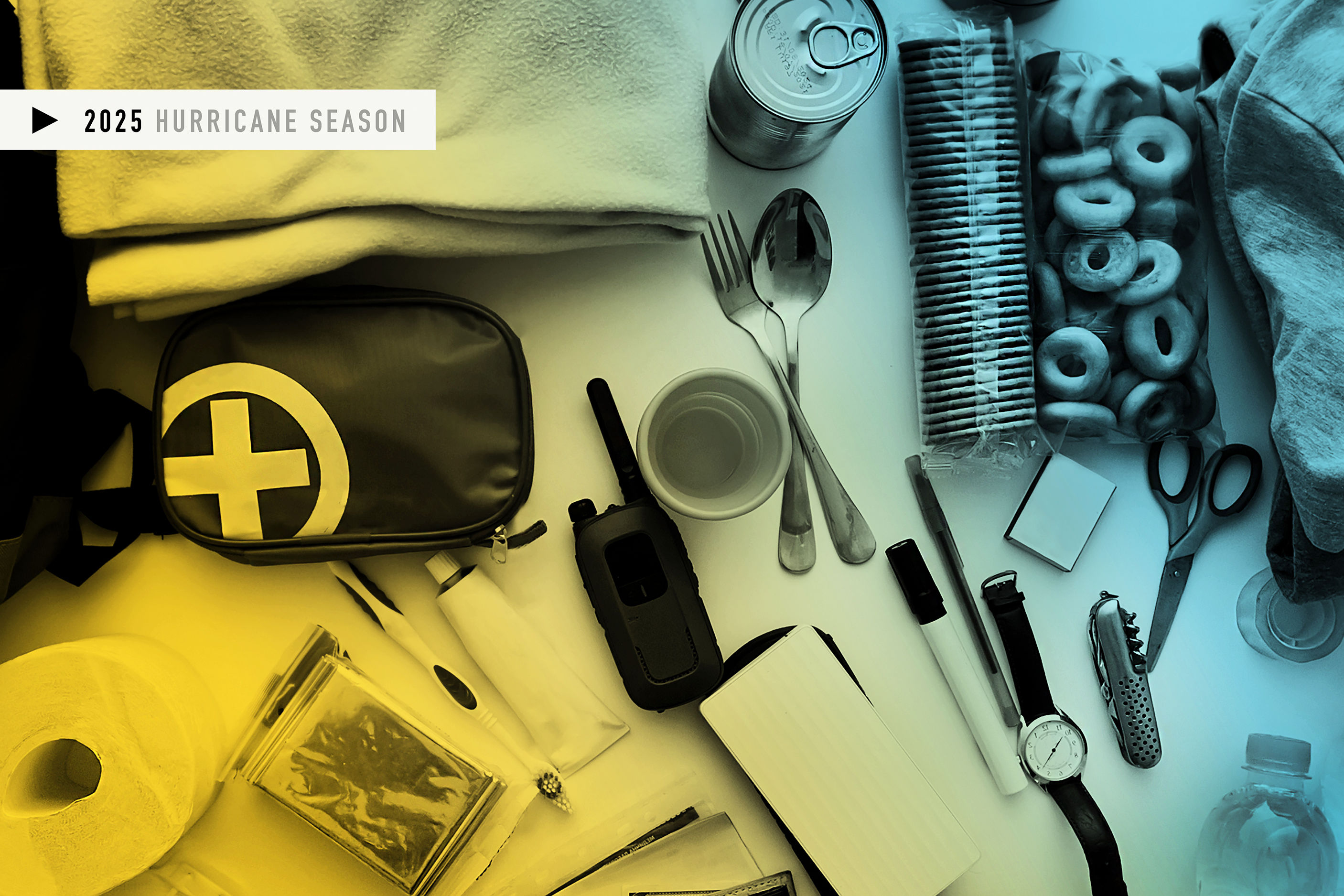
We’re now officially in the early days of every Houstonian’s least favorite time of year: that hellacious stretch between June 1 and November 30 known as “hurricane season”—when the mosquito eggs hatch, the air feels like we’re being punished for something, and the risk of a catastrophic meteorological event increases. As the temperatures rise, we start channeling our not-so-inner prepper (have you picked up a weather radio yet?) and also obsessively monitoring the Gulf of Mexico for signs that we’ll either need to evacuate or “hunker down.”
Fortunately, Space City Weather meteorologist Matt Lanza believes that 2026 will be a little kinder to Houston than in previous years—though we’re still losing him to Connecticut. Lanza and his family plan to relocate to be closer to his parents in New Jersey, but will continue reporting for Houston’s most trusted weather blog.
He says we shouldn’t take the news of a lighter risk as permission to neglect the upkeep of our hurricane kits or stop paying attention to weather forecasts, but we can use this time to take a breather and focus more on surviving the World Cup. Lanza calls this an “interesting season, hopefully in a good way,” pointing to the presence of El Niño—a periodic warming of equatorial Pacific waters—as the major reason why hurricane activity will be reduced.
According to Lanza, an average hurricane season sees around 14 named storms, seven hurricanes, and three major hurricanes. By contrast, a year with an El Niño averages 10 named storms, four hurricanes, and two major hurricanes, and that’s on the high end. A milder El Niño year usually sees even lower numbers. The diminished risk should provide some peace of mind as we count down the days to November 30, though the risk itself still isn’t zero.
“You still have to be ready in case [a hurricane] does crop up,” Lanza says. “I always go back to the hurricane season of 1983, which was a very, very minimal hurricane season—only had a handful of storms—but it had Hurricane Alicia, which was a big storm for the Houston area. So, even in those quiet years, you can still get hit.”
In an El Niño year, the Pacific undergoes what Lanza calls a “what goes up, comes down sort of situation”—warm water pools between South America and the International Date Line, but loses energy as it flows into the Atlantic. “The Pacific takes up the bulk of the action during El Niño years, and what happens is wind shear flies across the Atlantic, so you get a more hostile environment for storms,” Lanza says. He notes that 2026 is one of the coolest years the Atlantic basin has seen in a while, especially in the region between the Caribbean and West Africa. “You’ve got slightly cooler water in the Atlantic. You’ve got wind shear. You’ve got all this action going on in the Pacific. So, the Atlantic—what are you going to do? It’s kind of like picking up the scraps,” he says.
A cooler year doesn’t necessarily mean Houston’s future is safe from global warming. In an emotional blog post bidding farewell to his Texas home, Lanza admits he worries about the region’s vulnerability to hurricanes, “and not just Beryl-type storms—much bigger storms.” But that concern doesn’t mean all is lost for the Gulf Coast.
Houstonians aren’t exactly helpless when it comes to advocating for more and better climate action. Lanza recommends learning the science behind weather and climate change. The more we understand, the more we can advocate and put pressure on leadership to demand progress. Concerned citizens will likely encounter others who don’t “buy fully into climate change,” he says, but understanding the connection between climate and daily life helps. “When you’re talking to them about day-to-day weather, that resonates.”
As with the public health sector, Lanza acknowledges that Americans are increasingly hesitant to trust government agencies in forecasting the weather, due to a combination of significant budget cuts and pseudoscientific conspiracy theories proliferating in the upper echelons of power. He still recommends the National Weather Service’s (NWS) annual Official Southeast Texas Hurricane Guide for in-depth guidance on evacuation zones, kit construction, emergency lines, and other critical information.
“The real big thing is to understand when you’re dealing with the science and research,” Lanza says. “It’s not like a light switch, right? You can’t just turn it off during one administration and turn it back on during another administration.”
He believes the science endures and remains worthy of citation. The NWS and the National Oceanic and Atmospheric Administration (NOAA) continue to commit themselves to ensuring that Americans have access to potentially life-saving information, no matter who holds the nation’s top office. “Continue to talk about [climate science] with people in your community to make sure they realize sort of the value and importance of this stuff. This is not wasteful spending for the sake of keeping a few smart people employed,” Lanza says. “It’s critical that we do understand it, because we need to be sure that we are adequately prepared for whatever it could be that’s coming down the road…Knowledge is power, right?”